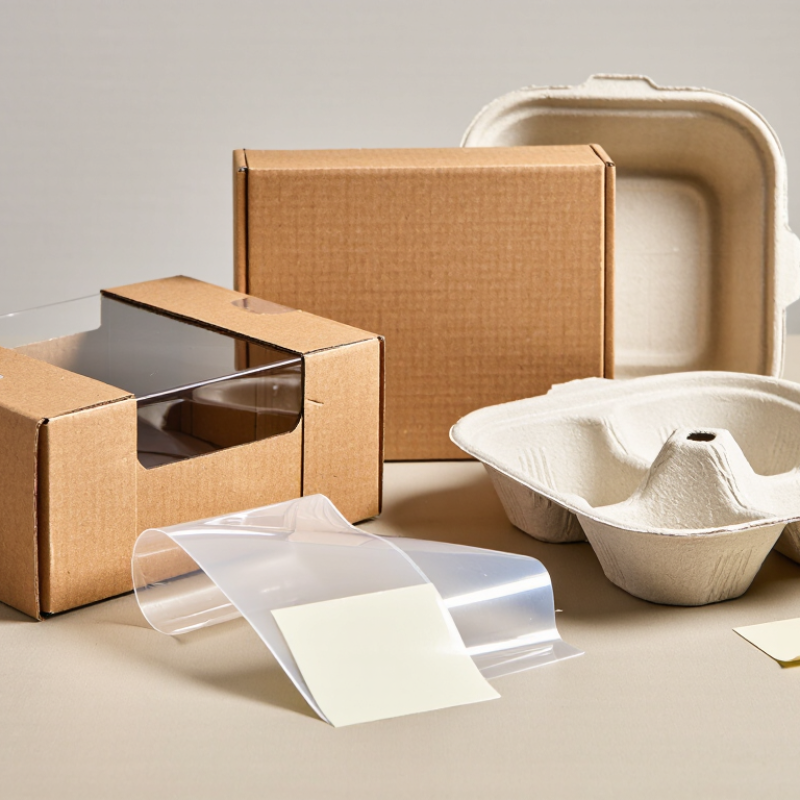
Our packaging is not always made from one material. A product’s pack may include a paperboard box, a molded-fiber tray, a plastic liner, and a small adhesive label. Each part serves a purpose: protecting the contents, keeping them clean, or helping the package travel safely. The exact materials depend on the product and its design. Check the package specifications for details.
Look closely at the surface. A matte box may have a coating, while a clear window may use a different material from the surrounding board. Caps, inks, and adhesives can also affect how components are sorted after use. Small details matter. A package that looks like plain paper may not be accepted in every paper recycling stream.
Reliable answers come from material specifications and supplier documentation, not appearance alone. These records can identify components and help explain their intended disposal routes. They may not answer every question, though. Materials can change between product versions or suppliers, so dated information deserves a second look. That is worth admitting.
In this guide, we examine what our packaging is made of, why each material is selected, and what trade-offs those choices involve. We also consider protection, weight, and end-of-life handling without treating any material as automatically better. Packaging decisions are practical, but they are not perfect. Knowing what is present is a useful place to begin.
What Is Our Packaging Made Of?
Common Materials Used in Packaging
Packaging commonly combines plastic, paper, glass, or metal, each chosen for its weight, strength, barrier properties, and cost. Plastics are light and help protect products from moisture, but mixed-material layers can be difficult to separate after use. The OECD’s Global Plastics Outlook (2022) estimates that global plastic production reached 460 million tonnes in 2019. It reports that only 9% of plastic waste was ultimately recycled. That matters. A recyclable material is not automatically recycled in practice.
Paper and corrugated board offer easy-to-print surfaces and cushioning for boxes, though moisture can weaken them. Glass provides a strong barrier and can be reused, but it is heavy and breakable. Aluminum and steel suit cans, lids, and protective layers; they are durable, but their production requires substantial energy. The US Environmental Protection Agency’s Advancing Sustainable Materials Management: 2018 Fact Sheet reports 82.2 million tons of US packaging waste, with 53.9% recycled. These figures show why material choice alone tells only part of the story. Package design, local collection, and sorting also affect what happens next. A thin film may use little material, yet still be hard to recover. That trade-off deserves a closer look.
| Material | Common Forms | Typical Packaging Uses | Key Characteristics | End-of-Life Considerations |
|---|---|---|---|---|
| Paper and paperboard | Folding cartons, corrugated board, paper bags, molded fiber | Shipping boxes, dry-food cartons, bags, protective inserts | Lightweight, printable, and available in a range of strengths. Corrugated board is designed to provide cushioning and stacking support. | Often recyclable when clean and dry. Food residue, wax coatings, plastic linings, and other mixed materials can affect acceptance in local recycling programs. |
| Glass | Bottles, jars, vials | Beverages, sauces, preserves, cosmetics, and some medicines | Rigid and chemically resistant; provides a strong barrier to gases and moisture. It is heavier and more breakable than many alternatives. | Can be recycled repeatedly where collection and processing facilities are available. Local programs may separate glass by color or exclude certain types of glass. |
| Aluminum | Cans, foil, trays, flexible foil layers | Drinks, ready meals, confectionery, and products needing light or moisture protection | Lightweight, formable, and an effective barrier to light, moisture, and gases when used as a continuous layer. | Recyclable through many established systems when collected and sorted. Very thin foil or foil combined with other materials may be harder to recover. |
| Steel and tinplate | Food cans, aerosol containers, closures | Canned foods, beverages, household products, and pressurized products | Strong and durable, with useful barrier properties. Containers commonly use a thin protective coating on the inside. | Steel is widely recyclable where metal collection is available. Empty containers may need to be prepared according to local recycling guidance. |
| Polyethylene terephthalate (PET) | Rigid bottles, jars, trays, films | Beverage bottles, food containers, and clear product packaging | Lightweight and clear in many forms; provides useful strength and moisture resistance. Properties vary by product design and thickness. | Some recycling systems accept PET bottles and containers. Collection rules and acceptance of trays, colored items, labels, or caps vary by location. |
| High-density polyethylene (HDPE) | Bottles, tubs, caps, flexible films | Milk and detergent bottles, personal-care containers, and household-product packaging | Lightweight, tough, and resistant to many chemicals and moisture. It is usually opaque in its natural form. | Many programs accept certain HDPE bottles and containers; acceptance of tubs, caps, and films depends on local collection facilities. |
| Polypropylene (PP) | Tubs, cups, lids, woven sacks, films | Food tubs, takeaway containers, closures, and flexible packaging | Lightweight and resistant to moisture and many chemicals. It can be made into rigid or flexible packaging. | Recycling availability varies by region and packaging format. Small items and flexible films may not be accepted in curbside programs. |
| Flexible plastic laminates | Multi-layer pouches, sachets, barrier films | Snacks, coffee, pet food, and products needing a combination of barrier properties | Thin layers of different materials can help protect products while reducing package weight. The layers may be difficult to separate. | Often not accepted in standard curbside recycling because the combined layers are challenging to sort and process. Specialized collection may exist in some areas. |
| Wood | Pallets, crates, boxes, barrels | Transport packaging, produce crates, and large or heavy goods | Strong and reusable in many supply chains. Its weight, durability, and performance depend on the wood type and construction. | Can often be repaired, reused, or recovered as wood material. Treatment, coatings, contamination, and local rules affect disposal options. |


Get Free Estimate!