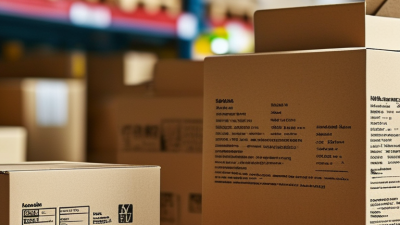
Choosing packaging options for global shipping is not a simple material comparison. It is a risk decision involving distance, climate, handling, product fragility, and customer expectations. A carton that performs well in a dry warehouse may soften after days near ocean humidity. Small details matter. Weak corners fail first.
The OECD’s Global Plastics Outlook (2022) reported 353 million tonnes of plastic waste in 2019, with only 9% recycled. Packaging decisions therefore carry environmental consequences beyond one shipment. Smithers’ The Future of Global Packaging to 2028 also identifies e-commerce, sustainability, and supply-chain efficiency as major forces shaping packaging demand. These reports support a practical principle: reduce unnecessary material, but never remove protection without testing.
William R. Packard, a recognized packaging educator and author, famously wrote, “Packaging protects what it sells and sells what it protects.” That idea remains useful for international logistics. The best packaging options balance protection, dimensional weight, recyclability, cost, and easy opening. Choose the smallest safe format. Test it.
A useful evaluation can compare molded pulp, corrugated board, recycled plastic mailers, reusable totes, and hybrid systems. Yet no scoring model is perfect. A recycled option may require more volume, while a lightweight format may suffer during repeated handling. Packaging teams should review drop tests, compression results, carrier requirements, and real customer returns before scaling globally. The right choice is rarely the cheapest box. It is the option that arrives intact, uses resources responsibly, and performs consistently across unpredictable routes.

Every global shipment should begin with clear requirements. Define the product’s weight, dimensions, value, quantity, and delivery speed. Record whether it needs temperature control, moisture protection, cushioning, or tamper evidence. A ceramic item may need molded support, while textiles may only require a moisture barrier. Packaging should fit the product, not merely fill the shipping carton.
Destination risks can change the entire design. Review climate, handling conditions, transport distance, and storage quality at the receiving location. Humid ports may require desiccants and sealed inner packaging. Cold regions can make some plastics brittle. Long journeys also increase vibration, stacking pressure, and impact exposure.
Ask practical questions. Will the box sit outdoors? Could it be dropped twice?
Product specifications must guide material choices. Confirm compression strength, closure performance, abrasion resistance, and package weight. Test a sample under realistic conditions before approving a large production run. A package can look secure and still fail at a corner seam. That detail is easy to miss. It is also costly.
Use clear labels, accurate dimensions, and documentation that matches the shipment. Avoid oversized packaging when possible, because empty space increases movement and transportation impact. A careful review may still reveal weaknesses, and that is useful. Packaging decisions should improve through testing, feedback, and honest examination.

Global shipping exposes packaging to drops, vibration, moisture, and long storage. The best material balances strength, weight, cost, and environmental impact. Corrugated fiberboard suits many parcels because its fluted layers absorb shocks while keeping weight low. Choose thicker walls for heavy or irregular items, but test before upgrading. More material can add protection, yet it also increases freight emissions and waste. Keep it practical.
For dense products, molded pulp or paper-based inserts can replace some plastic cushioning. They resist compression reasonably well and are easier to recycle in many regions. However, paper loses performance when exposed to humidity. Plastic air cushions and foam often protect fragile goods with less mass, but disposal options vary widely. Reusable fabric or rigid containers work well in closed shipping loops, though they may become inefficient across long distances. Measure the empty package, not only the product.
In packing trials, I check corner crush, seal failure, and movement after simulated drops. A simple shake test often reveals wasted space. Packaging data should include package weight, damage rates, recycled content, and recovery instructions. Recycled fiber can be less consistent, so humidity testing matters. I have sometimes chosen a stronger box too quickly, then found that a tighter fit performed better. That mistake is worth recording. Suppliers should provide material specifications and test reports, while shipping teams should review real damage claims every quarter. Conditions differ by route, season, and handling network. A package that works in a dry warehouse may fail after a wet transfer.
Package size, design, and protective features directly influence damage, cost, and customer trust. Pitney Bowes reported 161.8 billion parcels worldwide in 2022. That volume means every weak corner can become a repeated operational problem.
Choose a box that leaves minimal empty space around the product. Excess space increases movement, while tight packing creates compression damage. Measure the product, cushioning, and closure area together. A practical design should also support flat storage, quick sealing, and clear handling information.
Protection must match the shipping environment. Use molded inserts, paper cushioning, or corrugated dividers for fragile items.
Test the complete package through vibration, drops, compression, and temperature changes. ISTA testing protocols provide a reliable framework for these evaluations. Avoid adding layers without evidence. More material can increase waste without improving protection.
Eurostat reported 186.5 kilograms of packaging waste per EU resident in 2022. This makes material efficiency a serious design responsibility.
I still find that “maximum protection” is sometimes chosen too quickly. Real shipment data should challenge that instinct.
Tips:
Global shipping packaging begins with accurate labeling, not attractive design. Every carton should show the destination, sender details, package count, and handling instructions. Use waterproof labels that remain readable after rain, dust, and repeated transfers. A smudged barcode can delay a shipment for days.
Customs documents must match the package contents exactly. Describe items clearly, assign the correct tariff classification, and verify the declared value. Country-specific import rules can change, so check official customs guidance before dispatch. Include required invoices, certificates, and origin details when applicable. I have seen small wording differences create costly inspection delays. That experience made one point clear: never copy an old form without reviewing it.
Handling conditions also shape the packaging choice. Use internal cushioning for fragile products and reinforced corners for long routes. Leave no empty space inside the carton. Excess movement causes hidden damage. Temperature, moisture, stacking pressure, and transfer frequency deserve practical testing. A package may survive a warehouse but fail on a wet loading dock.
Regulatory requirements require equal attention. Confirm material restrictions, recycling marks, language rules, and labeling formats in the destination market. Keep records of packaging specifications and inspection results. No checklist is perfect. Recheck high-risk details before every shipment, especially when routes or products change. Reliable packaging comes from documented decisions, careful testing, and the willingness to question familiar habits.
| Packaging Option | Best Use Case | Labeling Requirements | Customs Documentation | Handling and Protection | Key Regulatory Considerations | Relative Cost | Global Suitability |
|---|---|---|---|---|---|---|---|
| Standard Corrugated Carton | General merchandise, apparel, books, and non-fragile goods. | Ship-to and return addresses, package count, orientation marks when needed, and a scannable tracking label. | Commercial invoice, accurate product description, HS code, country of origin, value, currency, and intended use. | Use a carton suitable for the product weight; fill empty space and seal all seams with appropriate tape. | Avoid misleading descriptions and ensure packaging does not conceal restricted or controlled contents. | Low | High |
| Double-Wall Corrugated Carton | Heavy, dense, or higher-value items requiring greater stacking strength. | Standard shipping label plus gross weight, handling marks, and orientation arrows where the product requires a fixed position. | Commercial invoice and, where applicable, packing list, import permits, certificates, and a detailed material description. | Add internal cushioning, edge protection, and palletization for heavy shipments; verify carton compression strength. | Wood pallets or crates used in international trade generally need compliant treatment and marking under ISPM 15. | Medium | High |
| Padded Mailer | Small, lightweight, non-fragile products such as textiles, documents, and accessories. | Legible address, tracking barcode, return address, and customs declaration for cross-border postal shipments. | Customs declaration or commercial invoice, accurate value, quantity, weight, origin, and plain-language product description. | Provides limited crush protection; do not use for rigid, sharp, liquid, or easily damaged products without additional protection. | Destination rules may restrict plastics, textiles, seeds, food, or other contents; check postal and import requirements. | Low | Medium |
| Temperature-Controlled Pack | Perishable goods, pharmaceuticals, biologics, and products with defined temperature limits. | Temperature range, “Keep Refrigerated” or “Keep Frozen” instructions, orientation marks, and emergency contact details when required. | Commercial invoice, packing list, permits, product registration evidence, health certificates, and temperature records as applicable. | Use validated insulation and refrigerants; include a data logger when needed and plan customs clearance to minimize dwell time. | Food, medical, biological, and refrigerant rules vary by destination; dry ice shipments require applicable dangerous-goods controls. | High | Medium |
| UN-Specification Dangerous-Goods Package | Qualifying chemicals, flammable materials, corrosives, aerosols, and other regulated dangerous goods. | Applicable hazard labels, UN number, proper shipping name, handling labels, orientation arrows, and package marks. | Dangerous-goods declaration when required, safety data information, commercial invoice, permits, and emergency contact details. | Use tested packaging, compatible inner containers, absorbent material where required, and trained personnel for preparation. | Transport mode and hazard class determine requirements under applicable air, sea, road, or postal regulations. | High | Restricted |
| Lithium-Battery-Compatible Package | Electronics containing lithium-ion or lithium-metal cells and batteries. | Battery handling mark or other required marking, orientation labels where applicable, and clear identification of battery type and configuration. | Commercial invoice, battery details, test-summary evidence when requested, and transport documents based on battery configuration. | Prevent short circuits, protect terminals, prevent movement, and use strong outer packaging that resists crushing and puncture. | Rules depend on watt-hour rating, lithium content, whether batteries are installed or packed separately, and transport mode. | Medium | Medium |
| Wooden Crate or Palletized Load | Industrial equipment, oversized cargo, machinery, and shipments requiring forklift or crane handling. | Handling symbols, gross weight, center-of-gravity mark when relevant, lifting points, and visible shipping documents. | Commercial invoice, packing list, dimensions, weight, HS code, origin, and any import or export permits. | Secure the load against vibration and movement; use bracing, corrosion protection, moisture barriers, and forklift access. | Solid wood packaging generally must be treated and officially marked in accordance with ISPM 15; destination inspection rules still apply. | High | High for cargo |
| Reusable Plastic Transit Container | Returnable components, industrial parts, controlled distribution loops, and moisture-sensitive goods. | Durable identification label, handling instructions, serial or inventory reference, and destination information. | Commercial invoice and standard customs documents remain necessary; reusable packaging may require separate declaration depending on local rules. | Rigid walls provide impact and moisture resistance; use dividers, lids, tamper controls, and internal restraints. | Check destination rules for imported packaging, recycling obligations, material restrictions, and return logistics. | Medium | Medium |
Choosing packaging for global shipping requires measured testing, not attractive samples. In my packaging trials, I begin with the product’s weak points: corners, seals, and moving parts. I record weight, dimensions, temperature limits, and moisture sensitivity. Then I build two or three prototypes using practical materials.
Keep it simple.
Each prototype faces a drop sequence from handling height, vibration, compression, and short humidity exposure. I inspect crushed edges, loose fillers, scuffed surfaces, and hidden product damage. A data logger can reveal heat or impact events that visual checks miss.
Test packed units after storage, too. Cartons may soften overnight in damp conditions. Not every laboratory result predicts a real delivery. That limitation deserves attention.
Cost optimization should include the full shipping footprint. A lighter carton may reduce freight charges, but weak protection can create replacements, delays, and customer complaints. I compare material cost, packing time, dimensional weight, and expected damage rates in one worksheet.
Small size reductions can matter when parcels cross several networks. However, I would not remove a corner pad after one successful test. Repeat the trial with different orientations and realistic loads.
A small pilot shipment offers useful evidence before wider rollout. Review failures honestly, adjust one variable, and test again.
Get Free Estimate!