Global shipping in 2026 demands more than attractive boxes and quick packing decisions. Packaging items must protect products through warehouses, loading docks, aircraft holds, and unpredictable weather. A ceramic mug may face vibration, compression, and sudden temperature changes before reaching a customer’s kitchen. A clothing parcel needs different protection from a precision instrument.
Choosing suitable materials starts with practical evidence. Review product weight, dimensions, fragility, moisture sensitivity, and delivery distance. Then match those details with corrugated cartons, padded mailers, molded inserts, stretch film, labels, and tamper-evident seals. Do not rely on appearance alone. A thicker box can still fail if internal movement remains uncontrolled. Small gaps often become expensive damage.
Reliable packaging also supports accurate customs documentation, safe handling, recyclability, and regional shipping requirements. Requirements can differ by destination and may change over time. Check current guidance from carriers, customs authorities, and recognized packaging organizations before finalizing a design. Testing matters. Drop tests, compression tests, and vibration trials can reveal weaknesses that a packing table cannot show.
In real operations, perfection is rare. An environmentally friendly material may resist moisture poorly. A stronger insert may increase shipping weight. These trade-offs deserve honest review. Packaging items should be tested with representative products and realistic routes, not only in ideal warehouse conditions. The best choice balances protection, cost, sustainability, customer experience, and dependable global delivery. That balance may require revision after the first shipment.
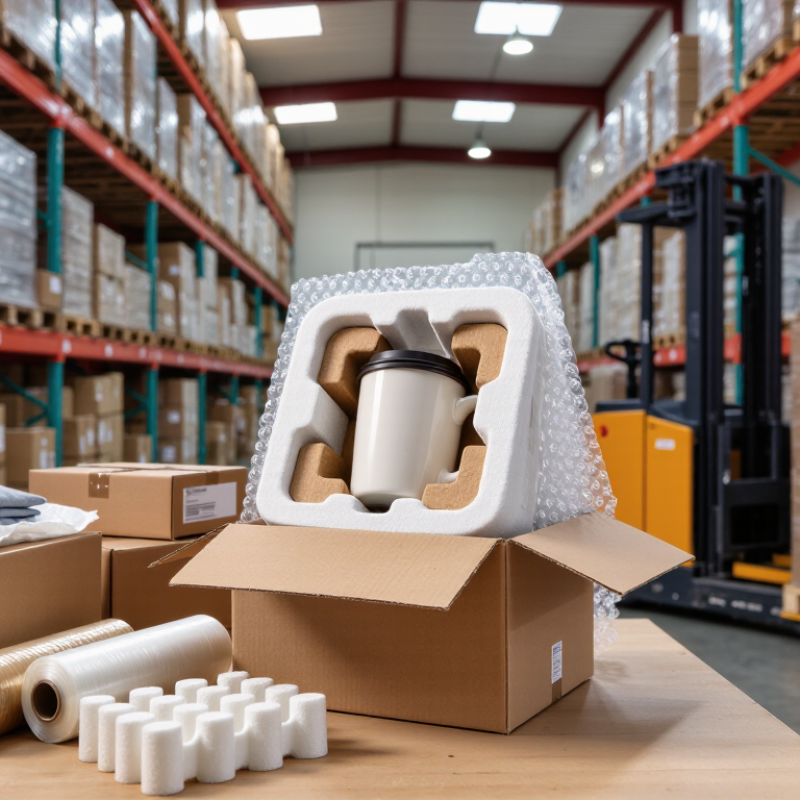
Global shipping needs more than a strong carton. Packaging decisions should begin with shipment risks, then connect with ISO 18601 principles. This standard supports packaging optimization, material efficiency, and recovery across the packaging life cycle. The 2023 UNEP report estimates that 19–23 million tonnes of plastic enter aquatic ecosystems annually. That figure makes unnecessary plastic harder to justify. Choose fiber-based cushioning where it protects the product adequately. Avoid empty space, but do not compress fragile items tightly.
Use ISTA 3A distribution testing to reproduce common parcel hazards. These include handling drops, vibration, compression, and temperature or humidity changes. Test the exact packed product. A small electronic device in a 40-centimeter carton behaves differently from the same device in a tight mailer. Record product damage, seal failure, corner collapse, and internal movement. Weak points become visible.
The World Bank’s 2023 Logistics Performance Index assessed logistics conditions across 139 economies. Its findings reinforce one practical lesson: international shipments face uneven infrastructure and handling quality. Select packaging with a realistic distribution profile, not an ideal warehouse route. A test laboratory can help define suitable sequences and severity levels. ISTA 3A is not a universal guarantee. A perfect test is still imperfect. Recheck packaging after supplier changes, seasonal humidity, or new destinations. That assumption can fail.

Global shipping in 2026 demands more than attractive packaging. Select materials according to shipment weight, product fragility, and route hazards. A 20-kilogram metal component needs different protection from a delicate glass instrument. Measure the packed product first. Then review compression, impact, vibration, and moisture risks.
ASTM D4169 provides a practical testing framework for shipping containers and systems. Its distribution cycles represent handling environments, including vehicle transport, warehouse stacking, and manual drops. Choose a test cycle that resembles the actual route. Select an assurance level that matches the product’s value and vulnerability. Higher assurance usually requires stronger packaging and more testing. It also increases cost and material use.
Use edge protection when cartons face repeated stacking. Add cushioning when internal movement could create damage. Keep fragile parts away from carton walls. A simple drop test can expose weak corners quickly. It may also reveal an unexpected problem: the cushion works, but the closure fails. The first design is rarely perfect. Recheck results after changing carton size, fill weight, or pallet pattern. Humidity matters too. Paper-based materials can lose strength during long ocean routes. Do not rely only on laboratory data. Compare test conditions with real distribution records, photographs, and damage reports. That assumption can fail. A qualified packaging specialist should document the product weight, hazard profile, test cycle, acceptance criteria, and inspection findings before approving production.
ASTM distribution-testing schedules use lower nominal free-fall heights as package gross weight increases. Use this relationship as an initial packaging-screening reference: heavier shipments generally require stronger corrugated structures, reinforced corners, and improved internal load distribution. For fragile products, combine the appropriate weight-based package strength with cushioning and product-specific fragility limits. Final packaging validation should consider the applicable ASTM D4169 distribution cycle, assurance level, vibration, impact, compression, climate, and handling hazards.
Dangerous goods require more than a strong carton. Choose packaging according to the substance, packing instruction, quantity, and transport mode. Under the IATA Dangerous Goods Regulations 67th Edition, air shipments must meet specific packing, marking, labeling, and documentation requirements. A UN 4G box is a fiberboard combination packaging approved through performance testing. However, its approval does not cover every dangerous goods entry.
Check the UN specification marking before packing. Confirm the packaging group, maximum gross mass, and permitted inner containers. Inner packagings must remain compatible with the contents and stay secure during vibration, pressure changes, and handling. Use cushioning that prevents movement without damaging closures. I have seen otherwise suitable boxes fail because bottles touched each other. Small details matter.
Tips: Keep the box dry and undamaged. Follow the exact packing instruction. Verify the shipper’s declaration. Check airline variations before dispatch. Photograph the completed package for internal records. Staff should receive current, role-specific training. Regulations can change, and assumptions become expensive. Review the 67th Edition against the latest carrier requirements before each shipment. When uncertain, ask a qualified dangerous goods specialist to confirm the packaging design.
How to Choose Packaging Items for Global Shipping in 2026?
Dimensional weight can cost more than the product itself. Carriers usually compare actual weight with volume-based weight. A common formula is length × width × height in centimeters, divided by 5,000. For example, a 40 × 30 × 20 centimeter carton creates 24,000 cubic centimeters. Its dimensional weight becomes 4.8 kilograms, even when the product weighs only 3.2 kilograms. Measure twice. According to the U.S. Census Bureau, e-commerce represented 16.1% of total U.S. retail sales in 2024. Small packaging errors therefore multiply across international orders.
Carrier size limits also deserve early testing. A 60 × 40 × 40 centimeter carton has a length-plus-girth measurement of 220 centimeters. That figure may exceed a service threshold, creating surcharges or rejection. Check each destination’s maximum length, girth, and dimensional divisor before approving a carton design. The 2024 State of Logistics Report estimated U.S. business logistics costs at 8.7% of GDP in 2023, showing how quickly transport inefficiencies become financial pressure. Use a snug carton, but leave space for cushioning and compression. Over-tight packing can damage corners; excessive void fill increases volume. Small changes matter. A packaging trial should record carton dimensions, packed weight, dimensional weight, damage results, and repacking time. The first design is rarely perfect. Test irregular products separately, because one universal box often looks efficient on paper but performs poorly in real distribution.
How to Choose Packaging Items for Global Shipping in 2026?
Packaging selection now requires evidence, not attractive sustainability claims. ISO 14001 evaluates an organization’s environmental management system, not a box’s recycled content. The ISO Survey 2022 recorded 529,853 ISO 14001 certificates across 141 countries and economies. This scale shows the standard’s relevance, but certification alone is not enough. Ask suppliers for the certificate scope, audit date, production site, and environmental objectives. A certificate covering an office may not cover the factory making your cartons.
Recycled-content targets also need product-level verification. The OECD’s Global Plastics Outlook reported that only 9% of plastic waste was recycled globally. For shipping materials, request declarations showing post-consumer and pre-consumer content separately. Check whether percentages apply by weight, component, or complete package. A padded mailer may contain recycled film, but its adhesive layer and label can complicate recovery. Small details matter.
Use chain-of-custody records, laboratory test results, and supplier invoices where practical. Compare these records with recycled-content targets in your destination markets and customer contracts. Do not accept “eco-friendly” as a specification. I have seen packaging pass a recycled-content review but fail drop testing after humidity exposure. That mistake creates damaged goods and unnecessary replacement shipments. Material validation should therefore include compression, vibration, moisture, and temperature testing. The process is not perfect. Data can be incomplete, and targets may change before 2026 ends. Keep an evidence register and review it quarterly.
| Packaging Item | Recommended Material | 2026 Recycled-Content Target | Global Shipping Function | ISO 14001 Validation Evidence | Performance Checks | End-of-Life Route |
|---|---|---|---|---|---|---|
| Corrugated Shipping Carton | Recycled-content corrugated fiberboard with water-based printing | 80% or higher recycled fiber | Primary outer pack for parcel, air, road, and container shipments | Current ISO 14001 certificate; certificate scope covering the relevant manufacturing site; documented environmental objectives and legal-compliance evaluation | Edge Crush Test, box compression, dimensional verification, and distribution testing using ASTM D4169 or ISTA procedures | Widely recyclable through established paper-recycling systems when clean and dry |
| Paper-Based Void Fill | Unbleached recycled kraft paper or crumpled paper cushioning | 80% or higher recycled fiber | Prevents product movement and reduces impact inside cartons | ISO 14001 certificate for the converting site plus material traceability and documented waste-reduction targets | Compression recovery, vibration resistance, abrasion check, and carton fill-efficiency review | Paper recycling where local collection accepts the grade |
| Molded Fiber Insert | Molded pulp made from recycled paper fiber or agricultural fiber | 70% or higher recycled or recovered fiber | Product immobilization and shock absorption for fragile goods | ISO 14001 certificate, fiber-source declaration, restricted-substance statement, and process-water management records | Drop testing, stacking assessment, humidity conditioning, and fit-tolerance inspection | Paper recycling or industrial composting only when the complete item meets the applicable local requirements |
| Paper Shipping Mailer | Recycled kraft paper with a water-based coating or recyclable paper adhesive strip | 60% or higher recycled fiber | Lightweight packaging for non-fragile apparel, documents, and small products | ISO 14001 certificate for the paper-converting facility and evidence that coatings and adhesives are controlled for recyclability | Tear resistance, seam strength, moisture exposure, and automated sorting compatibility | Paper recycling when plastic windows, films, and incompatible labels are absent |
| Stretch Film | Recycled-content polyethylene film with controlled post-consumer or post-industrial content | 30% recycled polyethylene, subject to load-performance validation | Unitizes cartons on pallets and protects against dust and light moisture | ISO 14001 certificate, recycled-content mass-balance records, and documented energy and waste indicators | Puncture resistance, elongation, holding force, pallet stability, and cold-temperature performance | Store for polyethylene film recycling where a dedicated collection stream exists |
| Polyethylene Air-Cushion Film | Recycled-content polyethylene film with minimal ink and removable labels | 30% recycled polyethylene where barrier and seal performance permit | Low-weight cushioning for lightweight and medium-fragility products | ISO 14001 certificate, verified recycled-content declaration, and evidence of film scrap recovery | Burst strength, air-retention test, puncture resistance, and vibration testing | Polyethylene film recycling where collection infrastructure is available |
| PET Strapping | Recycled polyethylene terephthalate strapping for palletized loads | 30% or higher recycled PET | Secures heavy cartons and unit loads during long-distance handling | ISO 14001 certificate, batch-level recycled-content documentation, and process scrap-recovery data | Tensile strength, weld strength, elongation, strap relaxation, and pallet-load testing | PET recycling after removal from the load and separation from incompatible materials |
| Moisture Barrier Liner | Recyclable polyethylene liner or coated paper selected according to product sensitivity | 30% recycled polyethylene, or 60% recycled fiber for recyclable coated paper | Protects goods from condensation, humidity, and short-term exposure to water | ISO 14001 certificate, material composition declaration, and evidence that the barrier layer does not prevent the intended recycling route | Water-vapor transmission, seam integrity, humidity conditioning, and transit simulation | Use the recycling route appropriate to the dominant material and local collection rules |
| Desiccant Sachet | Silica gel or clay desiccant in a paper-based sachet with controlled packaging materials | Use recycled paper for the outer sachet where safety and moisture performance allow | Controls humidity inside sealed cartons, containers, and product packaging | ISO 14001 certificate, chemical safety documentation, and evidence of controlled waste and spill procedures | Moisture-adsorption capacity, sachet seal strength, leakage inspection, and product compatibility review | Dispose of contents according to the safety data sheet; recycle the outer packaging only when accepted locally |
Get Free Estimate!