Where to Find Top Packaging Container Suppliers in China?
Finding dependable packaging container suppliers in China takes more than comparing prices on a marketplace. The right partner should match your product, production volume, quality expectations, and delivery schedule. China has established manufacturing clusters for plastic, glass, metal, and paper-based packaging. Yet location alone does not prove a supplier is capable. Details matter.
Start by defining the container’s material, capacity, dimensions, closure, and intended use. Then ask shortlisted suppliers for current product specifications, sample options, minimum order quantities, and realistic lead times. A sample can reveal issues that product photos hide: a loose cap, uneven wall thickness, or a label that wrinkles around a curved surface. Not always obvious. Confirm whether the company manufactures the item itself or coordinates production through another factory. That distinction may affect communication, customization, and quality control.
Reliable sourcing also depends on clear checks. Compare written quotations line by line, including tooling, packaging, shipping terms, and any testing fees. Ask how the supplier inspects incoming materials and finished goods, and request relevant records where appropriate. Video calls, factory visits, and third-party inspections can provide useful evidence, though none guarantees a perfect order. Small inconsistencies deserve attention. A supplier that answers technical questions clearly and flags limitations may be more dependable than one promising everything. This guide explains where to search, how to assess candidates, and what to verify before placing an order. The process takes patience. Sometimes, the best choice is not the cheapest one.

Classify Container Types in China’s ¥1.15 Trillion Packaging Sector (2023)
China’s ¥1.15 trillion packaging sector covers several distinct container types, not one interchangeable market. The China Packaging Federation reported 2023 operating revenue of about ¥1.15 trillion for large-scale packaging enterprises. Its industry statistics classify production across paper and paperboard, plastics, metal, glass, and other packaging segments. The figure describes qualifying enterprises, not every workshop or supplier in China. That distinction matters when comparing quotations.
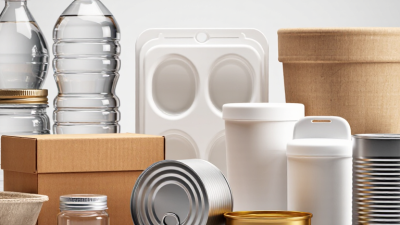
Paperboard cartons suit dry goods and stack efficiently in warehouses. Plastic containers offer light weight and flexible shapes, while metal cans provide rigidity and strong barrier performance. Glass containers are heavier but allow buyers to inspect the contents. Details matter. Ask suppliers about wall thickness, closure fit, sample consistency, and transport damage—not only unit price. A carton that looks sturdy on a desk may buckle under humid storage conditions.
The Federation’s categories describe manufacturing activity, so they do not always map neatly to a buyer’s finished product. A container may combine materials or require separate components. This is easy to overlook. Request material specifications and test samples under realistic filling, sealing, and shipping conditions. The headline market size helps establish scale, but it cannot verify a supplier’s capacity or quality. Check those directly before placing an order.
Map Supplier Hubs Using China’s 310.34 Million TEUs of Port Throughput (2023)
China’s ports handled 310.34 million TEUs in 2023, a useful signal when mapping packaging container suppliers. The figure reflects container traffic, not factory quality or capacity. Still, busy port regions can offer practical advantages: more shipping options, established freight services, and access to packaging materials.
Start with the Yangtze River Delta, Pearl River Delta, and Bohai Rim. These coastal manufacturing zones include many industrial clusters, but each has different strengths. Compare suppliers by container type, production process, and distance from the factory to the export terminal. A short drive on a map may become a long haul in traffic. That matters.
Use port throughput as a starting point, not a ranking. I would not treat it as a perfect map. Some capable factories sit inland and ship through a nearby river port or logistics hub. Ask for the manufacturing address, recent production photos, sample specifications, and a clear lead-time breakdown. Then check whether the quoted delivery term includes inland transport and port handling. Small details can change the real cost. A port can move millions of TEUs, yet your supplier still needs consistent quality checks, suitable packing, and confirmed space on the vessel.
Where to Find Top Packaging Container Suppliers in China? — Mapping Supplier Hubs Against China’s 310.34 Million TEUs of Port Throughput (2023)
| Port city / sourcing hub |
2023 container throughput |
Nearby manufacturing belt |
Packaging categories to explore |
Sourcing fit |
| Shanghai |
49.16 million TEUs |
Shanghai and the Yangtze River Delta, including parts of Jiangsu and Zhejiang |
Flexible packaging, paper cartons, food and beverage containers, industrial packaging |
Strong option for buyers seeking a broad supplier search area and extensive international shipping connections. |
| Ningbo-Zhoushan |
35.30 million TEUs |
Ningbo, Yuyao, Cixi and the wider Zhejiang manufacturing belt |
Plastic containers, injection-moulded packaging, household-product containers, paper packaging |
Worth exploring for plastic packaging and access to manufacturers across eastern Zhejiang. |
| Qingdao |
30.00 million TEUs |
Qingdao and the Shandong Peninsula |
Food and beverage packaging, paper cartons, plastic containers, industrial packaging |
A practical northern China option for buyers sourcing from Shandong and nearby production areas. |
| Shenzhen |
29.88 million TEUs |
Shenzhen, Dongguan and the Pearl River Delta |
Electronics packaging, protective packaging, printed cartons, plastic containers |
Consider for export-oriented sourcing and packaging requirements connected to electronics and consumer goods. |
| Guangzhou |
25.41 million TEUs |
Guangzhou, Foshan and the Pearl River Delta |
Food packaging, personal-care containers, paper packaging, plastic packaging |
Useful for buyers comparing packaging options across a large, diverse manufacturing region. |
| Tianjin |
22.19 million TEUs |
Tianjin, Beijing-Tianjin-Hebei and the Bohai Rim |
Industrial packaging, transport packaging, paper cartons, plastic containers |
A northern gateway to consider when suppliers or customers are based in the Bohai Rim region. |
| Xiamen |
12.25 million TEUs |
Xiamen and Fujian’s coastal manufacturing belt |
Food and beverage packaging, paper cartons, consumer-product packaging |
Consider for sourcing in Fujian and for shipment through a major southeastern coastal port. |
|
Context: China’s total port container throughput was 310.34 million TEUs in 2023. Port figures above are rounded published 2023 totals for selected ports; they are not supplier counts and should not be added to estimate the national total. Manufacturing belts and packaging categories are regional sourcing indicators, not a guarantee that a particular product is made locally. Verify supplier location, production capability, certifications, samples and export arrangements before placing an order.
|
Compare Factory Capabilities Across China’s Packaging Manufacturing Clusters
China’s packaging suppliers cluster around different strengths, so compare factory capabilities rather than choosing by location alone. Guangdong often offers broad plastic packaging and mold-making networks. Zhejiang has many producers of molded containers and printing services. Jiangsu factories may provide strong process control and capacity for larger production runs. These are tendencies, not guarantees. Details matter.
Compare factories using the same product brief. Ask whether molds, printing, and assembly happen in-house or through subcontractors. Request specifications for material, wall thickness, dimensions, and closure fit. Review recent inspection records and production samples, including the container’s base and rim. A low quote may exclude tooling or decoration. It may also assume a larger order than you need. One easy mistake is treating a polished sample as proof of consistent mass production.
Tips: Ask for a video walkthrough of the production line, then confirm daily capacity, lead time, and defect handling in writing. Small differences between samples and bulk runs can still happen.
Where to Find Top Packaging Container Suppliers in China?
Compare sourcing strengths across China’s major packaging manufacturing clusters.
The 1–5 ratings are a qualitative sourcing guide based on regional manufacturing and logistics profiles, not official production statistics. The Pearl River Delta is a strong fit for flexible packaging and export-oriented sourcing; the Yangtze River Delta offers broad supplier options; the Bohai Rim and Chengdu–Chongqing can be considered for paper and carton packaging.
Verify Food-Contact Containers Against GB 4806.7-2023
When comparing packaging container suppliers in China, ask whether each food-contact plastic item is assessed against GB 4806.7-2023. This Chinese national food safety standard applies to plastic materials and articles intended to contact food. It took effect on September 6, 2024. Check that the supplier’s documents refer to the current standard, not only an older report.
Be specific. A container for hot soup may need different evidence from one used for dry snacks. Share the food type, contact temperature, duration, and whether the item is reusable. Request test reports that identify the actual container, material, and color, then compare those details with your intended use. Look for relevant migration results and check that report samples match the production item. Small differences matter.
Paperwork can still be incomplete. Ask for batch traceability and clarify who arranged the testing and which laboratory performed it. A report is useful, but it does not automatically prove every size, color, or production batch is covered. Keep the answers on file. If details conflict, pause and ask for clarification before placing a large order. That extra check may feel tedious. It is worth doing.
Evaluate Supplier Credentials, Product Tests, and Export Readiness
Start with evidence, not a polished catalogue. Request the factory’s quality-system certificate, audit scope, batch records, and material traceability. Check that certificates name the actual production site and cover the container type you plan to buy. Paperwork matters.
Test samples under realistic conditions. Measure wall thickness, closure fit, leakage, and stacking strength, then record results by batch. For shipping packs, ask whether drop, vibration, and compression tests follow suitable ISTA or ASTM procedures. Test the real pack. A single passed sample is useful, but it cannot prove every production run will match.
Export capability needs the same scrutiny. Ask for a recent shipment timeline, packaging specifications, pallet dimensions, and a sample set of export documents. The World Bank’s 2023 Logistics Performance Index assessed 139 economies across six areas, including customs, tracking, and timeliness; these are practical checks for supplier readiness, not just freight-company concerns. UNCTAD reported that maritime trade grew 2.4% in 2023, while route disruptions complicated schedules. Request written lead times and a clear plan for delays. One imperfect detail deserves attention: a neat audit file can still conceal inconsistent shift-level checks, so speak with production staff or review records from several batches.