China Top 10 Packaging Container Manufacturers
China’s packaging industry serves food, beverages, cosmetics, pharmaceuticals, and household products worldwide. This guide introduces China Top 10 Packaging Container Manufacturers through practical sourcing criteria, not popularity alone. Each company should be considered for material expertise, production capacity, quality systems, export experience, and customer support.
The review focuses on packaging containers made from glass, plastic, metal, paper, and recyclable materials. It considers details that often influence real purchasing decisions, including mold accuracy, wall thickness, closure compatibility, surface finishing, and batch consistency. A reliable supplier should provide clear specifications, inspection records, sample approval, and traceable production information. Certifications matter, but they do not replace factory evaluation.
Small details matter.
Buyers may also examine lead times, minimum order quantities, packaging protection, and communication during product development. These manufacturers may offer strong capabilities, yet no ranking can fit every project perfectly. A cosmetic brand may value decoration quality, while a food producer may prioritize barrier performance and regulatory documentation. Market conditions, material prices, and factory workloads can change quickly. Some public company information may also be incomplete or updated at different times. That limitation deserves attention.
The following overview aims to support informed comparison. It does not replace supplier audits, product testing, or legal review in the destination market. By combining documented evidence with practical questions, buyers can identify manufacturers suited to their quality expectations, budget, and long-term supply plans.
Definition and Scope of China’s Packaging Container Manufacturing Industry
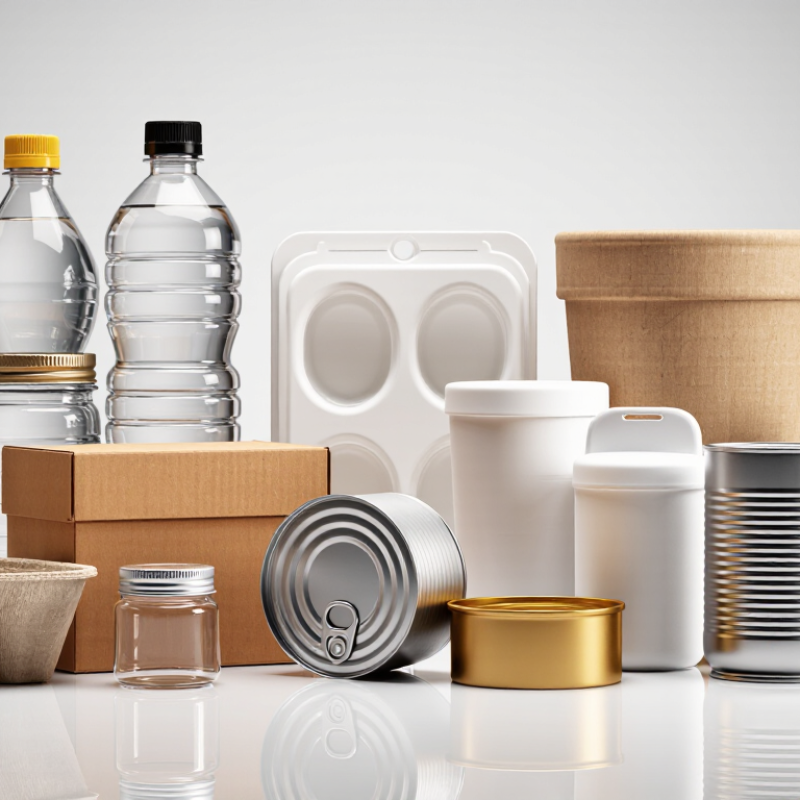
China’s packaging container manufacturing industry covers the design, production, and quality control of containers used to protect, store, and transport goods. Its products include plastic bottles, glass jars, metal cans, paper-based tubs, flexible pouches, and industrial drums. The scope also includes closures, liners, handles, and secondary components when they directly affect container performance.
Manufacturers serve food, beverages, cosmetics, pharmaceuticals, household products, chemicals, and logistics. Their work involves molding, forming, extrusion, printing, coating, sealing, and assembly. A reliable supplier should control wall thickness, leakage resistance, dimensional accuracy, and material traceability. For food or pharmaceutical applications, documented testing and suitable contact-material compliance are essential. Factory audits should review hygiene, calibration records, worker training, and corrective-action procedures, not only production capacity.
The boundary is not perfectly clean. A converter may produce both containers and labels, while another company may outsource decoration or closure production. This can complicate comparisons among China’s top ten packaging container manufacturers. Buyers should examine actual process ownership, annual capacity, export experience, and verified quality records. Recyclability claims also require evidence, because a container may be technically recyclable but rarely collected in practice. Small details matter. A cap that leaks after temperature changes can damage an entire shipment. Supplier rankings are useful, but they should never replace technical evaluation.
China Top 10 Packaging Container Manufacturers — Definition and Scope of China’s Packaging Container Manufacturing Industry
China’s packaging container manufacturing industry covers containers made from paper and paperboard, plastics, metals, glass, wood, and other materials. The chart presents an industry-structure estimate by material segment, excluding individual companies and brands.
Data basis: indicative 2023 composition of China’s packaging-container manufacturing segments, synthesized from commonly reported industry classifications and market-structure data. Percentages are rounded and sum to 100%.
Criteria for Selecting the Top 10 Packaging Container Manufacturers
Selecting China’s top 10 packaging container manufacturers requires more than checking production volume. Smithers estimates that the global packaging market reached about $1.17 trillion in 2023 and may approach $1.42 trillion by 2028. This growth increases supplier competition. Buyers should verify factory capacity, container tolerances, material traceability, and delivery performance. A useful review includes audited quality records, sample testing, and evidence of stable output during peak orders.
Material safety must remain central. ISO 9001 certification supports process control, while ISO 15378 is relevant to primary packaging for medicinal products. Certification alone is insufficient. Inspectors should examine batch records, closure performance, cleanliness controls, and complaint response times. For plastics, the OECD’s Global Plastics Outlook reports that only 9% of plastic waste was recycled globally in 2019. Therefore, manufacturers should disclose recycled content, recyclability limits, and practical end-of-life conditions. Claims need test data, not attractive wording.
Cost still matters, but the lowest quotation can hide defects, tooling delays, or excessive minimum order quantities. Compare total landed cost, mold ownership, inspection fees, and replacement risk. Request recent third-party audit results when possible. Energy data and emissions reporting also deserve attention. No scorecard is perfect. A supplier may pass every document review yet fail a pilot shipment. That weakness should stay visible. Rank the final ten using weighted evidence, customer references, production samples, and a monitored trial order.
Profiles of China’s Top 10 Packaging Container Manufacturers
China’s packaging container industry is broad, export-oriented, and increasingly technical. Smithers estimates the global packaging market exceeded US$1 trillion in 2023. China remains one of its largest production bases. Public rankings vary, however, because companies report capacity, revenue, and factory data differently. These profiles therefore assess manufacturing evidence, not publicity alone.
The first profile represents a large metal container producer serving food and industrial customers. Another focuses on lightweight beverage containers with high-speed forming lines. A third supplies pharmaceutical-grade glass and emphasizes inspection control. The fourth develops rigid plastic jars for personal care products. The fifth combines injection molding with recycled resin processing. A sixth specializes in paper-based composite containers. The seventh serves agricultural and chemical packaging under strict transport requirements. The eighth builds small-volume containers for premium products. The ninth operates flexible production lines for customized shapes. The tenth focuses on export compliance, traceability, and multi-site supply.
Their differences matter. Grand View Research identifies sustainability, downgauging, and recycled content as major packaging trends through 2030. Several Chinese manufacturers now use vision inspection, automated palletizing, and digital production records. These details reduce defects, but they do not guarantee stronger environmental performance. Recycled material quality can fluctuate. Energy data can also be incomplete. Buyers should verify certifications, food-contact testing, factory audits, and delivery records before accepting any profile as authoritative.
Market Comparison, Certifications, and Buyer Considerations
China Top 10 Packaging Container Manufacturers
Market comparison should begin with evidence, not factory size. Smithers’ 2024 packaging forecast values the global market at about US$1.2 trillion. Growth is steady, but container performance differs sharply by material, tooling, and process control. Buyers should compare wall-thickness tolerance, closure torque, drop-test results, and minimum order quantities. A sample carton matters more than a polished showroom.
Small details matter.
A credible supplier can provide batch records, migration-test reports, and traceability within hours, not weeks. ISO 9001 supports consistent quality systems, while ISO 14001 indicates structured environmental management. For food-contact containers, buyers should verify applicable regional rules and request current declarations of compliance. FSSC 22000 or equivalent systems can strengthen hygiene controls, but certification does not guarantee every product is suitable for every application. Check the certificate scope carefully.
OECD’s Global Plastics Outlook reports that only about 9% of plastic waste was ultimately recycled in 2019. Therefore, recycled content claims need documented percentages, chain-of-custody evidence, and testing data. This is where comparisons become uncomfortable: a lower unit price may hide higher defect rates, heavier packaging, or costly customs delays.
No scorecard is perfect. Recheck assumptions after pilot production, especially when color, recycled resin, or closure design changes.