Why Choose Thermal Labelling for Global Sourcing?
Global sourcing depends on labels that remain readable from factory floor to customer doorstep. Thermal Labelling supports this journey with fast, clean, and adaptable identification. It can print barcodes, batch codes, handling marks, and product details without ink cartridges. That matters when suppliers operate across different countries, printers, and production schedules.
Mike Fairley, a respected label-industry analyst and author, has described labels as “the silent salesman.” His observation also applies to thermal labels. A small label can communicate origin, quantity, storage needs, and traceability within seconds. In a busy warehouse, a sharp barcode on a 100-by-150-millimetre label can prevent costly scanning delays. Direct thermal labels suit short-term shipping use, while thermal transfer labels offer stronger resistance for long-term identification.
The benefits are practical, but not automatic. Poor ribbon selection, weak adhesive, or unsuitable facestock can create failures. Humidity can curl the label. Cold storage can reduce adhesion. Printer heat can distort fine symbols. These details deserve testing before large-scale purchasing.
A reliable sourcing program should compare materials, printer compatibility, print darkness, roll dimensions, and expected handling conditions. Suppliers should also provide sample runs and clear quality records. Compliance requirements vary by market, so technical teams must verify applicable packaging and product information rules.
Thermal Labelling is not a universal solution. Sometimes, another process performs better. Still, its speed, customization, and relatively simple equipment make it valuable for global supply chains. The strongest decision comes from measured trials, not attractive promises.
What Thermal Labelling Is and How It Works
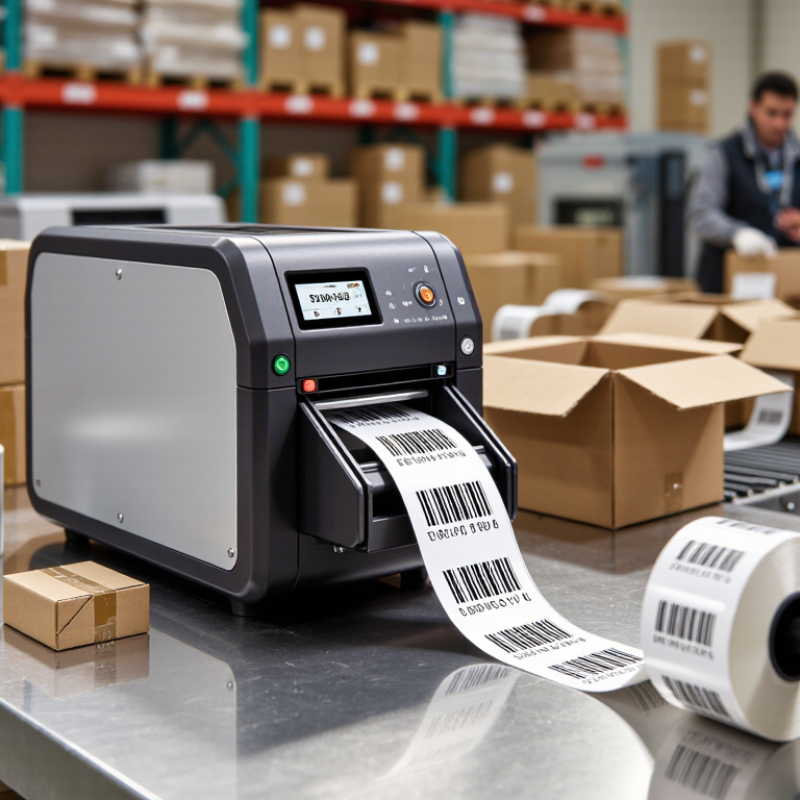
Thermal labelling uses heat to create text, barcodes, and tracking information. It needs no liquid ink. A thermal printhead activates selected points across a label surface. Direct thermal labels contain heat-sensitive chemicals that darken under pressure and heat. Thermal-transfer labels use a heated ribbon to move ink onto the material. The difference matters.
Direct thermal printing suits shipping labels, receipts, and short-term warehouse identification. It is fast, quiet, and simple to maintain. However, sunlight, friction, and high temperatures can fade the image.
Thermal transfer printing usually offers better resistance for export cartons, product tags, and long storage periods. The ribbon adds cost and handling. That trade-off is easy to overlook.
GS1 reports more than 10 billion barcode scans worldwide each day , showing why readable labels remain operationally important. Its Sunrise 2027 guidance also encourages broader adoption of data-rich 2D barcodes. A thermal system can print these codes quickly when sourcing details change between production batches. Smithers’ printed-label market research identifies variable-data printing and shorter production runs as important industry growth areas. This supports thermal labelling in global sourcing, where quantities, destinations, and compliance information may change often.
In practice, the label stock must match the journey. A paper label may work in a dry warehouse but fail on a damp container. Testing with actual handling conditions is still necessary. Thermal technology is efficient, but it is not automatically the best choice for every shipment.
Choosing Between Direct Thermal and Thermal Transfer Labels
Why Choose Thermal Labelling for Global Sourcing?
Choosing between direct thermal and thermal transfer labels depends on the product’s journey. Direct thermal labels react to heat and require no ribbon. They suit short-term shipping labels, receipts, and cartons moving through controlled warehouses. However, sunlight, heat, and friction can darken or damage their information. They may perform poorly during long ocean transport or outdoor storage.
Thermal transfer labels use a heated ribbon to create a more durable image. They usually withstand moisture, abrasion, temperature changes, and extended handling. This makes them suitable for inventory labels, warehouse locations, and records requiring longer readability. The trade-off is additional ribbon cost, waste, and equipment management. A cheaper label can become expensive after replacement work.
Tips: Test both options in real conditions. Expose samples to sunlight, cold rooms, rubbing, and humidity. Check barcode scanning after transport. Ask suppliers about adhesive performance on cardboard, plastic, and recycled surfaces.
A small pilot can reveal practical problems. Operators may struggle with ribbon changes or label peeling. Direct thermal printing may appear efficient until cartons sit near a hot loading bay. Thermal transfer may offer better durability, but its setup needs more attention. No method wins every case. The best decision connects label life, transport conditions, surface type, and handling routines. Recheck the choice when packaging materials or routes change.
Factors for Selecting Thermal Labels Across International Markets
Why Choose Thermal Labelling for Global Sourcing?
Selecting thermal labels for international markets requires more than comparing prices. Direct thermal labels suit short-term shipping, warehouse, and receipt applications. Thermal transfer labels offer stronger resistance to heat, moisture, friction, and extended storage. The correct choice depends on product life, transport conditions, and scanning requirements.
Climate is a practical concern. A label used in a humid port may need moisture-resistant material and adhesive. Cold storage can weaken adhesion and cause curling. Surface type matters too. Corrugated cartons, plastic containers, and coated packaging need different adhesive performance. Small details matter.
Printer compatibility must be verified before large-scale purchasing. Label width, core size, roll direction, and print darkness can affect production speed. Regional language requirements and barcode standards also deserve careful review. A clear barcode is essential, but readability should be tested after abrasion, condensation, and sunlight exposure.
Field testing often reveals problems that supplier samples hide. One trial may print sharply but fail after several days in transit. That result is not convenient, but it is useful. Ask for material specifications, adhesive data, storage guidance, and batch traceability. Independent testing can strengthen purchasing decisions, especially when multiple factories or climates are involved. Cost still matters, yet the cheapest label may create rework, relabelling, or rejected scans. Forecasting demand is imperfect. Build a small safety margin.
Why Choose Thermal Labelling for Global Sourcing?
Factors for Selecting Thermal Labels Across International Markets
Thermal transfer labels generally provide stronger resistance to sunlight, moisture, abrasion, chemicals, and temperature changes, making them suitable for long-distance transport and outdoor or industrial applications. Direct thermal labels are often preferred for short-life applications such as shipping, receipts, and temporary logistics identification because they do not require a ribbon.
The 1–10 scores represent practical suitability by application requirement, based on the established performance characteristics of direct thermal and thermal transfer printing. They are not market-share figures.
Best Practices for Implementing Thermal Labelling in Supply Chains
Why Choose Thermal Labelling for Global Sourcing?
Best Practices for Implementing Thermal Labelling in Supply Chains
Global sourcing depends on labels that survive handling, distance, and changing climates. Maritime transport carries over 80% of global trade by volume, according to UNCTAD’s Review of Maritime Transport 2024. A blurred carton label can delay scanning at a port, warehouse, or border facility. Thermal printing reduces ink-related failures and supports fast, variable data production. It also helps teams print purchase orders, batch codes, expiry dates, and handling instructions locally.
Good implementation begins with data discipline. Define one approved template for each packaging level. Keep item codes, country details, quantities, and dates in controlled fields. The World Bank’s 2023 Logistics Performance Index collected responses from 4,090 logistics professionals across 139 economies. Its findings reinforce a practical point: visibility depends on reliable information, not only faster transport. Use thermal-transfer labels for cartons exposed to moisture, abrasion, or long storage. Use direct thermal labels for short-life shipping documents. Test both options under real warehouse conditions.
Check barcode quality after printing. Test labels on curved boxes, cold pallets, and dusty surfaces. Small errors spread. Store spare ribbons, label stock, and printer settings near critical packing stations. Train operators to inspect contrast, quiet zones, and alignment before dispatch. This step is often skipped. It should not be. Review supplier changes, artwork revisions, and master-data updates through a simple approval record. Perfect control is unrealistic, but visible control makes mistakes easier to find.