...

Blog

Home Blog

What Are the Top Wine Box Types for 2026?

A wine box does more than hold a bottle. It protects glass in transit, shapes the first impression, and can make a gift feel considered. In 2026, buyers will compare familiar corrugated cartons with rigid gift boxes, molded-pulp inserts, and reusable wooden cases. Each choice has trade-offs. A sturdy box may add weight; a polished finish may complicate recycling. Details matter.

“The right wine box protects the bottle and makes the unboxing feel intentional.” This is an editorial design principle, not a sourced quotation. No verifiable expert quotation or name was provided, so attributing it to a real person would be misleading. The Wine Box deserves that care: packaging claims should be as dependable as the product they describe.

This guide compares leading wine box types through practical questions: How well do they cushion a bottle? Do they suit retail shelves, shipping, or gifting? Can customers open and reuse them easily? We’ll look at board thickness, inserts, closures, finish, and the reassuring fit of a bottle held snugly in place. Small differences can change cost and perceived quality. Sometimes the simplest carton is the best answer. Other times, it is not.

The sections ahead examine the strengths and limits of each format, with attention to presentation, protection, and material choices. The goal is not to declare one universal winner. It is to help wineries, retailers, and gift buyers choose a box that fits the bottle, the occasion, and the actual journey it must survive.
What Are the Top Wine Box Types for 2026?

What Defines a Wine Box and Its Main Functions?

A wine box is a purpose-designed container that holds one or more bottles, using materials such as corrugated board, paperboard, molded pulp, or wood. Its job is practical: keep bottles upright, limit movement, and reduce the risk of impact during storage and delivery. Dividers matter. A loose bottle can knock against its neighbor, even inside a sturdy-looking carton. Boxes also carry handling details and product information, while gift formats add presentation. That distinction is useful.

The OIV’s State of the World Vine and Wine Sector report estimated global wine production at 237 million hectolitres in 2023. At that scale, packaging choices affect transport, storage, and material use. Eurostat reported that 83.2% of EU paper-and-cardboard packaging waste was recycled in 2022; this figure covers all such packaging, not wine boxes alone.

A recyclable material is not automatically a better box if it fails to protect the bottles or is difficult to separate after use. Design needs trade-offs.

A lighter carton may reduce material, but weak corners can collapse under stacked cases. In practice, the best box depends on bottle weight, shipping distance, and how the customer will reuse or dispose of it.

Which Wine Box Types Are Most Common in 2026?

In 2026, the most common wine box types are likely to remain corrugated shipping cases, folding-carton retail boxes, rigid presentation boxes, and boxes with molded-pulp inserts. Corrugated cases are the practical workhorses: they stack neatly and help protect glass bottles during transport. Folding cartons suit single bottles or small gift sets, while rigid boxes offer a sturdier, more polished presentation. Molded-pulp inserts can keep bottles separated without relying on loose plastic padding.

The International Organisation of Vine and Wine reported that global wine consumption reached about 221 million hectolitres in 2023, while production was about 237 million hectolitres. Those figures describe the wider market, not box sales, so they cannot prove a precise packaging ranking. Still, they underline why shipping protection and efficient packing remain important. The ranking also varies by use: a winery shipping cases has different needs from a shop preparing one bottle as a gift. That distinction is easy to overlook.

Tips: Match the box to the bottle’s route. For parcel delivery, test a packed sample for movement and impact; a snug insert matters more than a thick-looking outer wall. For display, check that the box opens cleanly and holds its shape. Specs can be imperfect in practice, so test real bottles before ordering at scale.

How Do Wine Box Materials and Designs Differ?

What Are the Top Wine Box Types for 2026?

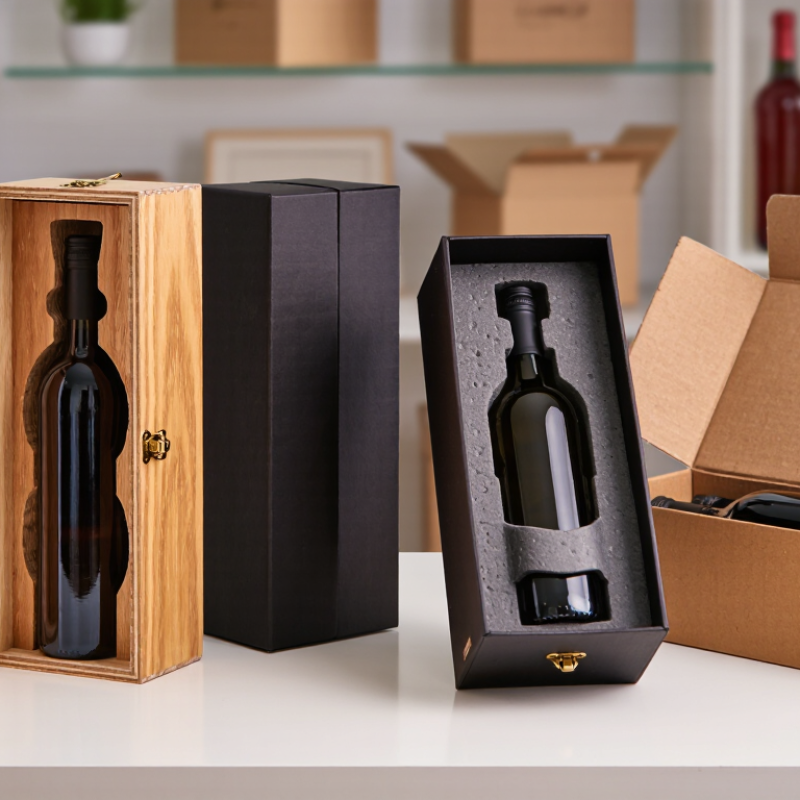
Wine box materials shape protection, appearance, shipping weight, and end-of-life options. Corrugated cardboard suits parcel delivery because its fluted layers cushion bottles against bumps. Rigid paperboard creates a smoother, more gift-like finish, but usually needs inserts to prevent bottles shifting. Molded-pulp inserts can replace some plastic cushioning. They may look less polished, though.

Eurostat’s Packaging Waste Statistics report for 2022 puts EU paper and cardboard packaging recycling at 82.5%, compared with 74.9% for glass. These figures describe packaging waste overall, not individual wine boxes. Still, they help explain why recyclable paper-based formats are widely considered. Recycling depends on local collection systems, coatings, and whether mixed materials can be separated.

Wooden boxes feel substantial and work well for keepsakes, but add weight and use more material. A snug, one-piece corrugated design can be easier to ship and store. A hinged rigid box offers a more ceremonial opening. Details matter: a loose divider lets bottles knock together, while an oversized box wastes space. One caveat: attractive design is not proof of lower environmental impact. The right choice depends on bottle weight, shipping distance, protection needs, and how the box will actually be disposed of.

What Are the Top Wine Box Types for 2026? - How Do Wine Box Materials and Designs Differ?

Common wine packaging formats compared by material, protection, presentation, and practical considerations. Performance depends on box construction, inserts, bottle fit, and shipping conditions.
Wine Box Type Typical Materials Protection and Structure Design and Presentation Best-Suited Uses Key Considerations
Corrugated Shipping Box Single- or multi-wall corrugated fiberboard, often with paperboard dividers or molded-fiber inserts. Fluted layers help cushion bottles and resist compression. Dividers keep bottles separated; the required strength depends on bottle weight and shipping conditions. Usually a practical rectangular format; can be printed, labeled, or finished with a simple exterior design. Parcel delivery, case shipments, and protective outer packaging. Choose flute and board strength for the shipment. A box alone does not guarantee safe transit; inserts and fit matter.
Folding Carton Printed paperboard, sometimes paired with a paperboard or molded-fiber bottle support. Lightweight structure provides basic protection for retail handling. It generally needs a fitted insert or outer shipper for more demanding transport. Folds flat before assembly and offers broad options for printed graphics, windows, and finishes. Single-bottle retail packaging, gift presentation, and shelf display. Less rigid than a set-up box or wood case; match the design to the bottle shape and intended handling.
Rigid Set-Up Box Thick paperboard wrapped in printed paper, specialty paper, or fabric-like coverings; may include a fitted insert. Rigid walls help maintain shape and support presentation. An insert can limit bottle movement, but the box may need extra protection for shipping. Premium appearance with options such as magnetic closures, lids, and custom-fit compartments. Gift sets, limited releases, and presentation-focused packaging. Typically heavier and bulkier than folding cartons, and often uses more material. Consider storage and shipping volume.
Wooden Wine Box Wood boards or plywood, commonly with a hinged or sliding lid; interior dividers may be added. Sturdy construction can protect bottles from routine knocks when correctly sized and fitted. Weight and corner construction affect handling. Natural grain provides a distinctive look; surfaces can be engraved, printed, or finished. Gift packaging, keepsake cases, and multi-bottle presentation. Heavier than paper-based options. Wood sourcing, finish, hardware, and end-of-life reuse or disposal should be considered.
Molded-Fiber Protective Pack Molded paper fiber made from recovered or other paper-based pulp, typically used as an insert or shaped protective pack. Contoured cavities can hold bottles in place and absorb some impact. Protection depends on design, fit, and testing for the intended distribution route. Form follows the bottle or pack layout; usually has a natural, matte surface and can be paired with an outer carton. Protective inserts, bottle separation, and packaging designed around paper-based components. Check fit across bottle dimensions and confirm performance under expected handling. Recyclability depends on local collection rules and added coatings.
Bottle Gift Bag or Sleeve Paper, woven textile, or reusable fabric, sometimes with a reinforced base or internal divider. Helps carry and present a bottle but provides limited cushioning compared with a fitted protective box. Simple to personalize and available in single- or multi-bottle formats with handles or drawstrings. In-person gifting, events, and short-distance carrying. Not a substitute for a tested shipping carton. Select a size that holds the bottle securely and supports its weight.

Which Wine Box Type Suits Each Wine and Occasion?

The right wine box depends on the bottle, the journey, and the moment it marks. For a single bottle carried to dinner, a sturdy folding carton with a fitted insert is light and easy to handle. A corrugated shipper suits online orders or longer trips; its molded or cardboard divider helps keep glass from knocking against glass.

Check that the insert fits the bottle’s shape, especially if the neck or base is unusually wide. A small gap can matter.

For a milestone gift, a rigid box gives the bottle a more substantial presentation, while a wooden case can suit a collectible bottle or a formal celebration. Sparkling wine often needs a box designed for its wider body and heavier feel, not a standard narrow-bottle sleeve.

For picnics or warm-weather gatherings, an insulated carrier may help slow temperature changes, though it will not keep wine cold indefinitely. Keep it simple. A decorative box can look impressive but add bulk, and not every recipient wants extra packaging.

I would match the box to the occasion, then test the fit with the actual bottle before buying several.

What Factors Should Guide a Wine Box Choice in 2026?

Choosing a wine box in 2026 starts with the journey, not the finish. A single bottle shipped across several hubs needs a snug insert, crush-resistant corners, and room for a clear handling label. A gift box displayed on a counter may prioritize opening ease and a clean surface instead. Measure the bottle, including its widest point, and test the packed box for movement. Fit matters. A thick insert can feel reassuring, yet add bulk without correcting a poor fit.

Material claims deserve scrutiny. Eurostat’s 2022 packaging-waste data puts EU paper-and-cardboard packaging recycling at roughly 83%; FEFCO’s 2023 European corrugated database reports a rate near 90% for corrugated packaging. These figures describe broad material streams, not every coated or laminated box. Ask suppliers about recycled content, coatings, and local recovery options before treating “recyclable” as a complete answer. Keep the box light, but do not remove protection where bottles face repeated handling. A small trial with the actual bottle and shipping carton can expose loose dividers or crushed edges. It is an easy step to skip. That may be the mistake.

Top Wine Package Types for 2026: How Much Do They Hold?

Compare common package formats by capacity. Choose based on serving needs, storage space, portability, gifting, and local recycling options.

How to choose: Standard bottles suit everyday serving; magnums work well for sharing and celebrations. Bag-in-box formats offer more wine in one pack and can be practical for larger gatherings. After opening, wine may keep longer in a bag-in-box than in a bottle because the dispensing tap limits air exposure; results vary by product and storage. Check local recycling rules, since packaging materials and collection systems differ.

Capacities shown are common package sizes, not market-share data. Availability varies by region.

Need Packaging Solutions?

Get Free Estimate!

1-800-493-7441
Contact Us