What Are the Top Stock Bulk Bags in 2026?
Stock Bulk Bags can look nearly identical on a warehouse pallet. Their real differences emerge under load: fabric weight, safe working load, liner compatibility, filling method, and discharge design. For buyers comparing readily available options in 2026, those details matter more than a low unit price. A bag that suits dry resin may not protect fine powder from moisture or leakage. Small details count.
Grand View Research estimated the global flexible intermediate bulk container market at about USD 4.5 billion in 2023 and projected growth through 2030. That forecast signals continued demand, but it does not rank individual stock bags or certify their performance. The Flexible Intermediate Bulk Container Association (FIBCA) provides industry guidance on FIBC selection and safe handling. Buyers should still check each supplier’s specifications, including capacity, lifting configuration, and any stated test documentation. A number on a product page is not the whole story.
This guide compares common stock-bag formats by material, construction, and practical use, helping buyers match a bag to its load and handling setup. It also flags trade-offs: a coated fabric may improve moisture resistance, yet it is not a substitute for appropriate storage. A named expert quotation cannot be responsibly included without a verifiable source; inventing one would weaken trust. Use the comparison as a starting point, then confirm the details with the manufacturer.
Understanding Stock Bulk Bags and Their Role in 2026
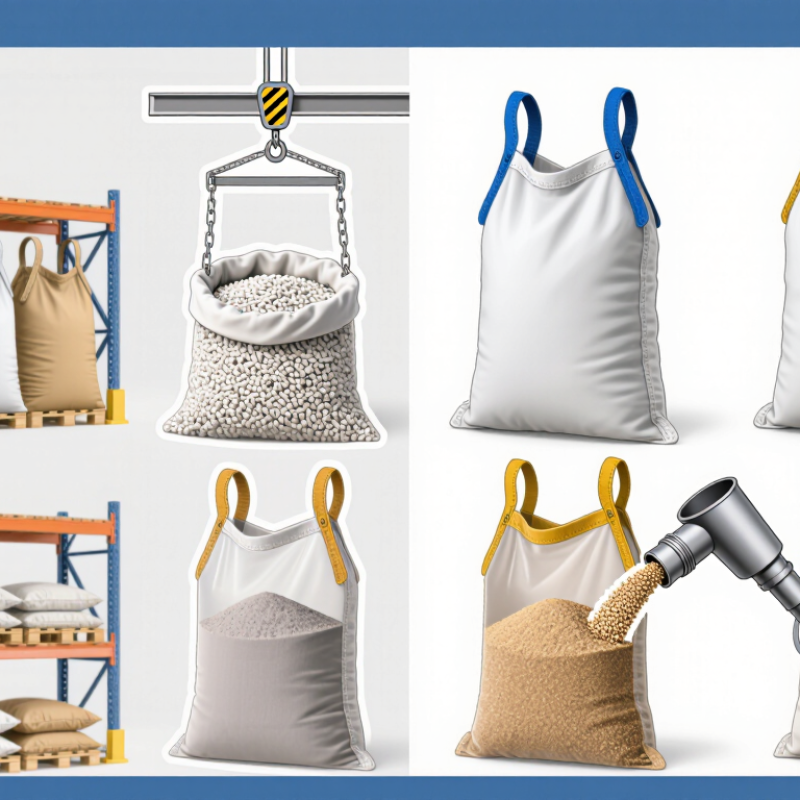
Stock bulk bags are ready-made flexible intermediate bulk containers held in inventory for common packing needs. In 2026, they help businesses respond to routine orders without waiting for a custom design. Typical options vary by capacity, dimensions, fabric weight, lifting loops, and top or bottom construction. That choice affects more than storage. A bag must fit the product, filling equipment, pallet, and handling method.
For example, a warehouse moving dry granules may need a wide opening for quick filling and a discharge spout for controlled unloading. A bag stored outdoors faces different risks; moisture and sunlight can weaken its fabric over time. Check the stated safe working load and follow the bag’s lifting instructions. Do not assume two bags of similar size can carry the same weight. Small details count. Stock items can improve availability, but they may offer fewer options for unusual loads or tight spaces. I have seen this trade-off treated as minor, when it can complicate daily handling. Before choosing, compare the bag’s specifications with the product’s density, storage conditions, and equipment. A practical fit is often more useful than the most elaborate specification sheet.
Key Specifications That Affect Bulk Bag Performance
A stock bulk bag’s performance starts with the load it must carry. Check the safe working load against the heaviest planned fill, not just the average one. Confirm the required safety factor and whether the bag is single-trip or intended for repeated use. A bag that looks sturdy can still fail if its rating does not match the handling cycle. Small details matter.
Dimensions affect filling, storage, and discharge. Measure the available pallet and hopper space, then check the bag’s filled shape. Fabric weight and weave influence strength, but heavier fabric is not automatically better. A coating can help limit moisture or dust passage; it does not make every bag waterproof. For outdoor storage, ask about UV resistance and follow the supplier’s exposure guidance. These specifications should be supported by clear product records, not appearance alone.
Construction matters during lifting. Inspect loop placement, seam design, and the condition of stitching, especially where loops meet the body. Choose a liner only when the material or process calls for one, since it can change filling and emptying behavior. For powders, the discharge spout and fabric permeability may affect flow and residue. It is easy to over-specify a bag and add cost without improving performance. I still check actual fill and lift conditions; paper specifications cannot capture every rough handling moment.
Industries and Materials Served by Stock Bulk Bags
Stock bulk bags serve agriculture, construction, manufacturing, and mineral handling. Farms use them for grain, seed, and animal feed; construction yards move sand, gravel, and dry aggregates. Manufacturers may pack resin pellets, powders, or processed ingredients. These are common uses, not a guarantee that one bag fits every product. Its safe working load, lifting loops, and discharge style should match the handling process.
Most stock bags use woven polypropylene, chosen for strength and practical storage. Coated fabric can help limit moisture entry, while an inner liner may suit fine powders or products needing extra containment. Neither feature makes a bag waterproof or automatically suitable for food contact. Confirm product compatibility, load limits, and handling conditions against the supplier’s specifications. Small details matter. Dusty powder can escape through seams, and damp storage can affect contents. Standard sizes are convenient, but sometimes they are the imperfect choice.
Tips: Check the rated load and dimensions before ordering. For fine, moisture-sensitive, or food-grade materials, ask about liner options, fabric construction, and documented suitability. Store bags off wet floors and inspect lifting loops before use. A quick check prevents costly surprises.
What Are the Top Stock Bulk Bags in 2026? — Industries and Materials Served by Stock Bulk Bags
Stock bulk bags are commonly used for construction materials, agriculture, fertilizers, food ingredients, and plastic resins. The chart compares approximate loose bulk densities of typical contents; actual values vary with product grade, moisture, and handling. Density is not the bag’s payload rating, so select a bag by its specified safe working load and product requirements.
How to Compare and Choose the Right Stock Bulk Bag
A stock bulk bag is only a good choice when its construction matches the load, filling method, and storage conditions. Start with safe working load, dimensions, and lifting loops. A bag that fits a pallet but blocks a forklift’s tines can slow every move. Fine powders may need a coated fabric and a secure closure; coarse materials often need less protection. Small details matter.
FIBCA’s published FIBC safety guidance describes common safety factors of 5:1 for single-use bags and 6:1 for multi-trip bags. These ratios are not permission to reuse any bag: check its label and reuse rating. ISO 21898 also sets design and testing requirements for FIBCs carrying non-dangerous goods. Ask for test documentation, not just a product description. A higher rating does not automatically mean a better fit.
Compare fabric weight, seam construction, discharge options, and lifting-loop design against the actual product. Check whether the bag must resist moisture, dust leakage, or abrasion during handling. It is tempting to choose by price alone; I would still question that shortcut. A low-cost bag can create extra handling time or product loss. Request a sample and test it with your filling line and pallet setup before ordering in volume.