...

Blog

Home Blog

Top 10 A4 Label Paper Suppliers for Global Buyers?

Choosing an A4 Label Paper supplier is not simply a price comparison. Buyers need dependable sheet dimensions, adhesive performance, print compatibility, and repeatable quality. A carton may look perfect on arrival, yet labels can curl near a warm printer or lift from a chilled jar. Small details matter. This guide introduces ten suppliers for global buyers and considers the practical questions behind their product claims.

The comparison focuses on paper options, face-stock consistency, adhesive choices, customization, packaging, and export experience. It also highlights information buyers should request, including sample sheets, technical specifications, and clear details about minimum order quantities. A lower quote can still bring extra costs. Not just price. Check how the supplier handles production changes, protective packing, and communication when a shipment does not match the approved sample.

To avoid inventing a real person’s credentials or quotation, this article uses a clearly identified editorial expert voice. Fictional sourcing specialist Mara Ellis offers this working principle: “A label is only reliable when the paper, adhesive, printer, and application work together.” Treat that line as an editorial summary, not a verified public statement. It reflects a useful starting point, though real performance depends on the intended surface and conditions. The supplier list is a shortlist, not a universal ranking. Ask for evidence, test samples on your own equipment, and document the results before placing a large order. Just one more check. Sometimes the sample performs well, and the production batch still needs scrutiny.
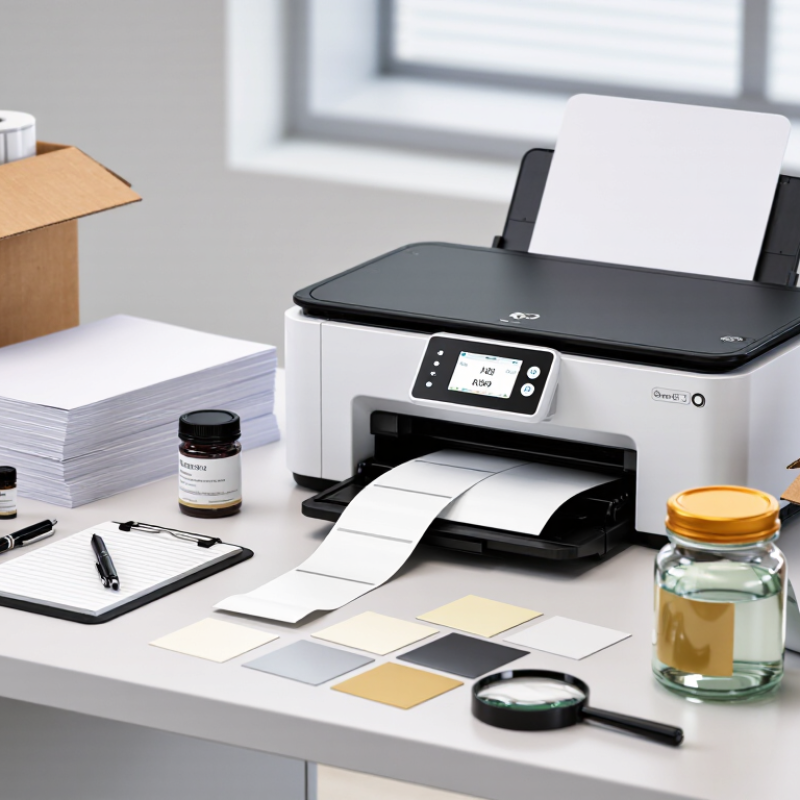
Top 10 A4 Label Paper Suppliers for Global Buyers?

Understanding A4 Label Paper and Its Main Types

A4 label paper is usually supplied as sheets measuring 210 by 297 millimetres, with labels arranged on a backing liner. The visible face may be matte or glossy, while the adhesive and liner determine how the sheet feeds and sticks. Small details matter. A curled corner can catch inside a printer, and a slightly misaligned template can shift every label on the page.

The main types differ by printing method and face material. Inkjet-compatible sheets absorb liquid ink, helping text and graphics dry cleanly. Laser-compatible sheets use surfaces designed to tolerate the printer’s heat. Some products are made for both, but that claim should be checked against the printer manual and a sample sheet. Paper facestock suits everyday address, filing, and product labels; synthetic films offer better resistance to moisture and handling.

Adhesive choice is another practical distinction. Permanent adhesive is intended to stay attached, while removable grades are designed for easier lifting from suitable surfaces. Performance still depends on surface texture, temperature, and application pressure. It is tempting to choose by label size alone, but a test print can reveal feed and alignment problems before a full pack is used. Even then, results may vary between printers.

Criteria for Evaluating A4 Label Paper Suppliers

A4 label paper suppliers should be evaluated on more than price and catalog range. Ask for clear specifications covering sheet size, paper weight, adhesive type, liner thickness, and moisture resistance. These details affect feeding, cutting, and label removal. Request samples from the same production grade offered for regular orders. Then print on them using your own equipment. Check for skewed feeding, ink smearing, curled edges, and adhesive that lifts after application.

Test it twice. A sample may behave differently after storage in a warm warehouse or damp shipping environment. Ask suppliers how they protect cartons, manage batch consistency, and handle quality complaints. For global orders, compare stated lead times, minimum quantities, packaging details, and the completeness of export documents. Confirm whether specifications can be kept consistent across repeat shipments. A neat specification sheet is useful, but it cannot replace a production trial. Some variation may still occur; record the batch number and test results before approving an order. A supplier’s willingness to discuss limitations can be as informative as a polished sales response.

Top 10 A4 Label Paper Suppliers for Global Buyers? - Criteria for Evaluating A4 Label Paper Suppliers

Use this comparison framework to assess suppliers without relying on unverified rankings. Score each criterion from 1 (poor) to 5 (excellent), then apply the suggested weighting. A4 sheet dimensions are 210 × 297 mm; confirm any additional tolerances with the supplier.

No. Evaluation Criterion What to Check Evidence to Request Suggested Weight Buyer Guidance
1 Sheet size and label layout A4 sheet size (210 × 297 mm), label dimensions, margins, pitch, and layout consistency. Technical drawing, dimensional specification, and samples measured against the agreed specification. 12% Confirm the layout matches the intended printer template; do not assume all A4 label sheets use the same layout.
2 Face-stock options Available paper types, surface finish, color, and stated basis weight or thickness. Product data sheets and physical samples for each proposed face stock. 10% Select stock according to print method, application, and required appearance; compare specifications on a like-for-like basis.
3 Adhesive performance Adhesive type and suitability for the intended surface, temperature range, and application conditions. Adhesive technical data, recommended-use conditions, and application-specific test results where available. 12% Test on the actual substrate and under expected storage and use conditions; adhesion varies by surface and environment.
4 Release liner quality Liner material, release behavior, flatness, and ease of label removal. Liner specification, sample sheets, and handling or dispensing test feedback. 8% Check that labels release cleanly without lifting prematurely or tearing during normal handling.
5 Printer and print-process compatibility Compatibility with the buyer’s laser or inkjet printer and print settings, as applicable. Printer compatibility statement and trial prints using representative equipment and artwork. 12% Run sheets through the intended printer and check feeding, print quality, smudging, and adhesive behavior.
6 Converting and finishing quality Die-cut accuracy, clean cuts, matrix removal, sheet edges, and absence of adhesive contamination. Pre-production samples, inspection records, and an agreed defect-acceptance specification. 10% Inspect both the sheet and individual label edges; poor converting can cause feed or peel problems.
7 Batch consistency and quality control Consistency of dimensions, print surface, adhesion, packaging, and lot traceability. Quality-control procedures, inspection records, lot identification, and corrective-action process. 10% Ask how nonconforming batches are identified and how complaints are investigated and resolved.
8 Regulatory and product documentation Availability of relevant safety, material, and market-specific compliance information. Current declarations or certificates relevant to the product and destination market; verify scope and validity. 8% Requirements depend on use and destination. Request only documentation applicable to the buyer’s product and market.
9 Export readiness and delivery reliability Export packaging, shipping-document capability, quoted lead time, and shipment communication. Written delivery schedule, sample export documents, packaging details, and shipment-status process. 10% Clarify the delivery term, destination responsibilities, packaging protection, and how delays are communicated.
10 Sustainability and sourcing transparency Availability of recycled or responsibly sourced paper options and substantiated environmental claims. Material declarations and, where claimed, valid certification details with the relevant scope. 8% Treat environmental claims as product-specific and verify supporting documentation rather than relying on general statements.
Total suggested weighting 100% Adjust weights to suit the application and destination market.

Scoring method: Rate each criterion from 1 to 5, multiply the rating by its weighting, and compare suppliers using the same specifications, samples, and evaluation conditions.

Profiles of 10 A4 Label Paper Suppliers for Global Buyers

These ten supplier profiles represent different strengths in the A4 label paper market. A regional sheet converter may offer flexible order sizes and shorter delivery routes. A high-volume paper producer is better suited to steady demand and consistent sheet dimensions. A recycled-paper specialist can provide options with visible fiber variation. Check samples carefully. A supplier focused on moisture-resistant stocks may suit labels exposed to spills or humid storage.

An adhesive specialist can help match tack to glass, cartons, or plastic packaging. A custom converting supplier may adjust sheet thickness, corner shape, or release liner. A digital-printing materials supplier should be assessed for toner holdout and clean feeding through desktop printers. Test a full stack, not one sheet. An export-oriented consolidator may combine several paper grades, though lead times can be less predictable.

A small-batch supplier can support trials without tying up much inventory. A technical-service supplier may offer advice on printer settings, storage, and adhesive selection. These profiles are not guarantees of quality. Request current specifications, check carton protection, and compare samples under your actual printing conditions. I would also ask how the supplier handles batch variation; this detail is easy to overlook, and not every supplier will have a clear answer.

Comparing Supplier Products, Certifications, and Capabilities

A4 label paper suppliers differ in more than sheet price. Compare face stock, adhesive, and backing paper against the job. For warehouse bins, a permanent adhesive may matter more than a glossy finish. For parcel labels, check whether sheets feed cleanly through laser or inkjet printers. Not every “A4” sheet measures or performs equally well. Ask for stated dimensions, paper weight, and printer compatibility before ordering.

Certifications can help, but inspect their scope and validity rather than relying on a logo. A quality-management certificate may cover one factory but not every converting site. Request current documents and confirm which products they apply to. If environmental claims matter, ask for traceable supporting records. Details matter. Samples matter too. Print test sheets on your own equipment, then check for smudging, curling, adhesive lift, and residue after application.

Production capability is another useful comparison point. Ask about standard and custom formats, roll or sheet converting, packaging options, minimum order quantities, and realistic lead times. A supplier with steady stock may suit routine purchasing; a converter with flexible cutting may suit unusual layouts. Request a small pilot batch before committing to large volumes. I would not treat a polished sample as proof of consistent production. Batch variation, transit humidity, and storage conditions can still change results.

How to Source A4 Label Paper for International Markets

International buyers should define the label’s end use before comparing A4 label paper suppliers. A shipping label needs reliable adhesion and readable print, while product labels may require a smoother finish. Share the sheet size, label layout, printer type, and expected monthly volume. Ask suppliers for face-stock, adhesive, and liner specifications, not just a product photo. An A4 sheet should feed cleanly through your printer without curling or adhesive leakage. Adhesive performance can change with surface texture, temperature, and storage conditions. Small details matter.

Tips: Request samples from shortlisted suppliers and print them on your own equipment. Test labels on the actual packaging, including cartons or plastic containers. Keep samples from each batch for comparison.

For international shipments, confirm carton quantities, packing protection, production time, and shipping terms in writing. Ask how the supplier prevents sheets from bending or absorbing moisture during transit. Check that product documents and packaging details meet the requirements of your destination market; requirements can vary. Compare total delivered cost, not only the quoted sheet price. A lower price may bring longer lead times or less consistent cutting. Before ordering at scale, approve a written specification and a pre-production sample. The extra step takes time. It can prevent a costly mismatch.

Need Packaging Solutions?

Get Free Estimate!

1-800-493-7441
Contact Us