...

Blog

Home Blog

7 Tips to Choose Industrial Thermal Transfer Labels

Choosing Industrial Thermal Transfer Labels is a practical decision, not a simple purchasing task. The wrong label may peel from a steel drum, blur under heat, or crack during warehouse handling. A reliable choice must match the printer, ribbon, surface, environment, and expected service life.

Mike Fairley, a veteran label-industry consultant and author, often stresses this principle: “The label is part of the product, not an afterthought.” That idea matters on real production floors. A label facing sunlight needs different protection than one used inside a dry warehouse. A barcode applied to a textured carton also needs stronger adhesion and sharper print contrast. Small details can create large operational problems.

This guide examines seven practical tips for selecting Industrial Thermal Transfer Labels. It considers material strength, adhesive performance, ribbon compatibility, print durability, and application conditions. It also looks at storage and testing, because a label can perform well in a sample room yet fail beside a loading dock. That happens more often than people expect.

No single label works everywhere. Even experienced buyers sometimes focus too heavily on price. That choice may seem efficient until unreadable codes interrupt inventory checks. Testing remains essential. Apply samples to the actual surface, expose them to expected conditions, and inspect the printed image after handling. A careful selection process improves traceability, reduces waste, and supports dependable daily operations.
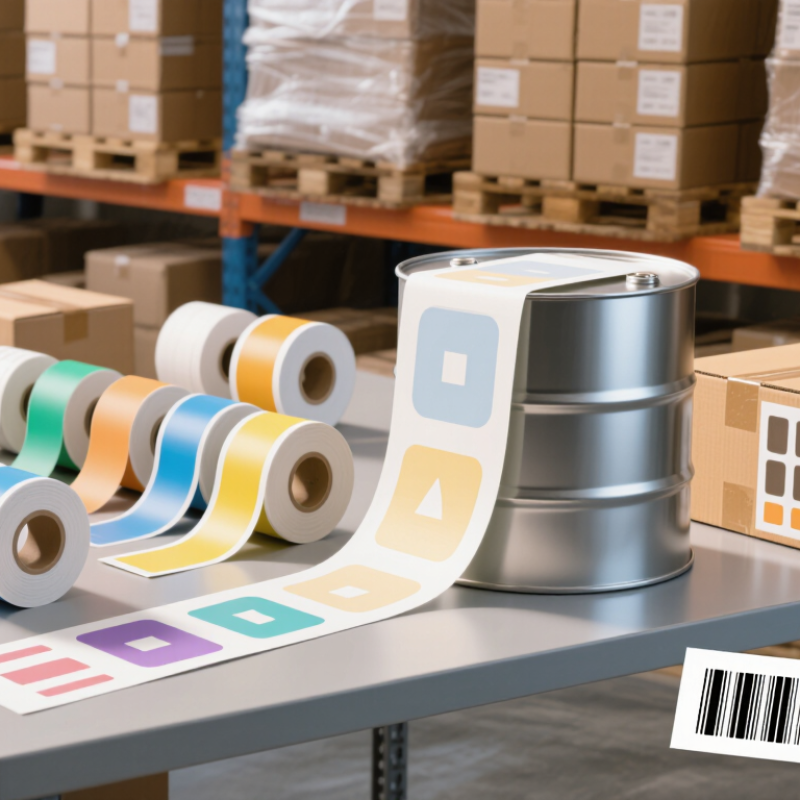
7 Tips to Choose Industrial Thermal Transfer Labels

Define the Application Requirements for Thermal Transfer Labels

Define the label’s job before choosing its material.
Record the surface, temperature range, moisture, chemicals, abrasion, and expected service life. A warehouse carton may need a low-cost paper face. Outdoor equipment may require synthetic stock and resin-based ink. Keep the details measurable.

Barcode performance matters too. Specify the code type, print resolution, label size, and scanning distance. GS1 guidance emphasizes clear, machine-readable symbols throughout the supply chain. A 2024 Smithers market report valued global printed labels above US$45 billion in 2023, showing how many applications now depend on reliable identification. The number is broad, not thermal-transfer specific. That distinction matters.

Test the complete system, not the label alone.
Match the face stock, adhesive, ribbon, and printer speed. Apply samples to the actual surface, then expose them to heat, cold, water, friction, and cleaning agents. Check readability afterward. In production trials, small details often fail first: a curled corner, faint edge, or ribbon wrinkle. Short tests can mislead. A 2023 industry survey on label operations found that automation and data accuracy remain major investment priorities, reinforcing the need for stable scanning performance. Review rejected labels, too. They reveal requirements that the original specification missed.

Match Label Materials with Industrial Surfaces and Environments

Industrial thermal transfer labels must match both the surface and the working environment. A 2024 industrial packaging survey reported that 61% of label failures involved moisture, abrasion, or poor surface preparation. The label is only half the system. The ribbon, adhesive, face stock, and printer settings must work together.

Tip 1: Check the surface energy. Powder-coated metal often needs a stronger adhesive than smooth glass. Rough plastic may require a conformable face material. Tip 2: Match the face stock to heat and chemicals. Polyester suits outdoor equipment, oil exposure, and frequent handling. Polypropylene can perform well in damp areas, but it may distort near high heat. Tip 3: Test abrasion resistance. Rub printed samples against the actual surface, not a clean laboratory panel. Small differences matter.

ISO 9001 guidance supports documented verification, while ASTM D3359 offers a practical method for checking coating adhesion. For outdoor labels, UV exposure deserves attention. A 2023 materials durability report found that unprotected printed samples lost visible contrast after extended sunlight exposure. That finding should influence ink and ribbon selection. I would not treat any material chart as a perfect answer. Condensation, dust, and uneven application often change the result. Field testing remains necessary. Keep samples for later comparison, too.

7 Tips to Choose Industrial Thermal Transfer Labels - Match Label Materials with Industrial Surfaces and Environments

Tip Industrial Requirement Recommended Label Material Suitable Surface or Environment Typical Selection Guidance Important Considerations
1. Match the Facestock to the Environment Identify exposure to moisture, abrasion, chemicals, sunlight, heat, and handling. Paper for controlled indoor areas; polyester or polypropylene for more demanding applications. Warehouses, production lines, outdoor equipment, containers, and returnable assets. Use coated paper when low cost and short-to-medium service life are priorities. Use synthetic films when moisture, tearing, or abrasion resistance is required. No single facestock performs best in every condition. Confirm the expected service life and exposure before ordering.
2. Select an Adhesive for the Surface Determine whether the surface is smooth, textured, curved, dusty, oily, painted, or powder-coated. Permanent acrylic adhesive for long-term bonding; rubber-based adhesive for high initial tack; removable adhesive for temporary identification. Metal, plastic, glass, painted surfaces, corrugated cartons, and slightly textured substrates. Clean, dry, smooth surfaces generally provide the most reliable adhesion. Textured or low-surface-energy plastics may require a specialized adhesive. Adhesive performance depends on surface cleanliness, application pressure, dwell time, and temperature during application.
3. Check the Temperature Range Consider application temperature, operating temperature, storage temperature, and short-term process heat. Polyester for general industrial heat exposure; polyimide for high-temperature processing; paper for moderate indoor conditions. Electrical assemblies, circuit-board processing, industrial ovens, machinery, and temperature-variable warehouses. Polyimide constructions are commonly selected for demanding high-temperature identification. Polyester is often used for durable equipment and asset labels. Temperature limits vary by facestock, adhesive, ink, and ribbon. Always validate the complete label construction at the actual process temperature.
4. Choose the Correct Thermal Transfer Ribbon Match print durability to abrasion, solvents, heat, and outdoor exposure. Wax for many paper applications; wax-resin for improved smudge and abrasion resistance; resin for durable synthetic labels. Shipping labels, work-in-process identification, equipment tags, chemical containers, and outdoor assets. Use the least-durable ribbon that meets the requirement. Resin ribbons are generally preferred when the printed image must withstand harsh handling or chemicals. Ribbon compatibility depends on the label coating and printer settings. Excessive heat or pressure can reduce image quality and printhead life.
5. Account for Moisture and Chemicals Identify contact with water, oils, coolants, cleaning agents, solvents, or corrosive substances. Polyester or polypropylene film with a compatible resin or wax-resin ribbon. Machine shops, washdown areas, laboratories, chemical storage, food-processing support areas, and outdoor locations. Synthetic films resist water better than ordinary paper. For chemical exposure, select a tested label construction rather than relying on material type alone. Chemical resistance is specific to the chemical, concentration, contact time, temperature, and printed surface. Conduct a compatibility test before deployment.
6. Consider Surface Shape and Flexibility Evaluate flat, curved, irregular, flexible, or textured surfaces and the amount of movement during use. Conformable polypropylene or polyester constructions with an adhesive designed for the substrate. Cables, pipes, drums, tools, curved housings, flexible packaging, and irregular machinery components. Use smaller labels or flexible facestocks on tight curves. Apply the label without wrinkles, stretching, or contact with surface contamination. Label width, bend radius, adhesive stiffness, and edge exposure affect long-term adhesion on curved or flexible surfaces.
7. Verify Barcode and Service-Life Requirements Define required scan reliability, label lifespan, print resolution, and regulatory or internal identification needs. Coated paper for short-term logistics; polyester, polypropylene, or polyimide for long-term identification. Inventory tracking, work-in-process control, serialized assets, safety identification, and equipment maintenance. Use suitable contrast, print density, label dimensions, and quiet zones for barcodes. Test readability after environmental exposure. A durable label is not useful if the barcode becomes difficult to scan. Validate both initial print quality and performance at the end of the intended service life.

Note: Temperature, chemical resistance, adhesion, and service-life performance depend on the complete label construction, printer settings, application method, and operating conditions. Test representative samples on the actual industrial surface before full-scale use.

Select the Right Thermal Transfer Ribbon and Printer Settings

Industrial thermal transfer labels need a ribbon that matches both the material and the working environment. Match the ribbon chemistry to the label surface. Wax performs well on uncoated paper. Resin works better on synthetic films and harsh surfaces. Wax-resin can support mixed applications, but it is not always the best compromise. Check the coating carefully. Rub a printed sample with a gloved finger. A blurred edge signals poor compatibility.

Select a ribbon slightly wider than the label, but avoid excessive overhang. Keep the ribbon centered to prevent wrinkles and uneven wear. Start with moderate print darkness and standard speed. Raise heat gradually when small text appears faint.

Lower the speed for dense barcodes or fine graphics. Clean the printhead before testing, especially after dusty production runs.

I once used excessive heat to fix weak images, and the labels looked darker but the printhead wore faster. That was a useful mistake.

Run a short batch through abrasion, moisture, and temperature checks. Inspect barcodes with a verifier, not only by eye. Record the ribbon type, darkness, speed, and pressure settings. Production conditions change, so a setting that worked last month may need adjustment today.

Evaluate Durability, Compliance, and Long-Term Readability

7 Tips to Choose Industrial Thermal Transfer Labels

Durability starts with the working environment. Check exposure to heat, cold, moisture, oils, solvents, sunlight, and repeated handling. A label near a curing oven needs different materials from one stored in a warehouse. Choose a face stock and ribbon combination tested for those conditions. Ask for abrasion, chemical, and temperature test data. Do not trust a glossy surface alone. It may look strong but fail after cleaning. I once saw a barcode fade because the ribbon was poorly matched. That mistake delayed a shipment.

Compliance requires more than printing warning text. Confirm that the label supports your industry’s marking rules, traceability needs, and required symbol quality. Review adhesive safety information and technical data sheets. Keep records for material batches, print settings, and inspection results. A qualified supplier should explain test methods clearly. Vague promises are not evidence. Check the smallest printed details.

Readability is a long-term performance issue. Test barcodes with a verifier after printing, not only by eye. Inspect contrast, edge sharpness, adhesive lift, and print density. Include aging tests with heat, humidity, and UV exposure when relevant. Leave enough quiet space around barcodes. Small text often becomes unreadable first. Labels should remain scannable after transport, wiping, and normal wear. The perfect test does not exist. Real conditions are messier, so review failures and improve the specification.

Compare Suppliers, Test Samples, and Confirm Total Value

7 Tips to Choose Industrial Thermal Transfer Labels

Choosing industrial thermal transfer labels requires more than comparing unit prices. Ask each supplier for clear specifications on face stock, adhesive, ribbon compatibility, roll dimensions, and storage conditions. Compare at least three suppliers using the same checklist. Look for batch traceability, documented quality controls, and realistic lead times. Vague answers are warning signs.

Request production samples, not showroom pieces. Print your actual barcodes, text, and symbols on them. Test adhesion on clean, rough, curved, and slightly dusty surfaces. Expose samples to heat, moisture, abrasion, and cleaning chemicals used in your facility. Test real conditions. Check whether edges lift after several days. My own trial was not perfect; I tested room temperature only and missed a humidity problem. That mistake caused reprinting and wasted labor.

Evaluate the total value, including freight, setup charges, storage space, rejected rolls, and printer downtime. A lower label price may hide higher waste. Measure scan performance after rubbing and temperature changes. Confirm minimum order quantities and replacement procedures before approval. Ask how quickly defects are investigated and corrected. Cheap is not value. Also review core size, winding direction, packaging strength, and delivery consistency. A supplier offering slightly higher prices may reduce stoppages and emergency purchases. Keep a small sample library with test dates, print settings, and operator notes. Those records make future comparisons more reliable.

Need Packaging Solutions?

Get Free Estimate!

1-800-493-7441
Contact Us