7 Tips for Buying Seaweed Extract Fertilizer
Seaweed Extract Fertilizer is often chosen to support crop growth and soil management, but products can differ sharply. Their source species, extraction method, concentration, and application rate all matter. A dark liquid in a bottle is not a quality standard. Buyers need evidence, not just attractive claims.
The FAO’s The State of World Fisheries and Aquaculture 2024 reports 37.8 million tonnes of global algae production in 2022, with about 97% farmed. These figures show the scale of seaweed supply, not the quality of any fertilizer. A 2019 review in Frontiers in Plant Science by Shukla and colleagues also describes how plant responses to seaweed-based biostimulants vary with formulation, crop, dose, and growing conditions. Results are not guaranteed. That uncertainty makes careful product comparison useful.
Before buying, check the declared seaweed species, guaranteed analysis, dilution instructions, batch details, and independent quality documentation. Ask whether the label specifies nutrients or only general biostimulant benefits. Compare prices per treated area, not per container; a concentrated product may require a much smaller dose. Look for crop-specific trial evidence, while remembering that one successful field result may not transfer to your soil or climate. Even careful buyers can misread a glossy label. I would also check storage guidance and whether the product dissolves cleanly in the equipment you use. These seven tips focus on practical checks, credible evidence, and claims worth questioning before you commit.
Understand Seaweed Extract Types and Their Intended Uses
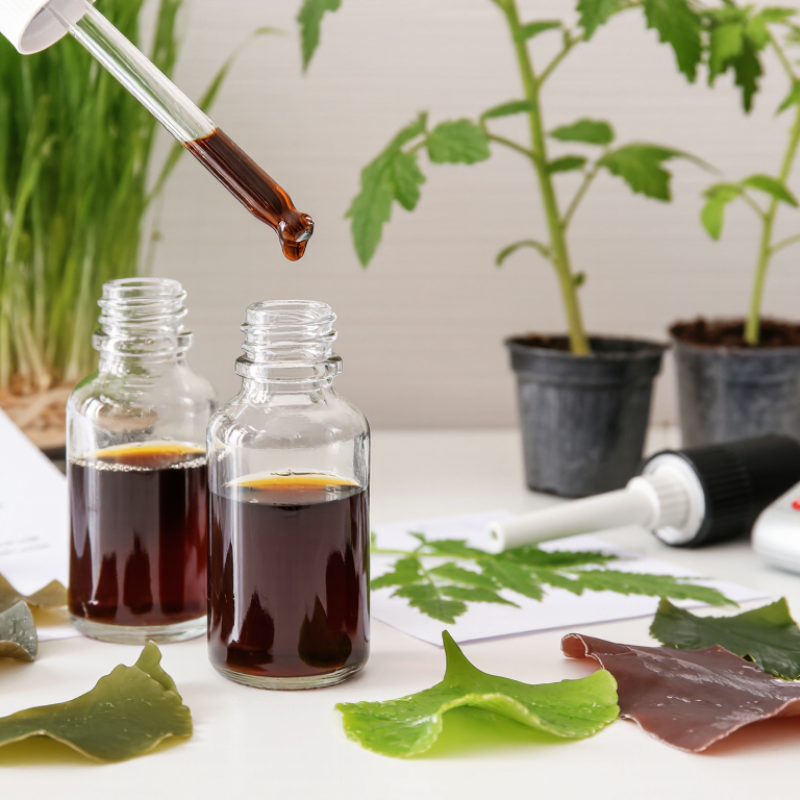
Seaweed extract fertilizers differ by species, processing method, and formulation. Brown seaweeds, such as kelp, are commonly processed into liquid concentrates or soluble powders. These are often used as foliar sprays or soil drenches to support plant growth during establishment or periods of stress. Granules are more convenient for soil application, but they release differently depending on moisture and soil conditions. No extract is a complete substitute for a balanced fertilizer.
Tips: Match the product to the job. For a quick leaf application, check that the label permits foliar use and gives a dilution rate. For soil treatment, look for drench or granular directions. Check the seaweed source and extraction details, too. Labels can leave gaps; that matters when products vary in concentration.
Scale does not prove performance. FAO’s The State of World Fisheries and Aquaculture 2024 reports 37.8 million tonnes of aquatic algae production in 2022, with most produced through aquaculture. This describes supply, not fertilizer effectiveness. Compare guaranteed nutrient analysis, recommended application rates, and any trial data for your crop. Start with a small test area, especially on seedlings or sensitive plants. Keep notes on dose, weather, and visible growth. Results can be uneven, and that is worth admitting.
7 Tips for Buying Seaweed Extract Fertilizer: Match the Type to Its Intended Use
Compare common product forms by their typical compatibility with different application methods.
How to read this: Ratings from 1 (less suited) to 5 (more suited) are illustrative format-fit guidance, not measured fertilizer performance. Actual suitability depends on the product’s formulation and label; check solubility and application instructions before buying.
Match the Fertilizer to Your Crops and Growing Conditions
Choose a seaweed extract for the crop, not just the word “seaweed” on the label. Check the listed seaweed species, extraction method, nutrient analysis, and directions. Products can differ, and an extract should not replace a fertilizer supplying nutrients your soil lacks. Start with the label. For leafy greens, fruiting crops, and seedlings, follow crop-specific rates; test a small area before treating the whole bed.
Growing conditions matter just as much. FAO’s 2024 State of World Fisheries and Aquaculture reports 37.8 million tonnes of algae production in 2022. That scale does not mean extracts have identical composition. Ask for a product analysis, and consider whether its stated use suits your crop and application method. A foliar spray may be practical where leaves are accessible; a soil application may suit other setups. Neither is automatically better.
Use a soil test to guide your choice, especially where salinity is a concern. USDA Agriculture Handbook 60 classifies soil as saline above 4 dS/m electrical conductivity, though crop sensitivity varies. In such conditions, check the crop’s tolerance and irrigation water before applying any product; seaweed extract is not a remedy for salty soil. I would avoid promising a yield boost from one treatment. Weather, dose, and crop stage can change the response, and a small trial may still disappoint.
Check the Label for Ingredients, Concentration, and Application Rates
A seaweed fertilizer label should tell you more than the name of the seaweed. Check the ingredient list for the seaweed source, added nutrients, and any fillers or wetting agents. Look for guaranteed nutrient analysis, such as nitrogen, phosphorus, and potassium, if the product claims to supply them. Read the fine print. Seaweed products can vary, so do not assume every bottle provides the same nutrients.
Concentration affects how much product you use. A liquid may list a dilution rate per litre of water, while a powder may give grams per area or volume. Compare the directions with the size of your garden and the crops you grow. A clear measuring example is useful. For instance, if the label calls for a small amount per litre, use a marked measuring spoon rather than guessing with a cap.
Application rates matter as much as ingredients. Check whether the fertilizer is intended for soil, foliar spraying, or both, and note how often it can be applied. Avoid increasing the dose because plants look weak; too much can waste product or stress them. Labels are not always easy to interpret, and I would pause rather than improvise when rates or units seem unclear. A small test area can help you observe how plants respond before treating the whole garden.
Compare Product Forms, Compatibility, and Ease of Use
Seaweed extract fertilizer is sold as liquid concentrate, ready-to-use spray, and soluble powder. Choose a form that fits your routine, not just the price per bottle. A concentrate may suit frequent use, but measuring small doses can be awkward. Ready-to-use sprays save mixing time for a few pots. Powders travel easily, though they may need careful stirring to dissolve fully. Convenience matters.
Check the label for application methods and mixing instructions before buying. Some products are intended for soil, others for foliar use, and not every formulation suits every crop or irrigation setup. Don’t assume an extract will mix safely with other fertilizers or sprays. Small test first. Mix a little in a clear jar and watch for clumping, separation, or sediment. This only checks physical compatibility; it does not prove the mixture is safe for plants.
Ease of use also depends on dose clarity and storage. A measuring cap or scoop can reduce guesswork, especially when treating a small garden bed. Look for directions that state how much product to use per litre or gallon, and how often to apply it. Keep the container sealed and follow its storage guidance. I’ve seen people focus on concentration alone; that number can mislead if the product is difficult to measure or apply consistently. Start at the labeled rate, then observe plant response before changing your routine.
Assess Quality, Sourcing, Certifications, and Overall Value
When comparing seaweed extract fertilizers, read the guaranteed analysis rather than relying on broad claims about growth. Check the listed nutrients, concentration, recommended dilution, and whether the product suits your crop and application method. Ask for a batch-specific certificate of analysis when available. It should identify tested nutrients and relevant contaminants, such as heavy metals. Worth checking.
Look for clear sourcing details, including the seaweed species and harvest region. Traceable sourcing helps you assess consistency and environmental practices. Extraction methods can affect the final composition, so ask whether the supplier explains its process. A polished label can distract from these details; buyers can easily overvalue it. No single number tells the whole story.
Review certifications carefully. Confirm what each one covers, who verifies it, and whether the certification applies to the fertilizer itself. Then compare price per treated area, not just price per bottle or bag. A concentrated product may require less, but follow its label rates and test it on a small area before wider use. Store it as directed, and check the production or expiration date. I would not assume the cheapest option is best—or that the most expensive one is automatically more reliable.