...

Blog

Home Blog

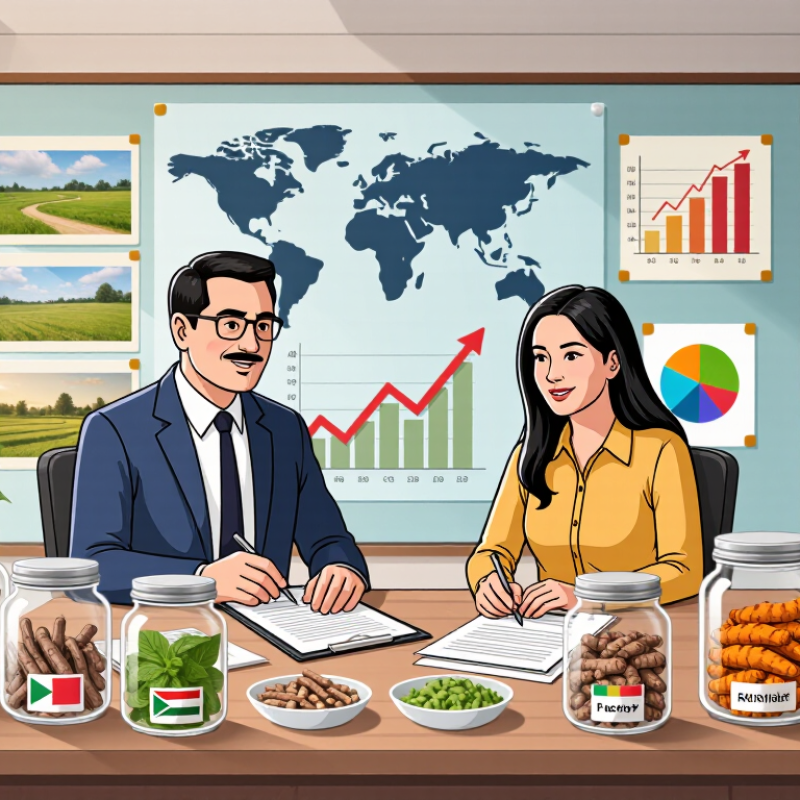
2026 How to Find Reliable Ayurvedic Herbs Suppliers

Demand for Ayurvedic Herbs is growing, but a large market does not guarantee dependable quality. Grand View Research estimated the global Ayurvedic products market at USD 9.5 billion in 2023 and projected a 20.5% compound annual growth rate from 2024 to 2030. These figures describe market estimates, not proof that every supplier meets the same standards. The World Health Organization has reported that 170 of its 194 Member States use traditional medicine. That matters. More buyers need clear evidence of what each botanical product contains and how it was handled.

In 2026, evaluating a supplier means looking beyond a polished catalogue or a low price. Request the botanical name, plant part, country of origin, harvest details, and batch-specific certificate of analysis. Check whether testing covers identity, microbial contamination, heavy metals, and pesticide residues, and ask which laboratory performed it. A useful supplier can explain its traceability and quality-control process without making unsupported health claims. Verify relevant certifications directly; a certificate alone is not a guarantee. Requirements can also differ by product and destination, so confirm applicable rules before placing an order. This guide examines practical checks for assessing Ayurvedic Herbs suppliers, from sample review to documentation. Some records may look complete yet leave questions unanswered. That is a reason to ask more, not to assume.
2026 How to Find Reliable Ayurvedic Herbs Suppliers

Map the Market: WHO Reports Traditional Medicine Use in 170 Member States

For anyone sourcing Ayurvedic herbs in 2026, the market is larger than a handful of familiar remedies. WHO’s 2019 Global Report on Traditional and Complementary Medicine recorded use in 170 Member States. It also reported that 88% of Member States acknowledged traditional and complementary medicine use. These figures map broad adoption, not supplier quality. The category includes diverse systems, so the data should not be read as Ayurveda-specific demand.

For buyers, that breadth makes traceability practical, not decorative. Request the botanical name, plant part, origin, harvest season, batch code, and a test report linked to that batch. WHO’s Good Agricultural and Collection Practices guidance for medicinal plants emphasizes controlled cultivation, collection, and handling. Ask how suppliers prevent mix-ups during drying and storage; damp sacks or handwritten labels can undermine careful paperwork. Documentation supports due diligence, but it cannot establish clinical benefit.

The map is useful, but incomplete. Reported use does not show how often herbs are taken, which species are chosen, or whether supply chains remain consistent. That matters. A dependable supplier should explain limitations, share current quality records, and welcome independent verification. Compare records across harvests, too. One clean sample captures only one moment in a changing crop.

Verify Botanical Identity Against Pharmacopoeial Monographs and Latin Names

A dependable Ayurvedic herb starts with the right identity, not an attractive label. Compare the supplier’s botanical name with a recognized pharmacopoeial monograph. Check the genus, species, plant part, and any listed synonyms. Small differences matter: the root of a plant is not interchangeable with its leaf. Ask for the accepted Latin binomial, including the author name when available, and confirm that it matches the material being sold.

Read the monograph closely. It may describe diagnostic features such as root color, odor, cross-section, or microscopic structures. These details give a buyer concrete questions to ask. A certificate of analysis can support the review, but it should name the tested species and plant part. Where identity remains uncertain, consider independent botanical or laboratory testing. A neat document is not proof by itself.

Names can be messy. Regional names may refer to different species, and suppliers sometimes use older synonyms. Record each name and how it was verified. Compare the sample, paperwork, and monograph rather than relying on one source. A monograph is a guide, not a magic stamp. Even a careful check can miss a substitution, so keep clear records and revisit the evidence when a shipment’s appearance changes.

Check Supplier Controls: FDA 21 CFR Part 111 Requires Ingredient Identity Testing

A supplier’s certificate of analysis is useful, but it does not replace a manufacturer’s responsibility under FDA 21 CFR Part 111. Dietary supplement manufacturers must establish identity specifications for each component and conduct an appropriate identity test or examination before using it. Ask how the supplier identifies each herb, which test methods are used, and whether the results correspond to the specific lot you are buying. Clear answers matter.

Look for lot-specific records, such as botanical name, plant part, origin, and test results. An identity check might use microscopy, chemical analysis, or another method suited to the herb and its form. A powder can look convincing and still be the wrong plant. Color alone is weak evidence. Review how the supplier handles substitutions, mixed lots, and out-of-specification results; request supporting records when possible. Good paperwork helps, but it is not proof by itself.

There is a practical wrinkle. Part 111 primarily sets obligations for supplement manufacturers, so a supplier’s claim of “FDA compliance” does not establish that every lot has been independently verified. Ask whether identity testing is performed in-house or by a qualified laboratory, and how methods are validated for the material supplied. Some records may be incomplete. Treat that as a reason to ask more, not as automatic proof of misconduct. A careful review connects the paperwork to the actual lot.

Review Batch COAs for Contaminants, Adulterants, and Test-Lab Accreditation

When evaluating an Ayurvedic herb supplier, request a certificate of analysis (COA) for the exact batch offered—not a sample or a previous production run. Match its batch number to the package and purchase documents. Check that the report names the plant species, plant part, test methods, and results. For contaminants, look for results covering lead, cadmium, arsenic, mercury, pesticides, and microbial limits. For authenticity, ask about checks for species substitution, undeclared fillers, and other adulterants. Specific panels matter. “Passed quality testing” does not tell you what was tested.

A 2008 JAMA study examined 193 Ayurvedic products sold online; 20.7% contained detectable lead, mercury, or arsenic (Saper et al., JAMA, 2008). The finding supports checking actual batch results, not relying on general quality claims.

Confirm that the testing laboratory holds ISO/IEC 17025 accreditation for the relevant methods and analytes; accreditation alone is not proof that every test is within scope. Review units, detection limits, dates, and pass criteria. Ask who collected the sample, too. A polished PDF can still describe a sample that differs from the material shipped. I would treat a missing method or unclear batch link as a reason to pause, even when the supplier’s explanation sounds reasonable.

Assess Supply-Chain Risk: WHO Estimates 1 in 10 Medical Products in LMICs Are Substandard or Falsified

A reliable Ayurvedic herb supplier should be assessed as a supply-chain partner, not just a seller. The World Health Organization estimates that one in ten medical products in low- and middle-income countries is substandard or falsified. This figure covers medical products broadly; it is not an estimate for Ayurvedic herbs alone. Still, it highlights why careful verification matters.

Ask where each herb was grown, when it was harvested, and how lots are tracked. Request batch-specific test reports, then check whether they identify the plant species and screen for relevant contaminants. Look for clear storage records: damp sacks, sunlight, and warm warehouses can affect quality. Keep the paperwork. Compare the lot number on the report with the number on the delivered packaging. A neat certificate is not proof by itself. Independent testing may add confidence, though it cannot remove every risk. Supplier visits and consistent records help, but they take time and may reveal gaps. That can be uncomfortable. It is useful, too. If answers about origin, testing, or batch changes stay vague, pause before placing a large order.

Assess Supply-Chain Risk: Substandard or Falsified Medical Products

WHO estimates that 1 in 10 medical products in low- and middle-income countries is substandard or falsified.

Estimated share: 10%. This global estimate highlights the importance of verifying sourcing, quality controls, and supply-chain traceability. Source: World Health Organization (WHO).

Need Packaging Solutions?

Get Free Estimate!

1-800-493-7441
Contact Us