...

Blog

Home Blog

How to Choose the Best Plastic Tarpaulin?

Choosing the right Plastic Tarpaulin starts with a clear question: what must it protect, and for how long? A garden stack of firewood needs different coverage from equipment left outdoors through a wet, windy season. Polyethylene is common for general-purpose covers, while woven construction and laminated surfaces influence strength, water resistance, and handling. Thickness can help, but it is not a complete quality rating; compare stated weight, weave, coating, and reinforced edges. Check grommet spacing, seam finish, and dimensions, too. Small details matter. A tarp that is too tight may strain its corners, while excess material can flap and collect water. No single specification guarantees a good fit.

Before buying, match the tarp to sun exposure, temperature changes, abrasion, and the way it will be secured. For repeated outdoor use, look for clear product information about UV resistance and expected service conditions, rather than relying on a vague “heavy-duty” label. Check manufacturer specifications and care instructions; product descriptions can leave important gaps. If protecting delicate items, consider ventilation or a separate breathable layer where condensation may collect. I would not assume the thickest cover is automatically best. Weight, flexibility, and ease of handling matter when installing a tarp in wind or over a large object. Measure the covered area, allow room for draping, and keep sharp corners from rubbing directly against the sheet. Fit matters. A careful choice is rarely perfect; it balances protection, lifespan, price, and practical use.
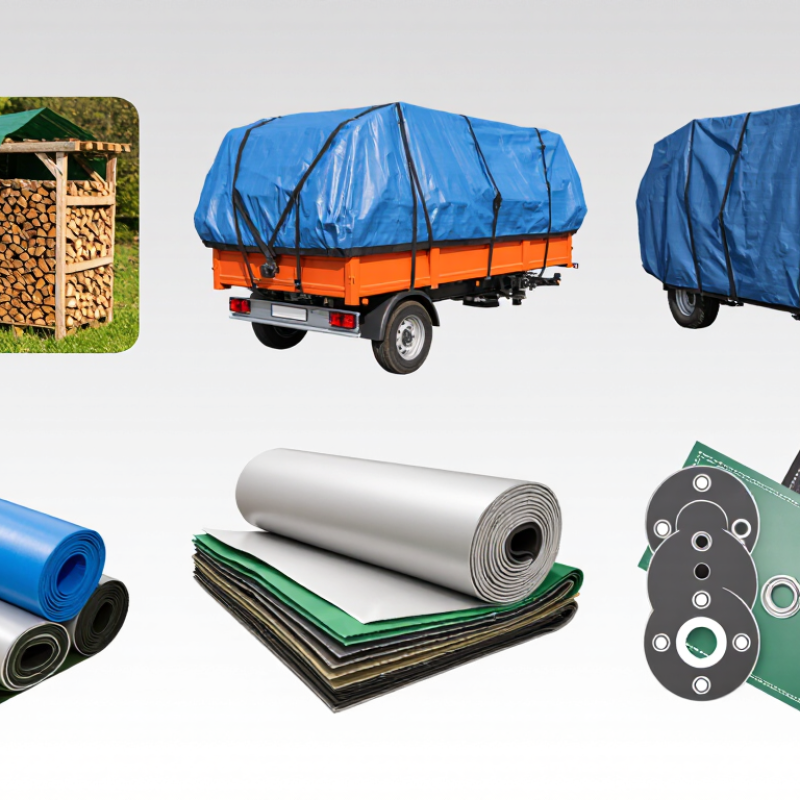
How to Choose the Best Plastic Tarpaulin?

Compare Tarp Weight: Common 80, 120, and 200 GSM Grades

GSM measures fabric weight in grams per square metre. It offers a useful starting point, not a complete durability rating. An 80 GSM tarp is lighter and easier to fold into a vehicle or carry around a garden. It can suit short-term cover for patio furniture or dry supplies. Check its edges carefully; thin material may tear sooner under wind or repeated handling.

A 120 GSM tarp provides a middle ground. It is generally easier to manage than a heavy-duty sheet, yet offers more substance for regular outdoor use. Think about covering a woodpile or shielding equipment between workdays. The coating, weave, and reinforced corners matter too. A higher GSM number cannot compensate for weak seams.

At 200 GSM, a tarp feels heavier and may be better suited to demanding, repeated use. It can be awkward to drape over a large load, though, especially alone. I’d compare the actual construction rather than trust weight alone; that shortcut is tempting, but not always reliable. Look for securely finished edges and sturdy eyelets, then match the sheet to the exposure. A sheltered shed needs less protection than a tarp left in strong sun and gusty weather.

Choose the Fabric: PE Weaves, PVC Coatings, or Canvas

A plastic tarpaulin works best when its fabric matches the job. PE weaves are made from interlaced polyethylene strips, often laminated for water resistance. They are light, easy to fold, and practical for short-term covers or occasional outdoor use. Their weak point is often edge wear: a sharp corner can start a tear, especially when the sheet is pulled tight. PVC-coated polyester usually feels heavier and more flexible. Its coated surface resists water and abrasion, making it useful for repeated handling. Canvas is breathable and can reduce trapped condensation, but it is heavier and may need treatment to shed rain reliably.

The choice also has an environmental footprint. PlasticsEurope’s Plastics – the Fast Facts 2024 report estimates global plastics production at 413.8 million tonnes in 2023. That figure covers plastics broadly, not tarpaulins specifically, but it is a reminder to consider service life and repairability alongside purchase price. A stronger sheet is not automatically better if it spends most of its life folded in storage.

Tips: Check the fabric weight, UV rating, seam construction, and warranty conditions. For a woodpile, breathable canvas may help limit moisture buildup. For a vehicle load exposed to rain, coated fabric with reinforced corners may be more suitable. Test the grommets, too. They often fail first. A small, imperfect detail: color can affect heat buildup, but shade alone will not tell you how long a tarp will last.

Evaluate UV Aging with ASTM G154 Test Data

Choosing the best plastic tarpaulin means looking beyond thickness and color. Sunlight can embrittle a sheet, fade its surface, and weaken seams over time. ASTM G154 test data offers a useful way to compare resistance to accelerated UV exposure.

Read the test conditions, not just the number of hours. ASTM G154 covers exposure in fluorescent UV apparatus, but lamp type, irradiance, temperature, and wet or condensation cycles affect results. UVA-340 and UVB-313 lamps do not create identical exposures. A report should identify its cycle and list measured changes, such as retained tensile strength, elongation, color, or visible cracking. Hours alone tell little.

Look for testing on the actual tarp material, ideally including coatings and finished seams. A lab coupon may age differently from a folded, stitched sheet under tension. Compare samples tested under the same conditions, and ask how much strength remained after exposure. Small details matter. A tarp that looks fine may already have lost flexibility. Test data still cannot predict every climate or installation; that limitation is easy to overlook. Pair the results with the expected sun exposure, temperature swings, and how often the tarp will be handled.

How to Choose the Best Plastic Tarpaulin? — Evaluate UV Aging with ASTM G154 Test Data
Evaluation Dimension Test Setting or Data to Record How to Use It When Comparing Tarpaulins
UV exposure method ASTM G154 uses fluorescent UV lamps and controlled exposure to moisture; it is a practice for operating the apparatus, not a universal product pass/fail specification. Compare specimens tested under the same lamp type, cycle, irradiance, temperature, and exposure duration. Results from different setups may not be directly comparable.
Common UV lamp UVA-340 fluorescent lamp; irradiance is commonly controlled at 0.89 W/(m²·nm) at 340 nm for a Cycle 1 setup. Confirm the lamp type and irradiance in the laboratory report. Do not treat this setup as the only ASTM G154 option.
Common Cycle 1 UV phase 8 hours of UV exposure at a 60°C chamber temperature. Use the same cycle when comparing candidate materials. Chamber temperature is a test condition, not a prediction of the tarp’s service temperature.
Common Cycle 1 condensation phase 4 hours of condensation at a 50°C chamber temperature, following the UV phase. This moisture phase helps evaluate weathering under a defined laboratory cycle. It does not reproduce every outdoor climate or exposure condition.
Total exposure duration Record the actual elapsed exposure time and number of completed cycles. Checkpoints such as 500, 1,000, or 2,000 hours may be selected by the test plan; they are not universal ASTM G154 acceptance points. Compare results at matching exposure times. Do not convert laboratory hours directly into outdoor years without a validated correlation for the material and location.
Tensile-strength retention Measure tensile strength before and after exposure using the same applicable test method and specimen direction. Calculate: retained strength (%) = exposed strength ÷ initial strength × 100. Higher retention generally indicates less loss of tensile capacity. Compare warp and weft directions separately where relevant.
Elongation-at-break retention Record initial and exposed elongation at break, then calculate: retained elongation (%) = exposed elongation ÷ initial elongation × 100. A substantial change can indicate embrittlement or altered flexibility. Interpret it alongside strength and visual condition.
Visual condition Record observed cracking, chalking, fading, coating loss, brittleness, or delamination before and after exposure; include photographs and a stated rating method. Use consistent inspection criteria across specimens. ASTM G154 does not establish one universal visual acceptance threshold for all tarpaulins.
Specimen and construction details Record polymer or fabric construction, coating, thickness or mass per area, color, specimen orientation, and edge condition. Differences in construction can affect weathering performance, so compare like-for-like products and report these details with the results.
Selection decision Review the complete report: test cycle, lamp, irradiance, temperatures, exposure time, initial and exposed measurements, calculations, and visual observations. Choose the tarp that best retains the properties required for its intended use. Set acceptance limits for the application; ASTM G154 itself does not provide a universal tarp lifespan or pass/fail limit.

Compare Coated-Fabric Strength Using ASTM D751 Tensile and Tear Tests

When choosing a plastic tarpaulin, look beyond thickness and color. ASTM D751 includes test methods for evaluating coated-fabric properties, including tensile and tear strength. Tensile testing measures how much force a fabric withstands when pulled. Tear testing measures resistance to a growing cut or split. These results help assess whether a tarp can handle tension across a frame or a snag from a sharp corner. Numbers need context.

Read the test report carefully. Compare results only when the same test method, specimen direction, and units are used. A fabric may perform differently along its length and width, so check whether results cover both directions. Also consider your actual use: repeated folding, wind movement, and abrasion can affect service life, even when laboratory strength looks good. One limitation is easy to miss: a high tensile result alone does not guarantee strong tear resistance.

Tips: Ask for the ASTM D751 method and test direction behind each reported value. Check whether the sample was conditioned consistently. For a tarp used outdoors, examine seams and reinforced edges too; a strong panel can still fail at a poorly finished corner. Test results guide a comparison, not a perfect prediction.

How to Choose the Best Plastic Tarpaulin?

Compare coated-fabric strength using ASTM D751 tensile and tear tests

Higher tensile and tear forces can indicate a stronger fabric, but the best choice depends on the tarp’s intended use, weight, and flexibility. Values shown are illustrative examples, not certified test results or ASTM acceptance limits. Compare actual results only when specimens are tested using the same ASTM D751 procedures and conditions.

Match Reinforcement and Grommet Spacing to the Intended Load

How to Choose the Best Plastic Tarpaulin?

Match Reinforcement and Grommet Spacing to the Intended Load

A tarp’s thickness alone cannot predict how well it will hold. Wind, water pooling, and sharp corners concentrate force around edges and eyelets. For a light garden cover, modest reinforcement may be enough. For a large outdoor cover exposed to gusts, choose reinforced hems, corner patches, and closely spaced grommets. As a practical starting point, compare options with grommets about 18 to 24 inches apart, then tighten spacing where wind or edge loads are higher. This is a selection guide, not a universal rating.

Ask for test results, not just “heavy duty” claims. ASTM D751-19 covers coated-fabric tests including breaking strength, tear strength, coating adhesion, and hydrostatic resistance. Those measurements help compare materials tested by the same method; they do not establish one strength value for every tarp. Check whether the supplier’s report identifies the test method and units. Also inspect stitching and grommet backing: a strong sheet can still fail at a weak eyelet. I have seen neatly spaced grommets pull through when a loose corner began flapping.

Tip: Match spacing to exposure, and secure every grommet without over-tightening. Leave room for movement. A taut tarp can still tear.

Need Packaging Solutions?

Get Free Estimate!

1-800-493-7441
Contact Us