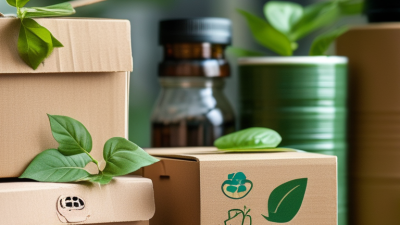
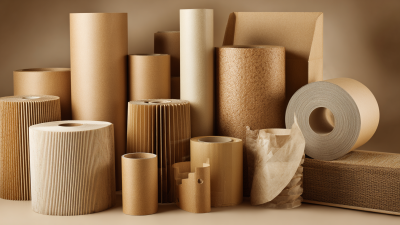
Global buyers are rethinking cartons, mailers, bottles, and protective inserts. Cost still matters, but procurement teams now examine carbon, recyclability, sourcing, and end-of-life systems. The OECD’s Global Plastics Outlook reported that global plastic waste reached 353 million tonnes in 2019, nearly triple the 2000 level. Packaging remains a visible part of this problem. A delivery box can reveal a company’s environmental claims within seconds.
The UNEP report Turning off the Tap estimates that plastic pollution could fall by 80% by 2040 through reuse, recycling, and redesign. This supports growing interest in eco friendly packaging materials, including recycled paperboard, molded fiber, certified compostable films, and bio-based polymers. However, no material is automatically sustainable. A molded-fiber tray may need more transport space. A compostable pouch may fail when local composting facilities are unavailable. The details matter.
Ellen MacArthur, founder of the Ellen MacArthur Foundation, describes circular design through three principles: “designing out waste and pollution, keeping products and materials in use, and regenerating natural systems.” Her perspective remains useful for global purchasing decisions. Buyers should request lifecycle evidence, recycled-content documentation, food-contact compliance, and credible certifications. They should also test packaging in real warehouses, not only in laboratories. A wet loading dock changes everything. Some claims still sound greener than the evidence allows. That is uncomfortable, but necessary. The following guide examines material performance, regional infrastructure, supplier reliability, and practical trade-offs for responsible international sourcing.

Eco-friendly packaging begins with evidence, not a green label. Life Cycle Assessment, defined by ISO 14040 and ISO 14044, examines raw materials, manufacturing, transport, use, and disposal. This matters because packaging can shift impacts between stages. A lightweight pouch may reduce shipping emissions, yet complicate recycling. A heavier paper box may use more energy during transport. The answer depends on the full system.
Packaging represents about 40% of global plastic use, according to the OECD Global Plastics Outlook 2022. That figure makes material selection commercially important, not merely environmental. Buyers should request data on recycled content, energy consumption, water use, and end-of-life recovery. Recycled paper, molded fiber, reusable containers, and mono-material plastics can perform well in suitable supply chains. Compostable materials are not automatically better. They often require specific industrial facilities, which many regions still lack.
A credible supplier should explain material composition, testing methods, and disposal assumptions. The UNEP Turning off the Tap report, published in 2023, supports reducing unnecessary packaging and expanding reuse and recycling systems. In practical sourcing, I would compare the same package by weight, protection, shipment distance, and local recovery access. Data can still be incomplete. That is the uncomfortable part. A lower-carbon material may have weaker moisture resistance or a higher damage rate. Eco-friendly decisions need measured trade-offs, not perfect claims.
Global buyers should compare packaging by product protection, transport weight, recovery systems, and verified lifecycle data. Paper is lightweight and widely collected, but coatings, inks, and food residue can reduce recyclability. The U.S. Environmental Protection Agency reported a 68.2% paper and paperboard recycling rate in 2018. That figure is useful, but it does not represent every market.
Glass offers strong chemical stability and repeated recyclability. However, it is heavy, increasing freight emissions and breakage risks. Metal provides excellent barrier protection and high recovery value. Aluminium production uses substantial energy, although the International Aluminium Institute reports that recycling aluminium can save up to 95% of primary production energy. The trade-off is real. Buyers should check recycled content and transport distance.
Bioplastics may reduce fossil feedstock use, but “compostable” packaging often requires industrial facilities. These facilities are unavailable in many regions. European Bioplastics reported global bioplastics production capacity at about 2.2 million tonnes in 2023, far below conventional plastic output. Recycled materials can perform well when supply is stable and contamination is controlled. The OECD’s Global Plastics Outlook estimated that only 9% of plastic waste was ultimately recycled in 2019. Therefore, a recycled package is not automatically sustainable. Request third-party lifecycle assessments, supplier test records, and destination-specific recovery data. A practical choice may still be imperfect. Packaging decisions need evidence, not attractive labels.
Eco-friendly packaging is not a material label. Global buyers should measure carbon, water, recyclability, and end-of-life performance.
UNEP’s 2023 Turning off the Tap report states that packaging uses about 36% of all plastic produced. OECD’s Global Plastics Outlook estimates plastics created 1.8 gigatonnes of greenhouse-gas emissions in 2019. That figure covers the full lifecycle, not only factory energy.
For paper, molded fiber, or biobased films, request product-level life-cycle data under ISO 14040 and ISO 14044.
Water needs equal scrutiny. UNESCO’s 2024 World Water Development Report says agriculture accounts for about 70% of global freshwater withdrawals. Fiber sourcing can still shift pressure into water-stressed basins. Use local water-scarcity factors, not one global water number.
Recyclability is a system result. OECD reports that only 9% of plastic waste was recycled globally in 2019. A recyclable pouch may still be rejected when collection, sorting, or reprocessing capacity is missing.
End-of-life claims need destination-market evidence. Compostable packaging can fail without industrial composting. That is uncomfortable.
Tips: Ask suppliers for verified carbon data, water-risk locations, recycled-content evidence, and disposal instructions. Test the package through real sorting conditions. Compare lightweighting against durability; thinner packaging can increase product damage. Document assumptions, because packaging assessments are rarely perfect. A material may perform well in one country and poorly in another.
The EU Packaging and Packaging Waste Regulation sets a clear recycled-content direction. By 2030, PET packaging must contain at least 30% recycled PET in relevant contact-sensitive applications. The same 30% threshold applies to many single-use plastic beverage bottles. The European Commission’s Regulation (EU) 2025/40 provides the legal basis. Global buyers should therefore evaluate recycled PET, not only “recyclable” claims.
The OECD’s Global Plastics Outlook reports that just 9% of global plastic waste was recycled in 2019. That gap exposes a practical problem. Recycled material supply may be inconsistent. Buyers need batch-level documentation, origin records, and contaminant testing. A transparent recycled-content certificate is more useful than a green slogan. Food-contact packaging also requires approved inputs and controlled processing. Ask for resin specifications, migration test results, and production samples. Small details matter.
A clear PET bottle with 30% post-consumer resin may look slightly grey or show tiny marks. That is not automatically a defect. It can reflect real recycled content. However, appearance must still meet product requirements. The European Environment Agency identifies better design, collection, and recycling systems as essential for circular plastics. Buyers should compare total impact, including transport and manufacturing energy. I may be too optimistic about rapid supply growth. Regulation can move faster than recycling infrastructure. Contract terms should address shortages, quality changes, and evidence updates.
With an estimated 141 million tonnes of plastic packaging waste generated each year, material selection cannot rely on attractive labels alone. Global buyers should examine the full packaging journey, from raw materials to disposal. Recycled paperboard suits cartons, sleeves, and dry goods. Molded fiber can protect bottles, electronics, and takeaway items. Both may reduce virgin plastic use, but moisture and grease can weaken performance.
Procurement teams should request verified recycled-content data, testing reports, and clear disposal instructions. Check food-contact compliance where relevant. Confirm whether local recyclers actually accept the material. A package labeled recyclable may still be rejected because of coatings, adhesives, or mixed layers. Small trials help reveal crushed corners, leaking seals, and confusing customer instructions before large orders. No material is perfect. Even paper can carry environmental costs when forests, water, transport, and coatings are ignored. The better choice is usually the material that meets product needs with less waste and a realistic recovery route.
Get Free Estimate!