...

Blog

Home Blog

How to Choose the Right Foil Pouch for Your Product?

Choosing the right Foil Pouch starts with the product, not the packaging trend. Coffee, powdered foods, dried fruit, and cosmetics may need different levels of protection. Consider what the contents must resist: moisture, oxygen, light, or aroma loss. A laminated foil structure can provide a strong barrier, but the full material construction matters. Ask for clear specifications rather than relying on the word “foil” alone.

Then look at how the pouch will be filled, sealed, stored, and handled. A stand-up pouch may suit retail shelves, while a flat pouch can work for smaller portions. Check the seal area, opening style, dimensions, and compatibility with your filling equipment. Small details matter. A zipper is useful for repeated access, but it does not replace a reliable heat seal. It is easy to overlook the pouch’s weight and stiffness, especially when testing only an empty sample.

There is no single best format for every product. I would compare samples using the actual contents and the expected storage conditions. Review supplier data, request relevant test information, and confirm that printing or special features do not compromise performance. If the product is sensitive, consider advice from a qualified packaging professional. A practical choice balances protection, usability, appearance, and cost. Some compromises may remain. That is worth acknowledging before placing a large order.
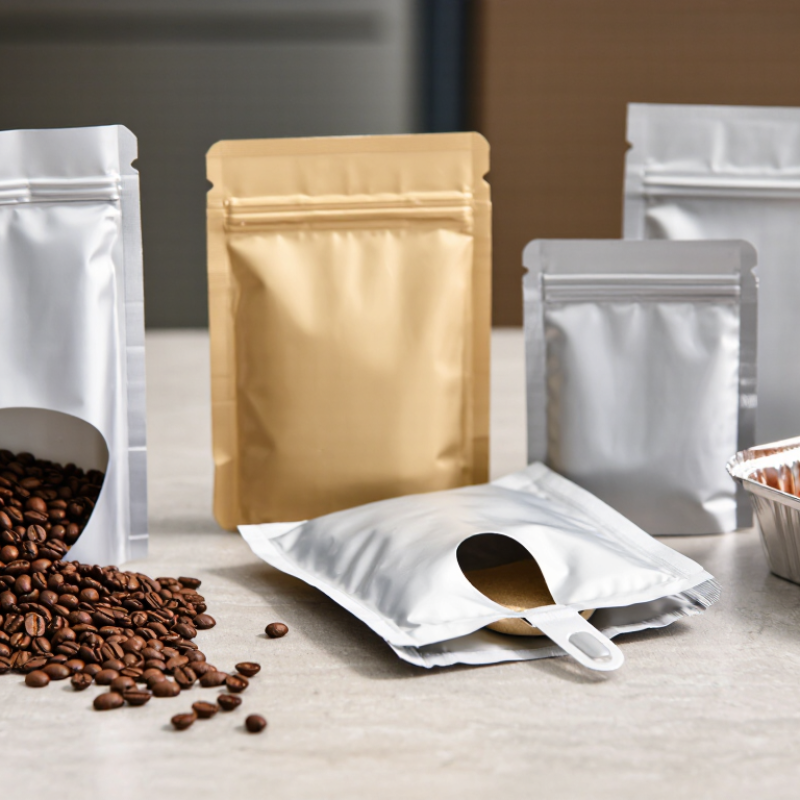
How to Choose the Right Foil Pouch for Your Product?

Define Your Product’s Packaging Requirements

A foil pouch should match the product’s real packaging needs, not just look sturdy. Start by noting the product’s weight, shape, and condition at filling. Does it contain sharp edges, fine powder, or a little oil? Each detail can affect pouch structure and seal performance. Also consider what the product must be protected from. Moisture, oxygen, light, and odor can all matter, but not equally for every item.

Set a realistic shelf-life goal and check how the product will be stored and shipped. A dry snack may need strong moisture protection, while a light-sensitive powder may need an opaque layer. Ask for technical data on the pouch’s barrier properties, then confirm that the material suits your filling temperature and sealing equipment. Dimensions matter, too: excess empty space can encourage movement, while a tight fit can strain seals. It is easy to specify more protection than necessary. Testing a filled pouch under expected storage conditions can help reveal what is actually needed.

Tips: Test samples with your real product, not a substitute. Check seals after filling, handling, and storage. Record any leaks, creases, or changes in product quality; small flaws are useful clues.

Compare Foil Pouch Materials and Barrier Properties

Compare the barrier layer, not just the pouch’s shiny surface. A foil laminate, often PET/aluminum foil/PE, blocks light and provides a strong barrier to oxygen and moisture when seals and folds remain intact. Metallized PET uses a thin metal coating; it is usually less protective than a true foil layer, but may suit products with moderate shelf-life needs. High-barrier PE or PP structures avoid aluminum, yet performance depends on coatings and construction. There is no universal winner.

Ask suppliers for oxygen transmission rate (OTR) and water vapor transmission rate (WVTR), including test conditions. ASTM D3985 and ASTM F1249 describe common test methods; compare results at matching temperature and humidity. The Flexible Packaging Association’s 2023 State of the Industry report estimated U.S. flexible-packaging sales at $42.9 billion in 2022. That scale makes material choice familiar, not automatic. A low OTR on a film sample may not predict a finished pouch’s performance if seals are weak or the laminate is damaged. Easy to overlook.

Tips: Match the barrier to the product’s sensitivity and expected shelf life. For coffee or dry powders, check aroma retention and moisture protection; for oily snacks, test oxygen exposure. Request filled-pouch trials, then inspect seals after transport. I’d still question a specification without test conditions.

Select a Pouch Style, Size, and Closure

Choosing a foil pouch starts with how the product will be stored and used. A flat pouch suits samples or lightweight portions, while a stand-up pouch gives customers a stable pack that can sit on a shelf. For products poured in small amounts, a side gusset may offer useful capacity without making the pouch awkward to hold. Shape affects filling, storage, and display. It is easy to focus too much on appearance.

Size should follow the real serving or use amount, not just the product’s weight. A cup of chunky pieces needs more space than the same weight of powder. Measure the product volume, then allow room above the fill line for sealing and handling. Too much headspace can make a pouch look underfilled; too little can interfere with a clean seal. Test with the actual product. Packaging samples can reveal details that a drawing cannot.

Match the closure to how often the pouch will be opened. A tear notch works for a pack meant to be used once, while a zipper helps protect contents between uses. For liquids or products that need controlled pouring, a fitment may be more practical, though it adds cost and another sealing point to check. Confirm that the closure works with the pouch material and filling process. I would not assume a familiar format is automatically the best one; a small user test can catch an inconvenient opening or a zipper that is hard to press shut.

How to Choose the Right Foil Pouch for Your Product? - Select a Pouch Style, Size, and Closure

Common pouch formats and practical starting points. Capacity estimates are approximate and vary with product density, particle size, and filling method.
Pouch Style Typical Starting Size (W × H × Gusset) Approximate Dry-Fill Range Suitable Products Closure Options Selection Notes
Three-Side-Seal Flat Pouch 80–150 × 120–220 mm; no gusset About 10–250 g Single-use portions, powders, tea, spices, sample packs, and small snacks Heat seal; tear notch; zipper on selected designs Compact and easy to fill. Choose a size that leaves adequate headspace for sealing.
Stand-Up Pouch with Bottom Gusset 120–220 × 180–320 mm; 60–120 mm gusset About 100 g–2 kg Granola, dried fruit, coffee, pet treats, powders, and other shelf-stable goods Press-to-close zipper plus top heat seal; tear notch The bottom gusset helps the pouch stand on a shelf. Confirm the filled pouch remains stable.
Side-Gusset Pouch 80–150 × 250–450 mm; 50–100 mm side gussets About 250 g–2 kg Coffee beans, ground coffee, bulk powders, and products packed in a tall format Top heat seal; optional zipper or one-way degassing valve Side gussets expand when filled. For freshly roasted coffee, a compatible degassing valve may be appropriate.
Flat-Bottom Pouch 100–180 × 180–350 mm; 50–100 mm bottom and side gussets About 250 g–2 kg Premium snacks, coffee, pet food, and products that benefit from a broad shelf footprint Resealable zipper plus top heat seal; tear notch The flat base can provide strong shelf presentation. Check the final filled dimensions and display space.
Quad-Seal Pouch 100–200 × 250–450 mm; side gussets typically 50–100 mm About 500 g–5 kg Larger quantities of coffee, snacks, dry foods, and pet products Top heat seal; optional zipper or degassing valve Four sealed corners help create a structured pack. Seal strength and fill weight should be tested with the product.
Spouted Pouch 120–220 × 180–300 mm; dimensions vary with spout placement Commonly about 100 mL–1 L Liquids, sauces, gels, concentrates, and some squeezable products Screw-cap spout; tamper-evident feature where specified Specify the liquid, viscosity, filling temperature, and dispensing needs before selecting the spout and laminate.

Check Product Compatibility and Regulatory Needs

A foil pouch must suit the product, not just look protective. Oils, acids, salt, and moisture can interact with different laminate layers, inks, or adhesives. Heat matters too: a pouch approved for dry snacks may not tolerate hot filling or retort processing. Test the finished pouch with the actual product and expected storage conditions. A supplier’s material declaration is useful, but it is not a substitute for application-specific testing.

Regulatory checks depend on the sales market and intended use. For food packaging in the United States, review applicable FDA food-contact requirements; in the European Union, assess the framework rules for materials intended to contact food. Request supporting documentation for every layer, including adhesives and printing inks, and confirm that migration testing reflects the product’s acidity, fat content, temperature, and contact time. The Flexible Packaging Association’s 2024 State of the U.S. Flexible Packaging Industry report estimated 2023 sales at $42.9 billion, underscoring how widely these formats are used. Scale does not guarantee suitability. Details can be missed.

Tips: Send suppliers a real product sample, filling temperature, shelf-life target, and destination markets. Ask for test reports on the complete pouch. Then run a small production trial; seals and handling can behave differently on the line. A little uncertainty remains until tested.

How to Choose the Right Foil Pouch for Your Product

Compare typical oxygen-barrier performance, then confirm product compatibility and regulatory requirements.

The 1–4 scale is a qualitative comparison, not a measured transmission rate. Actual performance depends on material grade, thickness, pouch structure, humidity, and temperature. Check the product’s sensitivity, sealing needs, and applicable food-contact or other regulations for your target market before choosing a pouch.

Evaluate Printing, Supplier Quality, and Total Cost

A foil pouch can look sharp on screen and still disappoint on a filling line. Request a printed proof, then check small text, color consistency, seal areas, and how the design looks under store lighting. Confirm whether the supplier controls color with documented standards and can provide batch records. Ask for samples made with the same structure and printing process as production. Small details matter.

Supplier quality needs evidence, not just a polished sales sheet. Review material specifications, inspection procedures, and test results for seal strength, leakage, and barrier performance. The Flexible Packaging Association reported a U.S. industry value of $42.9 billion in 2023, underscoring the scale of this packaging sector. That figure is not a quality score. Request references and agree on defect limits before ordering.

Compare total cost, not only the quoted price per pouch. Include setup charges, cylinders or plates, freight, minimum order quantities, expected waste, and storage. A low unit price can be a false saving. The U.S. EPA reported that containers and packaging generated 82.2 million tons of municipal solid waste in 2018; this broad category is not specific to foil pouches, but it highlights the value of avoiding excess stock and rejects. A simple cost sheet helps. I’d still revisit the assumptions after the first production run; estimates can miss real-world waste.

Sources: Flexible Packaging Association, 2024 State of the U.S. Flexible Packaging Industry; U.S. EPA, 2018 Advancing Sustainable Materials Management report.

Need Packaging Solutions?

Get Free Estimate!

1-800-493-7441
Contact Us