How to Choose the Right Packaging Materials for Your Products?
Choosing the right packaging materials is crucial for product success. The global packaging market is valued at over $900 billion and continues to grow. Consumers increasingly prefer eco-friendly options, with 73% willing to pay more for sustainable packaging. This shift highlights the importance of selecting appropriate packaging materials.
Selecting packaging materials involves various factors. Consider product protection, shelf life, and brand image. For instance, fragile items require robust materials to prevent damage. However, not all businesses prioritize this when choosing packaging. Many select inexpensive options without considering long-term impacts on their brand reputation.
Sustainability plays a pivotal role in modern packaging. Reports indicate that businesses adopting sustainable practices see a 10% increase in customer loyalty. This indicates that neglecting environmentally friendly choices can hurt potential sales. As businesses navigate these choices, the need for thoughtful selection of packaging materials becomes clear.

Identifying the Packaging Needs of Your Product
Identifying the packaging needs of your product is crucial. Each product type has unique requirements for protection, preservation, and presentation. For instance, food items often need materials that can maintain freshness and prevent contamination. A study from the Food and Beverage Packaging Association shows that 55% of consumers prioritize product freshness when selecting packaged goods. This statistic highlights the importance of packaging in influencing customer choices.
Electronics require robust packaging to withstand shipping impacts. According to a report from the Institute of Packaging Professionals, around 40% of product damage occurs during transportation. Packaging for electronics should be cushioned and moisture-resistant. Failing to address these needs can lead to significant financial losses and brand damage.
Many businesses overlook the sustainability aspect of packaging. A recent survey indicated that 72% of consumers prefer brands that use eco-friendly materials. Ignoring this trend can alienate a growing demographic of environmentally-conscious shoppers. Brands must adapt their approach to meet consumer expectations while ensuring functionality. This focus on sustainability should be balanced with cost-effectiveness and product safety.
Understanding Different Types of Packaging Materials
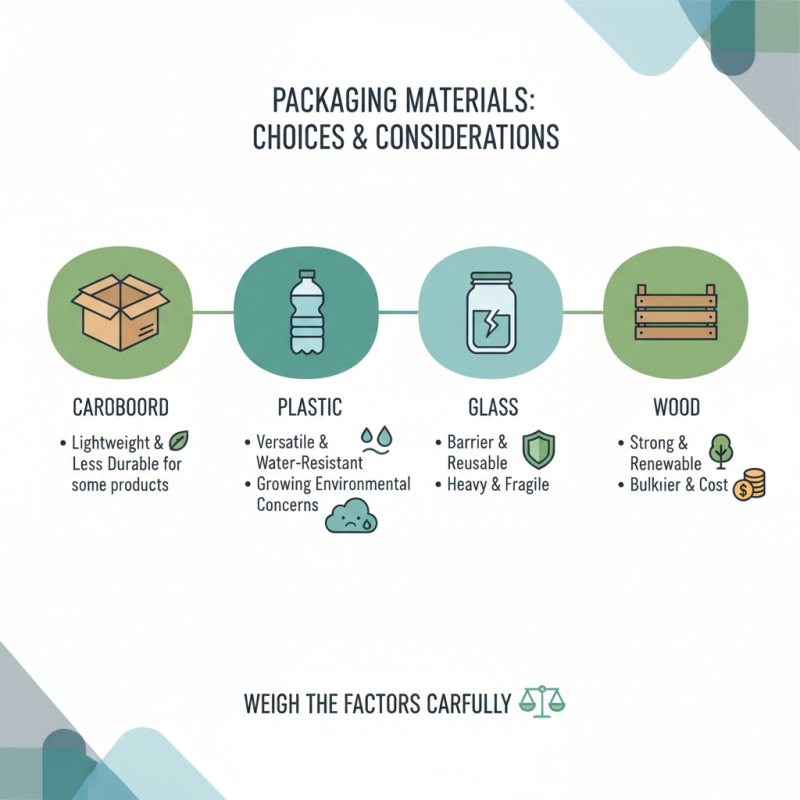
When it comes to packaging materials, options abound. Cardboard, plastic, glass, and wood are common choices. Each type has unique qualities. Cardboard is lightweight and recyclable. However, it may not offer the durability some products need. Plastic is versatile and water-resistant, but concerns about its environmental impact grow. It’s essential to weigh these factors carefully.
Glass provides an elegant solution. It’s reusable and recyclable. But glass can break easily. Not all products are suited for such fragile materials. Wood, on the other hand, is durable and biodegradable. Yet, it can be heavy and costly. Various dimensions and styles mean there’s always something new to consider.
No single option fits all needs. Companies must assess their products and target markets. Choosing the right material requires a balance of cost, function, and sustainability. Reflecting on these aspects can lead to better decisions. Each product may deserve a tailored approach to packaging materials. Engaging in deeper discussions about these choices often reveals surprising insights.
Evaluating Environmental Impact in Packaging Choices
When choosing packaging materials, environmental impact should be a top concern. Every choice we make contributes to global issues like pollution and waste. For example, plastic may be cheap and convenient, but its long-lasting nature harms ecosystems. It's crucial to assess whether the benefits of any packaging outweigh its ecological footprint.
Biodegradable options exist, yet they sometimes cost more and may not perform as well. This raises questions about their practicality. Recycled materials offer a solution, but they can be limited in availability. Ensure that you're supporting initiatives that champion sustainability.
Finding a balance can be challenging, and mistakes can happen. Reflect on how packaging decisions affect the planet.
Consumer awareness plays an essential role in this process. Customers are becoming more environmentally conscious. They often prefer brands that prioritize sustainable packaging. Companies must adapt to this shift, even if it involves reassessing their current practices.
It’s an ongoing journey— one that requires honesty and willingness to improve. Embrace the challenge of creating better packaging choices. Every decision matters, and incremental changes can lead to significant impacts in the long run.
Assessing Cost-Effectiveness of Packaging Options
When considering packaging options, cost-effectiveness is key.
The best materials balance quality and price. You must evaluate various types, from
cardboard to biodegradable films. Each has its benefits and drawbacks.
Some materials may seem cheap, but hidden costs can arise. For instance, low-quality packaging may lead to
product damage. This can increase returns and hurt your reputation.
Invest wisely in materials that protect your products.
Tips: Always calculate total costs, including shipping.
Lightweight materials can save on transportation.
Test different options to see what fits your needs best. Also, consider sustainability; it can attract more customers.
Finding the right packaging is a journey, requiring reflection and adjustment.
Ensuring Compliance with Regulatory Standards in Packaging
Choosing the right packaging materials is crucial, but compliance with regulatory standards is often overlooked. Different regions have specific rules related to packaging. Understanding these regulations can prevent costly mistakes.
Many materials must meet environmental and safety standards. Plastic, for instance, might be restricted in some areas. Always check local regulations before making decisions. These rules adapt over time, so continuous research is essential.
**Tips:**
1. Review the material safety data sheets (MSDS) for each packaging.
2. Consult with a packaging expert if regulations confuse you.
3. Attend workshops or webinars on regulatory updates.
Ignoring these factors can lead to fines or product recalls. While your packaging might look appealing, non-compliance can overshadow its benefits. Make compliance a priority to safeguard your brand’s reputation.
How to Choose the Right Packaging Materials for Your Products? - Ensuring Compliance with Regulatory Standards in Packaging
| Packaging Material |
Benefits |
Regulatory Compliance |
Environmental Impact |
Cost |
| Glass |
Recyclable, non-reactive, preserves flavor |
Complies with FDA regulations for food safety |
High recyclability but energy-intensive to produce |
Higher cost than plastic |
| Cardboard |
Lightweight, customizable, cost-effective |
MEETS ASTM D3273 and other packaging codes |
Biodegradable, renewable source material |
Low to moderate cost |
| Plastic |
Durable, moisture-resistant, lightweight |
Must follow FDA and EU plastic directives |
Challenging to recycle, contributes to pollution |
Low cost, widely available |
| Bioplastic |
Sustainable, compostable options available |
Varies by material, check ASTM D6400 compliance |
Reduced impact compared to traditional plastics |
Moderate to high cost |
| Metal |
Strong, preserves product integrity |
Complies with food safety regulations |
Recyclable and durable, less landfill impact |
Higher production cost |