...

Blog

Home Blog

What Is the Best Potassium Humate Supplier in China?

Choosing the best Potassium Humate supplier in China takes more than comparing prices. Product grades can differ in humic-acid content, potassium oxide, solubility, moisture, and batch consistency. Ask for a current certificate of analysis, technical data sheet, and a small sample. Then check whether the sample dissolves evenly in water and leaves visible sediment. Small details matter.

The need for dependable soil inputs is clear. FAO and the Intergovernmental Technical Panel on Soils estimated that about 33% of the world’s soils were moderately to highly degraded in their 2015 Status of the World’s Soil Resources report. That figure describes soil condition, not Potassium Humate performance. Soil scientist Rattan Lal has warned, “Soil is a non-renewable resource.” It is a useful reminder, though no single amendment can repair poor soil management.

Market reports can help frame demand, but their estimates may group humic substances, fertilizers, and related products differently. They do not establish which Chinese supplier is best. For a fair comparison, review assay methods, traceability, packaging, delivery records, and independent test results where available. Request evidence for each claim. A polished brochure is not evidence. I would also compare two or three batches, not just one; consistency can be easy to overlook. The best supplier is the one whose specifications are clear, results are repeatable, and answers remain specific when questioned.
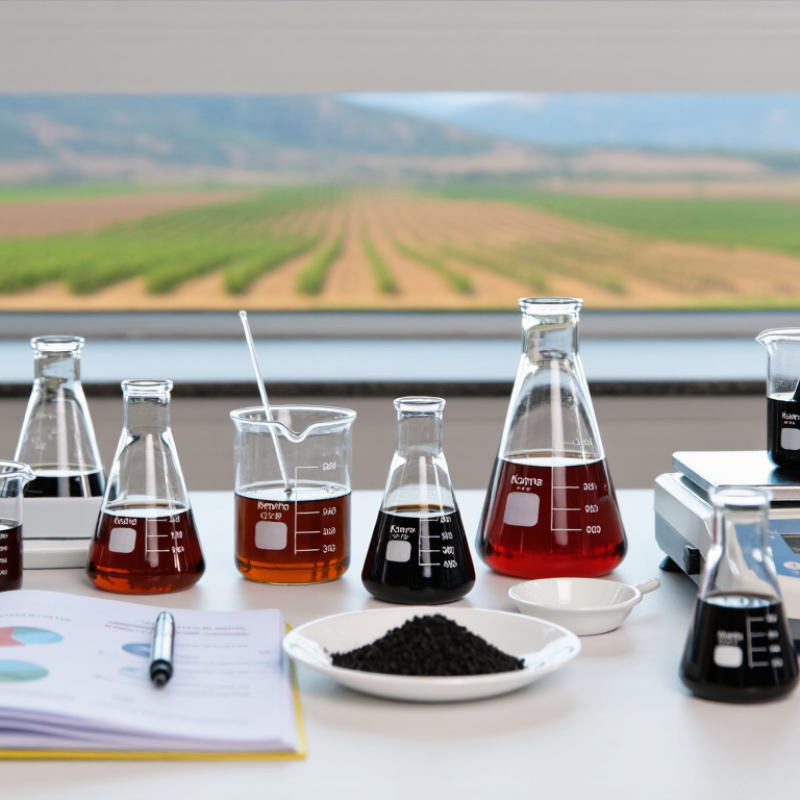
What Is the Best Potassium Humate Supplier in China?

Potassium Humate Basics: Composition, Solubility, and Agricultural Uses

Potassium humate is the potassium salt of humic acids, complex organic compounds formed as plant and animal residues decompose. Products may also contain fulvic substances, minerals, moisture, and ash. Their proportions vary with the raw material and manufacturing process, so the name alone does not guarantee a consistent composition. Ask for a batch analysis showing humic content, potassium level, moisture, and water-soluble fraction. Check the test method, too.

Potassium humate generally dissolves more readily in water than unneutralized humic acid, but solubility can vary with formulation, water quality, and pH. A jar test with the farm’s actual irrigation water can reveal sediment or clogging before fertigation. Small detail. In agriculture, it is used in soil drenches, fertigation, and some seed treatments to support root growth and nutrient availability. Rose et al.’s 2014 meta-analysis in Plant and Soil reported average increases of 22% in shoot dry weight and 21% in root dry weight across studies of humic substances. Those results cover varied products and conditions, not potassium humate alone. Field response is not guaranteed; soil tests, crop stage, and application rate matter. I would not treat a promising label claim as a substitute for local trials.

Potassium Humate Basics: Solubility Across pH Conditions

Humic acid is generally insoluble under strongly acidic conditions and becomes soluble as pH rises; fulvic acid is soluble across a broad pH range. Potassium humate is water-soluble under suitable conditions, but strong acid can convert its humate fraction to less-soluble humic acid. The chart shows qualitative behavior, not measured concentration; actual products vary in composition and performance.

China’s Supply Chain: Raw Materials, Product Grades, and Production Forms

China’s potassium humate supply chain begins with humic-rich materials, often weathered lignite or leonardite. Their composition can vary by deposit and batch. That variation affects color, solubility, and humic-acid content. Ask suppliers where the raw material comes from and how each batch is tested. A polished specification sheet helps, but it does not tell the whole story.

Product grades should match the intended use. Compare humic-acid content, potassium content, moisture, and water solubility using clearly stated test methods. For fertigation, a sample should dissolve cleanly in a bucket, without leaving heavy sediment. For soil application, granules may be easier to handle. Powder, flakes, and liquid concentrates each have different storage and transport needs. Convenience matters.

Production forms reveal practical differences. Dry products are generally easier to ship, while liquids can be simpler to dose but may cost more to transport. Request recent batch records and test a representative sample in your own water and equipment. Check whether the supplier can keep specifications consistent across repeat orders. This takes time. Even careful testing has limits: one successful sample cannot guarantee every future batch. A reliable supplier should discuss that uncertainty openly, rather than promise identical results under every condition.

Verify Product Claims with ISO 19822:2018 Humic and Fulvic Acid Testing

The best potassium humate supplier is not necessarily the one with the boldest percentage on its label. Ask for a batch-specific laboratory report and check whether it identifies the test method, sample basis, and result units. The International Fertilizer Association’s 2024 outlook estimated global fertilizer consumption at about 205 million tonnes of nutrients for 2024/25. That market figure gives useful context, but it does not prove a humate product’s quality or field performance.

Scale is not evidence.

ISO 19822:2018 provides a method for determining humic and hydrophobic fulvic acids in fertilizer materials. Request results tested against this standard, then confirm the report names the exact product batch and reports humic and fulvic fractions separately. Check moisture basis, too; otherwise, two percentages may not be comparable.

A certificate alone is not a verdict. Ask which independent laboratory performed the test, and whether the supplier can provide a recent matching batch record. I would still want a small field trial under local soil conditions. Lab results measure composition, not guaranteed yield.

That distinction is easy to miss.

Compare Commercial Benchmarks: 60% Humic Acid and 8% K₂O

For a China-based potassium humate supplier, 60% humic acid and 8% K₂O offer useful screening benchmarks. They do not prove overall quality. Ask whether humic acid is reported on a dry basis and which test method supports it. Moisture can shift the as-shipped result. Small detail, big difference.

Check the certificate of analysis against a recent production lot, not only a sales sample. Confirm K₂O separately; total potassium and soluble potassium are not interchangeable labels. Request results across several batches, plus a retained sample for comparison. A pale-brown powder may look consistent, yet appearance cannot verify assay or dissolution. Test it in your own water.

Supplier selection also depends on practical performance. Ask for solubility guidance, particle-size information, packaging details, and traceable lot numbers. For irrigation or fertigation, a jar test can reveal sediment before a larger trial; water hardness and filtration matter. I would not treat one polished report as certainty. Even a clear certificate leaves one question: will the next shipment match?

Select a Supplier by Batch COAs, Traceability, Export Records, and Delivery Performance

What Is the Best Potassium Humate Supplier in China?

A reliable supplier can show batch-specific certificates of analysis, not just one polished product sheet. Check that each COA lists the lot number, test date, potassium humate content, moisture, and testing methods. Ask whether results come from an in-house or independent laboratory. The answer should be clear. Traceability matters too: request a simple record linking the raw material, production batch, and packed goods. If those details cannot be matched, the paperwork offers limited reassurance.

Tips: Request a COA from a recent shipment and compare it with the sample you receive. Confirm that the lot numbers match. Ask for recent export references, typical transit times, and on-time delivery figures—not promises alone.

Export records can help show whether a supplier understands routine shipping documents and packaging requirements. Delivery performance deserves the same scrutiny: compare quoted lead times with actual dispatch dates, and ask how delays are reported. No supplier is flawless. One late shipment may be unusual; repeated vague explanations are more telling. I would also check how quickly staff answer technical questions. A fast reply is useful, but accuracy matters more. Small gaps in a record are worth discussing before payment, even when the product sample looks good.

What Is the Best Potassium Humate Supplier in China? — Select a Supplier by Batch COAs, Traceability, Export Records, and Delivery Performance
Evaluation Dimension Evidence to Request How to Compare Suppliers Verification Notes
Batch-specific COA A certificate of analysis linked to the exact production lot offered for shipment. Check that each quoted specification has a result, unit, test method, and acceptance limit where applicable. Confirm the lot number matches the product label and shipping documents. A generic sample COA does not establish results for a different lot.
Product specification clarity Written specification stating the product form, grade, guaranteed values, units, and test methods. Compare offers only when the reported parameters and methods are comparable; do not treat differently defined assays as equivalent. For humic substances, ask how “humic acid” and related values are defined and measured. Request the method rather than relying on a value alone.
Independent test confirmation A recent report from an independent laboratory for a clearly identified sample or lot, if independent testing is part of the purchase requirement. Check the sample identity, test date, methods, and whether the reported items match the purchase specification. Agree in advance who selects and pays for the sample and how discrepancies will be handled.
Batch traceability Lot coding, production records, packaging identification, and a documented link between the lot and its COA. Ask the supplier to demonstrate how a shipped lot can be traced back to its production and quality records. Check that lot identifiers remain consistent across the COA, labels, packing list, and other agreed records.
Export documentation Redacted examples of relevant export documents, such as a commercial invoice, packing list, bill of lading, and certificate of origin when applicable. Assess whether the supplier can prepare documents that match the product, quantity, consignee details, and agreed shipping terms. Document requirements depend on destination, route, and transaction. Confirm requirements with the importer, carrier, or customs broker.
Delivery performance A dated shipment record or order history showing agreed dispatch dates and actual dispatch dates, with sensitive details redacted. Compare on-time dispatch using the same period and definition: orders dispatched on or before the agreed date ÷ total orders in that period. Distinguish factory dispatch from arrival at destination; transit time can depend on the carrier, route, and customs processing.
Packaging and shipment readiness Packaging specification, net and gross weights, pallet or container plan, and shipment photographs where available. Confirm packaging and loading details meet the buyer’s handling, labeling, and destination requirements. Agree on packaging, marks, and any moisture-protection requirements in the purchase documents before production or dispatch.
Order terms and quality remedies A written quotation and purchase terms covering specification, inspection, claims, delivery, and payment. Compare the full delivered offer and the process for resolving specification or shipment discrepancies, not price alone. Ensure the contract identifies the applicable product specification, inspection basis, and agreed Incoterms® rule and version.

Supplier performance cannot be established from a generic comparison table. Verify current, lot-specific records and compare offers against the same written specification and delivery terms.

Need Packaging Solutions?

Get Free Estimate!

1-800-493-7441
Contact Us