...

Blog

Home Blog

10 Best Gloss Art Board Suppliers for Global Buyers

Choosing a supplier for Gloss Art Ardboard is not just a search for the brightest finish. Buyers need dependable sheet thickness, clean white surfaces, and coating that holds color without scuffing too easily. A sample may look excellent under a showroom lamp, yet behave differently on a fast press or after a humid voyage. Small differences matter.

Paperboard sourcing specialist Daniel Mercer puts it this way: “A glossy sheet earns trust through consistent coating, a stable core, and predictable performance from batch to batch.” That is a useful test for any supplier claim. Ask for current technical data, production samples, and clear information about tolerances. Then compare what arrives with what was promised. Details count.

This guide reviews ten Gloss Art Ardboard suppliers serving global buyers, with attention to product range, customization, quality controls, and export experience. It also considers practical questions: Can the mill support repeat orders? Are packaging and pallet details clear? Does the supplier respond when a specification needs adjustment? A low quote can be tempting. But it may hide freight costs, uneven batches, or slow communication. No supplier is perfect, and a polished website proves very little. Buyers should verify claims independently and test sheets on their own equipment. That takes time. It can prevent expensive surprises later.
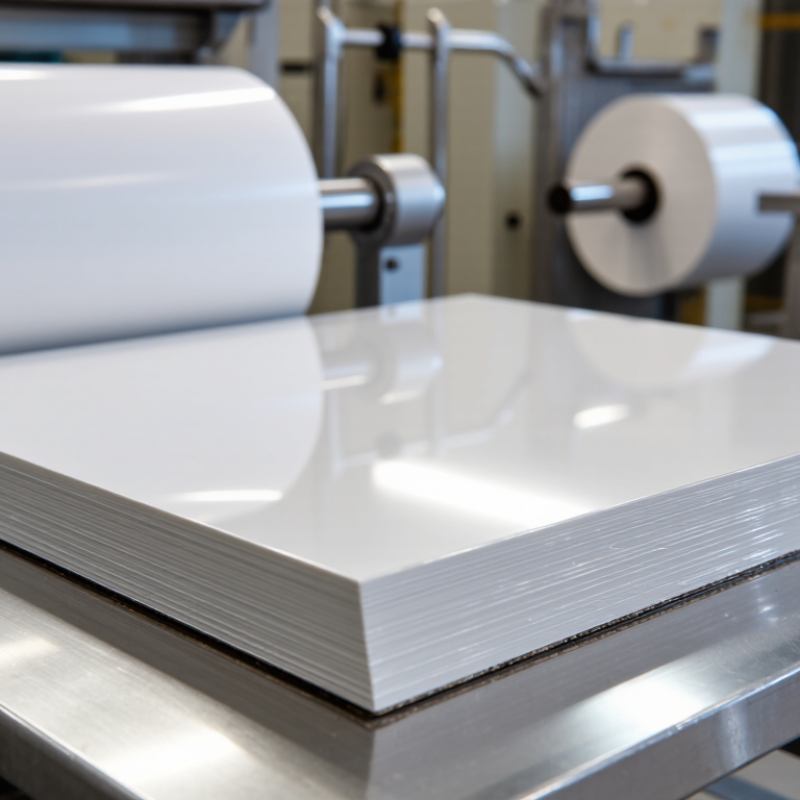
10 Best Gloss Art Board Suppliers for Global Buyers

Gloss Art Board Explained: Coated Layers, Base Stock, and Common Uses

Gloss art board is a stiff paperboard with a smooth, glossy coated surface. The coating usually combines mineral pigments and binders, then receives finishing to create an even sheen. It may cover one side or both. That matters.

The base stock provides most of the board’s strength and thickness. Its fibre mix, grammage, and construction affect stiffness, folding, and how cleanly edges cut. A glossy face can make printed colors look vivid, but it does not make the board waterproof. Strong light can also create glare, which may reduce readability on display pieces.

Buyers commonly use gloss art board for product cartons, book covers, presentation folders, and promotional cards. For packaging, check whether the board scores without cracking and suits the intended folding process. Ask suppliers for samples with stated thickness, grammage, coating sides, and printing compatibility. A sample can still mislead if it is tested in different humidity or on another press. I would not judge by shine alone; a board that looks excellent flat may behave poorly at the crease. Compare actual printed and folded pieces before placing a large order.

Typical Buying Range: 200–400 gsm and ISO 536 Grammage Testing

For gloss art board, 200–400 gsm is a practical buying range for covers, folders, and premium printed sheets. At 200 gsm, a square metre weighs 200 grams; at 400 gsm, it weighs 400 grams. That difference affects handling and converting. It does not, by itself, guarantee stiffness or surface gloss. CEPI’s Key Statistics 2023 reports European paper and board production of about 78.5 million tonnes. This broad market figure shows scale, not the quality of any individual grade.

Ask suppliers to state the target grammage and agreed tolerance on quotations and sample labels. ISO 536:2019 specifies a method for determining paper and board grammage, expressed in grams per square metre. Request test results tied to the delivered production lot, not only a catalogue specification. Check that the laboratory uses calibrated equipment and records sample conditioning. Small details matter.

One caveat: ISO 536 measures grammage, not gloss, coating uniformity, or stiffness. A board may meet its weight target and still behave poorly on press. I would compare printed and trimmed samples before committing to a large order. That takes time. Ask for test method, measured values, and batch identification in writing. CEPI’s production data is useful context, but supplier-level test evidence should guide the purchase.

10 Best Gloss Art Board Suppliers for Global Buyers - Typical Buying Range: 200–400 gsm and ISO 536 Grammage Testing
Supplier Type Typical Board Offering Common Grammage Range Useful Quality Checks Best Fit for Buyers
Integrated paper and board mill Gloss-coated solid bleached sulfate (SBS) or other coated paperboard, often supplied in sheets or reels About 200–400 gsm, subject to the mill’s grade range Verify grammage using ISO 536; request coating, caliper, moisture, and surface-finish specifications Large-volume buyers seeking consistent grades and direct technical support
Paperboard converter Converted sheets cut from larger reels or parent sheets; finishing options depend on equipment Commonly sourced within the 200–400 gsm buying range Confirm sheet size, squareness, edge condition, lot identification, and grammage test documentation Buyers needing tailored sheet sizes or converted formats
Packaging-board specialist Coated board intended for folding cartons and other printed packaging Often available across light- to mid-weight packaging grades, including 200–400 gsm options Check print-side gloss, stiffness, fold performance, and suitability for the planned printing and converting process Packaging producers balancing print appearance with converting requirements
Printing-paper distributor Stocked gloss-coated board grades sold in standard sheet sizes Availability varies; ask specifically for grades from 200 to 400 gsm Request the grade specification and batch-level grammage results; confirm storage and packaging conditions Print shops and buyers seeking stocked material or consolidated orders
Regional paper merchant Locally stocked coated board, with selection determined by regional demand May cover part or all of the 200–400 gsm range Check whether the quoted grammage is nominal or measured, and confirm tolerances and delivery format Buyers prioritizing local availability and shorter replenishment lead times
Export-focused paper supplier Board supplied for international shipments, typically in export packing and agreed formats Can be quoted to buyer specification within the supplier’s available grade range Agree on test methods, sampling, moisture protection, packaging, and inspection documents before shipment Importers coordinating orders across borders and requiring documented specifications
Custom sheet-cutting supplier Gloss art board cut to customer dimensions from available reels or larger sheets Depends on the input grade; 200–400 gsm is a common specification window to request Check cut-size tolerance, grain direction where relevant, sheet count, and grammage of the input grade Buyers whose equipment or product format requires non-standard sheet sizes
Print-and-packaging materials wholesaler Multiple coated board grades for commercial print, display, and carton applications Selection varies by inventory; compare available weights within 200–400 gsm Compare gloss finish, caliper, stiffness, print compatibility, and the supplier’s batch traceability Smaller buyers needing access to several grades from one source
Specialty coated-board supplier Gloss-finished board with grade-specific surface or coating characteristics Specified by grade; request available options in the 200–400 gsm range Define the gloss measurement method and geometry; ISO 8254-1 covers 75° specular gloss measurement for paper and board Buyers for whom surface appearance and print finish are key requirements
Paper and board sourcing agent Sources grades from mills or converters against a buyer-defined specification Depends on the selected producer and grade; specify the required grammage range in the inquiry Request producer data, ISO 536 grammage results, grade identification, and clear acceptance criteria Buyers comparing supply options or coordinating sourcing in unfamiliar markets
Buying note: 200–400 gsm is a practical inquiry range, not a universal product-availability guarantee. ISO 536 specifies the determination of paper and board grammage. Confirm the test method, sampling plan, tolerances, grade, format, and finish with the supplier before placing an order.

Surface Quality Metrics: ISO 2470 Brightness and ISO 8791 Roughness

For gloss art board, surface claims need measurable conditions. ISO 2470-1:2016 defines ISO brightness as diffuse blue reflectance, reported as a percentage. It is not the same as perceived whiteness, and optical brighteners can affect readings. Ask suppliers for test results, the tested side, and conditioning details—not a brightness figure alone.

Roughness needs equal care. ISO 8791-2:2013 measures Bendtsen air-leak roughness, commonly reported in millilitres per minute; ISO 8791-4:2007 uses the Print-surf method. These methods are not interchangeable. As a practical comparison, a buyer might record one sample at 88% ISO brightness and 150 ml/min Bendtsen, then test competing sheets under the same conditions. Those figures are an example, not an industry-wide pass mark. Small differences matter.

A smoother surface can support more even ink transfer, but the best result depends on coating, printing process, and desired finish. Request recent laboratory reports that identify the ISO method, sample direction, and measurement side. Check multiple sheets from each lot; one test can hide variation. Keep moisture and conditioning consistent, too. It is easy to overlook this. A glossy face may look uniform under warehouse lighting, yet show uneven coverage on a solid printed area. Numbers need context.

How to Compare Global Suppliers: Certifications, Capacity, and Lead Times

How to Compare Global Suppliers: Certifications, Capacity, and Lead Times

A certificate is a starting point, not proof that gloss art board will suit your press. The ISO Survey 2022 recorded more than 1.26 million valid ISO 9001 certificates worldwide. Check the certificate’s scope, issuing body, and expiry date. Then request recent test data for brightness, grammage, coating, and moisture. Compare samples under the same lighting; gloss can look different after printing. Small detail, big impact.

Capacity needs specifics. Ask for monthly output of your required grammage and sheet size, current production loading, minimum order quantity, and backup arrangements. A supplier’s total mill capacity may not reflect the line available for your order. For lead times, separate production, packing, and transit estimates. UNCTAD’s Review of Maritime Transport 2024 reported sharp container-rate increases on major routes in the first half of 2024. Shipping conditions can change quickly, so request recent dispatch records and a written delay-notification process. A neat schedule may still be optimistic.

Tip: Ask for dates from three recent comparable orders, not just a standard lead-time quote. Compare the same port, order size, and board specification. Note what is confirmed and what remains an estimate.

10 Best Gloss Art Board Suppliers: Regional Profiles and Product Ranges

Regional profiles help buyers compare gloss art board beyond headline price. East Asian mills and converters often list broad coated-board choices. European and North American suppliers may emphasize documented sourcing and local converting. These are tendencies, not guarantees. FAO’s Yearbook of Forest Products reports roughly 401 million tonnes of global paper and paperboard output in 2022. That figure signals industry scale, not gloss-board capacity.

Tip: Request a current specification sheet, coated-side details, caliper tolerance, and sample sheets from each region. Compare gloss under consistent lighting; phone photos can mislead. Ask for test results and shipment-packaging details, too.

Product ranges can differ in grammage, sheet size, gloss level, stiffness, and print compatibility. Ask suppliers to specify each clearly; catalog terms are not always comparable. Some listings group coated-one-side and coated-two-side grades under similar names. Verify the coating construction before approving a production run. Suppliers may also differ in minimum order quantities, lead times, and moisture protection. Request pallet photos and edge-protection details; corner damage can ruin an otherwise good sample. Test sheets on the intended press. Small checks save trouble.

10 Best Gloss Art Board Suppliers: Common Product Weight Grades

A global buyer’s reference to commonly specified gloss art board basis weights. These are nominal grades, not supplier-specific availability; ranges and stock options vary by market.

Basis weight is measured in grams per square metre (gsm). Confirm exact specifications, tolerances, and regional availability with each supplier.

Need Packaging Solutions?

Get Free Estimate!

1-800-493-7441
Contact Us