...

Blog

Home Blog

What Are the Best Food Packaging Solutions in China?

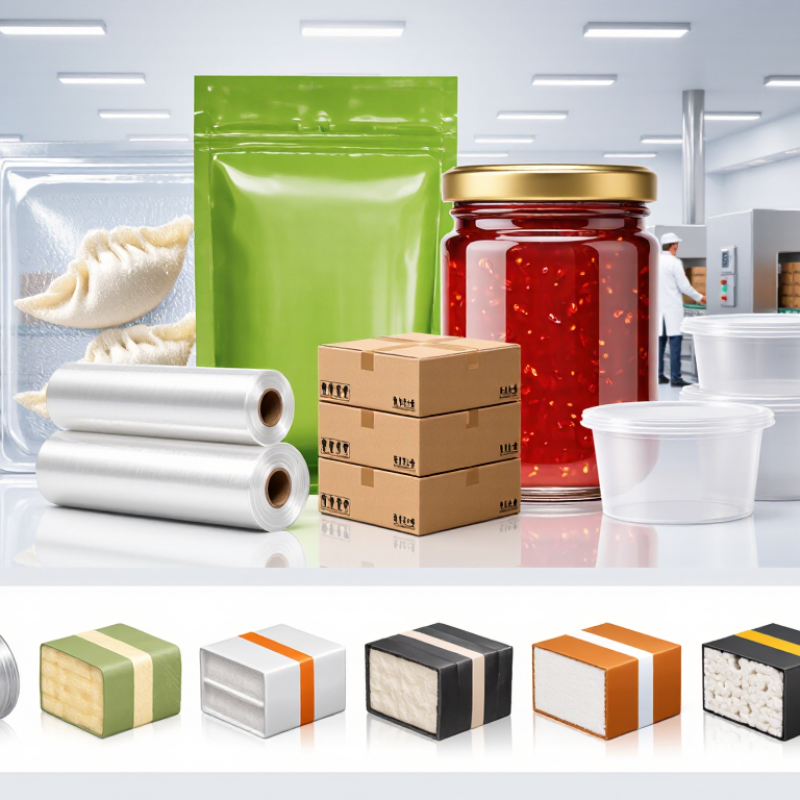
China’s food market moves quickly, but the best food packaging solutions are not simply the newest or cheapest. They protect product quality, fit the production line, and make sense for the buyer. A chilled dumpling pack faces different demands from a tea pouch or a glass jar of chili oil. Moisture, oxygen, light, sealing strength, and transport conditions all matter.

Food-packaging specialist Dr. Aaron L. Brody is often associated with this practical principle: “Packaging must protect the food while serving the needs of the supply chain and the consumer.” The details behind that idea are easy to underestimate. A seal that looks neat on a sample may fail after a long, humid journey. A recyclable material may still need testing on existing filling equipment. Small choices count.

This guide looks at common options across China, including flexible films, paper-based packs, rigid containers, and modified-atmosphere packaging. It considers product fit, barrier performance, food-contact safety, customization, cost, and supplier capability. These factors help buyers compare solutions without treating one material as right for every use. That sounds straightforward. It rarely is.

The discussion also points to questions worth asking manufacturers: Can they provide material specifications? Do they test seals and shelf-life performance? Can they support stable production at the required volume? A supplier’s sample is useful, but it is not the whole story. Real-world trials may reveal problems that a brochure cannot. The best choice is usually the one that performs reliably for the specific food, route, and business—not the one with the boldest claim.
What Are the Best Food Packaging Solutions in China?

Definition and Core Functions of Food Packaging in China

Food packaging in China is the material and system surrounding food from processing to sale and use. Its core functions are to protect food from contamination, moisture, oxygen, impact, and temperature changes; preserve quality; and communicate handling and storage information.

For example, a sealed tray can limit leaks, while a clear date and storage instruction help shoppers handle chilled foods correctly. Packaging also supports transport through busy distribution networks. It cannot, however, make poor storage safe.

The scale of food loss shows why protection matters. FAO’s 2019 State of Food and Agriculture estimated that 14% of food is lost between harvest and retail worldwide. UNEP’s Food Waste Index Report 2024 estimated 1.05 billion tonnes of food waste in 2022 across households, food service, and retail.

These figures do not prove packaging alone can prevent waste. They do underline the value of choosing formats that suit a food’s shelf life, route, and storage conditions. A rigid container may protect fragile produce, while a moisture barrier can help keep dry foods crisp. More material is not always better.

Tip: Match packaging to the product and journey. Check seal integrity, stacking strength, and storage guidance under realistic conditions. Then review whether the package is easy to sort and recycle locally. Small print matters. A design can work in a factory but frustrate a shopper.

Market Scale: China's Packaging Sector Earned About ¥1.15 Trillion in 2023

China’s packaging sector recorded operating revenue of about ¥1.15 trillion in 2023, according to China Packaging Federation industry statistics. The figure covers the wider packaging industry, not food packaging alone. Still, it points to substantial manufacturing capacity across paperboard, plastics, metal, and glass. The National Bureau of Statistics reported catering revenue of ¥5.29 trillion that year, up 20.4% from 2022. More takeaway orders increase demand for leak-resistant bowls, secure lids, and bags that withstand steam. Scale matters.

Those figures cannot identify one best format. Fresh produce may need ventilation and cushioning; hot soup needs a reliable seal and heat tolerance. Packaging choices should also reflect delivery distance, cold-chain handling, and local recycling access. A key limitation is that revenue data reveal little about package performance or end-of-life outcomes. This is often overlooked. Buyers can test seals, stack strength, and food-contact compliance under realistic transport conditions. A lightweight pouch may use less material, yet still be difficult to recycle locally. The practical choice is a package that protects food with minimal material, supported by documented testing and local disposal options.

Key Materials: Comparing Paper, Plastics, Glass, and Metal for Food Use

Food packaging in China should match the product, filling process, and delivery conditions. Paperboard suits dry goods such as biscuits or takeaway boxes, and it prints clearly. But steam, oil, and sauces can soften it. A liner or coating may help, though it can make recycling less straightforward. Paper is not automatically the greener choice.

Plastic is light, flexible, and useful for chilled foods or sealed portions. The exact resin and package design matter: a film that performs well at room temperature may not suit hot filling or long storage. Glass provides a strong barrier and does not readily react with many foods, but it is heavy and can break during transport. Handle it carefully.

Metal cans and trays block light and oxygen, making them practical for products that need robust protection. Their inner coatings must be compatible with the food, especially acidic sauces. There is no perfect material. A realistic comparison should include shelf life, filling temperature, transport distance, and local collection options. That last detail is easy to overlook. Packaging trials with the actual food can reveal leaks, soggy edges, or damaged corners before large orders begin.

What Are the Best Food Packaging Solutions in China? — Key Materials: Comparing Paper, Plastics, Glass, and Metal for Food Use
Material Common Food Uses Barrier and Preservation Weight and Handling Main Advantages Limitations and Design Considerations End-of-Life Considerations in China
Paper and paperboard Dry foods, takeaway cartons, bakery boxes, sleeves, and outer packaging. Provides a useful light and air barrier when appropriately designed, but uncoated paper generally has limited resistance to moisture, grease, and liquid. Lightweight and easy to fold or stack; can lose strength when wet or heavily loaded. Printable, widely used, and often suitable for rigid or foldable formats. Can use recycled fiber where the application and food-contact requirements allow. Grease- or moisture-resistant performance may require coatings, liners, or laminates, which can make separation and recycling more difficult. Not suitable for every direct-contact application without appropriate testing. Clean, unlaminated paper is generally easier to recover than composite packaging. Food residue, plastic layers, and barrier coatings can reduce recyclability; collection and processing vary by location.
Plastics Flexible pouches, bottles, trays, cups, films, and lidding. Performance varies by polymer and structure. Some formats provide good moisture or oxygen barriers; multilayer structures can combine properties but are harder to separate. Usually lightweight and resistant to breakage. Flexible formats can reduce storage and transport volume. Versatile in shape and sealing, with options for clear, flexible, or rigid packaging. Can be selected for specific shelf-life and processing needs. Different plastics have different heat resistance and barrier properties. Suitability for hot filling, microwave use, or repeated use depends on the exact material and intended conditions. Avoid unsupported claims that a package is universally recyclable. Recycling depends on resin type, package design, cleanliness, and local collection and sorting. Multilayer films and small or contaminated items are often more challenging to recover.
Glass Beverage bottles, jars, sauces, preserved foods, and some infant-food containers. Provides a strong barrier to gases and moisture and does not readily transmit odors or flavors through the container wall. Heavy and breakable; needs protection during handling and transport. Some containers are designed for reuse, subject to suitable return and washing systems. Transparent or colored options are available. Glass can be suitable for products needing a strong barrier and can withstand many food-processing conditions when the container is properly specified. Weight can increase transport impacts. Sudden temperature changes may cause breakage, and closures or seals are still needed to protect the contents. Glass can be recycled, but practical recovery depends on local collection, sorting, color separation, and transport arrangements. Reuse requires an effective collection and cleaning system.
Metal Cans for beverages and preserved foods, foil, trays, and metal closures. Rigid metal cans provide an excellent barrier to light, gases, and moisture. Food-contact coatings or internal lacquers may be used to protect product quality and the container. Strong and stackable; typically lighter than glass but heavier than many plastic or paper formats. Cans can dent, and foil can tear. Suitable for products requiring robust protection and, in appropriately designed systems, thermal processing. Aluminum and steel formats can be recycled when collected and processed. Compatibility between the food, metal, coating, and processing conditions must be assessed. A damaged or unsuitable coating can affect product quality and package integrity. Metal is technically recyclable, but recovery depends on collection and sorting. Emptying containers and handling attached materials can affect recycling quality.
Selection note: No single material is best for every food. Match the package to the food’s moisture, oxygen, light, temperature, shelf-life, transport, and processing needs. For food-contact packaging sold in China, verify that the finished material and intended use comply with applicable Chinese food-contact safety requirements, including relevant GB 4806 standards.

Food-Contact Safety: How China’s GB 4806 Standards Guide Packaging

What Are the Best Food Packaging Solutions in China?

Food-contact safety starts with the material, not the package’s appearance. China’s GB 4806 standards set safety requirements for materials and articles intended to contact food. The series includes general requirements and standards for specific materials, such as plastics, paper, metal, and coatings. Details matter. A container suitable for dry biscuits may not suit hot soup or oily food.

A practical review checks the intended food, temperature, contact time, and packaging structure. These conditions can affect whether substances migrate into food. Ask suppliers for relevant conformity documents and test reports, then confirm that the tested sample matches the actual packaging. A report for one plastic film may not cover a printed, laminated pouch. Small differences count. Testing should reflect realistic use, including heating or long storage where applicable.

Keep material specifications, batch records, and supplier declarations together so they can be checked later. Standards can be updated, so verify current requirements for the exact material and use. Paper packaging may look straightforward, but coatings, inks, and adhesives also deserve attention. This step is easy to overlook. Compliance documents are useful, but they do not replace careful review of the final package and its intended conditions.

Delivery and Sustainability: Meeting Needs of 545 Million Food-Delivery Users in 2023

China’s 545 million food-delivery users in 2023 represent a demanding test for packaging. A meal may travel across town in rain, traffic, and crowded elevators. The container must keep food secure, retain heat, and avoid leaks without adding needless bulk.

For soup, a tight-fitting lid and a separate sealed bag help prevent spills. Fried foods need room for steam to escape; otherwise, crisp coating softens before arrival. That small detail matters. Paper-based boxes can work well for some dry meals, while sturdy, food-contact-safe containers suit saucy dishes. No single material fits every menu.

Sustainability depends on what happens after the meal, not just what the package is made from. Clear sorting instructions can help, but local collection and recycling options vary. Compostable packaging may not break down in ordinary waste systems. This part is often overlooked. Restaurants can reduce unused cutlery and right-size containers, though convenience still wins on busy nights. Better packaging is a series of practical trade-offs, and some choices deserve a second look.

Need Packaging Solutions?

Get Free Estimate!

1-800-493-7441
Contact Us