Choosing the right Mini Cake Board can influence presentation, transport, and customer satisfaction. For wholesale buyers, appearance matters, but performance matters more. A glossy board may look attractive under shop lighting. However, it can become slippery under a chilled cake.
This guide examines ten practical options for wholesale purchasing. The comparison considers board thickness, surface finish, moisture resistance, edge quality, weight capacity, packaging, and storage needs. These details affect real working conditions. A bakery may stack hundreds of boards in a small storeroom. A distributor may need consistent sizing across several cake designs. Small differences can create noticeable waste.
The selections are based on common bakery requirements, supplier information, and practical quality checks. Each Mini Cake Board should be reviewed for flatness, clean cutting, stable laminating, and reliable delivery. Sample testing is essential before placing a large order. Check the board beneath a six-inch cake, then inspect it after refrigeration. Some products perform well in photos but feel weak in daily handling.
No board is perfect. That is worth remembering. A thicker option may offer better support but increase shipping costs. A budget board may satisfy simple orders but disappoint premium customers. My assessment may also change with new materials, packaging methods, or supplier improvements. Therefore, this article focuses on useful comparisons rather than absolute claims. It aims to help wholesalers select dependable boards with clearer expectations, fewer surprises, and better value.
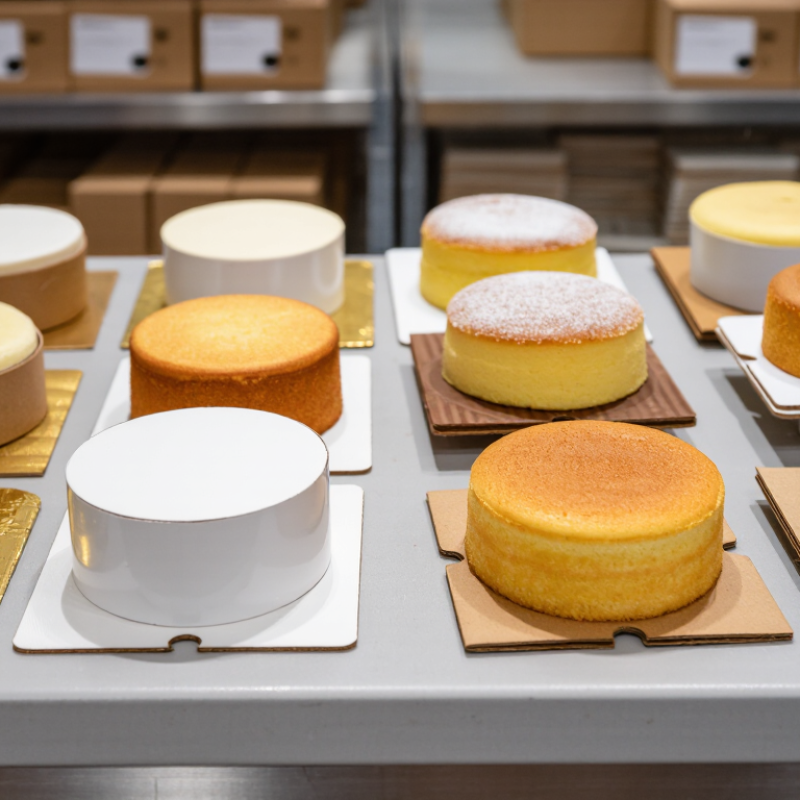
Mini cake boards are compact, rigid bases placed beneath individual cakes, cupcakes, tarts, or small dessert boxes. They provide support during decorating, packing, transport, and display. Common materials include coated paperboard, laminated card, and food-safe plastic. Each option offers different strength, moisture resistance, and cost control.
Wholesalers need mini cake boards because small desserts still require protection. A firm board helps prevent cracks, tilted layers, and damaged frosting during delivery. It also creates a cleaner presentation for bakeries, cafés, caterers, and event suppliers.
In bulk purchasing, consistency matters. Identical sizes improve packing efficiency and reduce wasted carton space. Thickness matters too. A thin board may bend under a dense mousse cake, while an overly thick board can increase shipping costs.
Based on practical purchasing experience, surface finish deserves attention. Glossy coatings resist grease, but some may feel slippery. That detail is easy to overlook.
Tips:
Test samples with real products before placing a wholesale order. Check the board’s diameter, edge quality, moisture resistance, and load capacity. Store cartons flat and away from damp floors. Ask for food-contact documentation when required.
A small mistake in sizing can affect thousands of units. I have seen attractive boards fail because their edges softened in refrigerated storage. Suppliers should also compare unit price, carton quantity, lead time, and replacement policy.
The cheapest option is not always the most reliable.
Wholesale mini cake boards succeed or fail at the material stage. Corrugated paperboard offers low weight, clean cutting, and useful shock absorption. Its fluted center helps protect small cakes during short deliveries. Solid paperboard gives a smoother surface and sharper printed edges. It suits cupcakes, petite pastries, and premium gift boxes. However, thin grades can bend under moist sponge cakes.
Plastic-coated paperboard resists grease better, but recycling options may become less straightforward. Foil-laminated board looks attractive, yet it can complicate recovery systems. Wood-based boards, including MDF, provide strong support for heavier cakes. They also add weight, storage costs, and more quality checks. For food contact, wholesalers should request supplier declarations and test moisture resistance before placing large orders. The U.S. Food and Drug Administration’s food-contact framework emphasizes that packaging components must be suitable for their intended use. Material selection cannot rely on appearance alone.
Tips: Compare edge strength, not only thickness. Place a loaded sample on a scale for 24 hours. Check warping afterward. McKinsey’s 2023 global packaging survey reported that roughly 60–70% of consumers would pay more for sustainable packaging. That finding supports recyclable paperboard, but the result is not universal. A thinner board may reduce material use, yet it can create product damage. That trade-off deserves honest testing.
Which Materials Make the Best Mini Cake Boards?
This comparison uses practical wholesale criteria rated from 1 to 5: moisture resistance, rigidity, food-contact suitability, recyclability, and cost efficiency. Coated paperboard and corrugated fiberboard generally offer the best balance for standard mini cakes, while laminated plastic provides stronger moisture resistance and reusable performance.
Choosing the best mini cake boards for wholesale starts with accurate sizing. The board should usually extend 1 to 2 inches beyond the cake. This creates space for piping, lifting, and safer box handling. Common sizes include 4-inch, 6-inch, and 8-inch boards. Measure the finished cake, not only the baking pan.
Shape also affects presentation and storage. Round boards suit classic mini cakes, while square boards support sharper decoration. Scalloped edges can look attractive but may reduce usable space. For wholesale orders, check that every shape is cut evenly. Small differences become obvious across a large batch.
Thickness influences stiffness, stacking, and shipping weight. Thin boards may work for light sponge cakes, but dense fruit cakes need stronger support. I once selected a thinner option to reduce freight costs. Several boards bent when staff moved boxed cakes. That was an expensive lesson. A practical test is simple: place a fully decorated cake on the board, then lift it from one edge. Add gentle movement and inspect bending, surface separation, and slipping. Weight capacity should be tested with real cakes, because moisture and toppings change the load. Ask suppliers for material details, thickness tolerance, and batch samples. Do not trust a stated capacity without testing it. Humid storage can weaken some paper-based boards, especially near unsealed edges. Bulk buyers should compare actual performance, not just unit price.
What Are the 10 Best Mini Cake Boards for Wholesale?
The best mini cake boards are not chosen by appearance alone. Wholesale buyers should compare material strength, food safety, moisture resistance, and presentation. Popular options include coated paperboard, corrugated board, solid fiberboard, and reusable plastic. Each serves a different production need.
A reliable board should stay flat under a small cake, cream, and light decoration. Look for a firm center, smooth edges, and a grease-resistant surface. Food-contact documentation matters, including material declarations and migration test records. Inks and coatings should be suitable for contact around food. Avoid loose fibers, sharp corners, staples, and strong chemical odors. Consistent sizing also improves packing speed and reduces returned orders. A 100-millimeter board that varies by two millimeters can affect cake placement.
Presentation still matters. White, kraft, silver, and gold finishes create different retail impressions. Clean die-cut edges help cakes look professionally finished. However, glossy surfaces may show fingerprints easily. That detail is easy to miss. I would test samples under real bakery conditions, not only under showroom lighting. Check stacking, refrigeration, condensation, and delivery movement. One purchasing mistake is judging quality from thickness alone. A thicker board can still bend when its structure is weak.
Tips: Request samples from several production batches. Weigh them, press the center, and inspect the edges. Test grease marks after four hours. Confirm packaging protects boards from dust and humidity. Keep a simple inspection record for every wholesale shipment.
| Rank | Mini Cake Board Profile | Typical Size Range | Construction | Thickness | Recommended Load | Surface and Edge Features | Food-Safety Considerations | Best Wholesale Use | Wholesale Quality Rating |
|---|---|---|---|---|---|---|---|---|---|
| 1 | Premium Laminated Corrugated Board | 4–8 in round or square | Multi-layer corrugated fiberboard with a rigid paper laminate | 3–4 mm | Up to 2.2 lb per board when evenly supported | Bright printable top, clean-cut edges, good resistance to light moisture | Use a food-contact-rated top layer or a suitable cake liner between the dessert and board | High-volume cupcakes, mini layer cakes, and retail gift boxes | Excellent |
| 2 | Double-Wall Corrugated Cake Board | 5–10 in round or square | Two corrugated layers bonded for increased stiffness | 5–6 mm | Up to 3.3 lb per board when evenly supported | Strong compression resistance, stable base, less bending during transport | Confirm that adhesives, coatings, and paper liners are suitable for intended food contact | Heavier mini cakes, stacked desserts, and delivery orders | Excellent |
| 3 | Metallic-Finish Laminated Board | 4–8 in round, square, or scalloped | Rigid fiberboard core with a reflective laminated paper surface | 2.5–3.5 mm | Up to 2.0 lb per board when properly centered | Premium presentation, reflective finish, smooth wipeable outer surface | The metallic layer should be fully bonded and separated from food by an approved food-contact surface | Celebration cakes, dessert counters, and premium presentation packs | Very High |
| 4 | Moisture-Resistant Kraft Board | 4–8 in round or square | Dense paperboard with a moisture-resistant kraft coating | 2–3 mm | Up to 1.8 lb per board in normal chilled-service conditions | Natural kraft appearance, reliable rigidity, improved resistance to buttercream and condensation | Coating and paper composition should be documented for the intended food-contact application | Artisan bakeries, eco-focused packaging, and rustic dessert styles | Very High |
| 5 | Reusable Food-Grade Plastic Board | 4–10 in round or square | Rigid food-grade plastic sheet, commonly polypropylene or similar material | 2–4 mm | Up to 4.4 lb per board, depending on diameter and support | Non-absorbent surface, easy to sanitize, consistent shape, low breakage risk | Request food-contact documentation, temperature limits, and cleaning instructions before bulk purchase | Reusable cake programs, catering, and high-turnover bakery operations | Excellent |
| 6 | Uncoated Recycled Fiberboard | 4–8 in round or square | Compressed recycled paper fibers with a plain paper surface | 2–3 mm | Up to 1.5 lb when kept dry and evenly loaded | Lightweight, economical, recyclable in suitable waste systems, plain appearance | Use with a food-safe liner because the uncoated surface can absorb grease and moisture | Budget multipacks, bakery production, and secondary packaging | Good |
| 7 | Scalloped Decorative Cake Board | 4–7 in round with decorative edges | Rigid laminated paperboard with die-cut scalloped or patterned edges | 2–3 mm | Up to 1.7 lb per board when the cake is centered | Improves visual presentation, consistent die-cut shape, suitable for display-ready products | Decorative laminates should not directly contact food unless specifically approved for that use | Mini celebration cakes, seasonal assortments, and gift-ready packaging | Very High |
| 8 | Custom-Printable White Board | 4–10 in round, square, or rectangle | White coated paperboard or laminated fiberboard designed for printing | 2–4 mm | Up to 2.2 lb per board, depending on board size | Clean white background, strong color reproduction, suitable for printed messages or seasonal artwork | Printed inks, coatings, and adhesives should be evaluated for indirect food-contact use | Private-label packaging, bakery promotions, and themed product collections | Very High |
| 9 | Pre-Cut Window-Box Support Board | 4–8 in round or square | Rigid paperboard sized for snug placement inside a dessert or window box | 2–3 mm | Up to 1.8 lb per board with a correctly fitted box | Helps reduce sliding, matches common presentation packaging, available in coordinated shapes | Use an approved food-safe barrier where frosting or moisture may contact the board | Grab-and-go cakes, subscription boxes, and delivery packaging | High |
| 10 | Heavy-Duty MDF-Style Dessert Board | 6–10 in round or square | Dense rigid fiber panel with a sealed or laminated decorative surface | 4–6 mm | Up to 5.5 lb when adequately supported | Very high rigidity, premium weight, stable for taller or denser desserts | Only use versions with documented food-contact barriers; unsealed fiber panels should not touch food | Large mini-cake assortments, tiered displays, and repeated transport | High |
| Wholesale buying note: Load capacities are practical purchasing estimates and vary with board diameter, support conditions, cake weight distribution, moisture exposure, and packaging. Before placing a bulk order, request material specifications, food-contact documentation, coating and adhesive details, compression or flex testing, dimensional tolerances, carton-pack quantities, and a production sample. | |||||||||
Choosing the ten best mini cake boards starts with real bakery conditions, not attractive samples. USDA Economic Research Service data shows food-away-from-home spending represented 58.5% of U.S. food spending in 2023. That shift increases demand for stable, transport-ready cake packaging. Select boards with accurate diameters, clean edges, and enough thickness for frosting-heavy products. A 4-inch cake may need a 5-inch board for safer handling. Small details matter.
Check the board’s material, moisture resistance, and food-contact documentation. Paperboard with a laminated surface usually handles cream and syrup better than untreated stock. Grand View Research projects the paper packaging market to grow at roughly 4% annually through 2030, supporting continued investment in recyclable and efficient formats. However, “eco-friendly” claims need evidence. Ask for material specifications, coating details, and relevant compliance records.
Test samples before agreeing to wholesale quantities. Place a finished mini cake on each board, refrigerate it overnight, then lift it with one hand. Watch for bending, peeling, or greasy marks. Test ten units, not one. I would also compare carton counts, pallet efficiency, minimum order quantities, and replacement terms. A perfect-looking board can still fail during delivery. My own weak point is trusting supplier samples too quickly; repeated testing gives a more honest result.
Get Free Estimate!